Málaga’s Tetuán Bridge to gain green areas, seating and nearly 300 new plants
Málaga City Council is preparing to transform the northern pavement of the bridge with four large planters that will also serve as seating areas. The project includes six trees, palm plants, ornamental vegetation and an automated irrigation system.
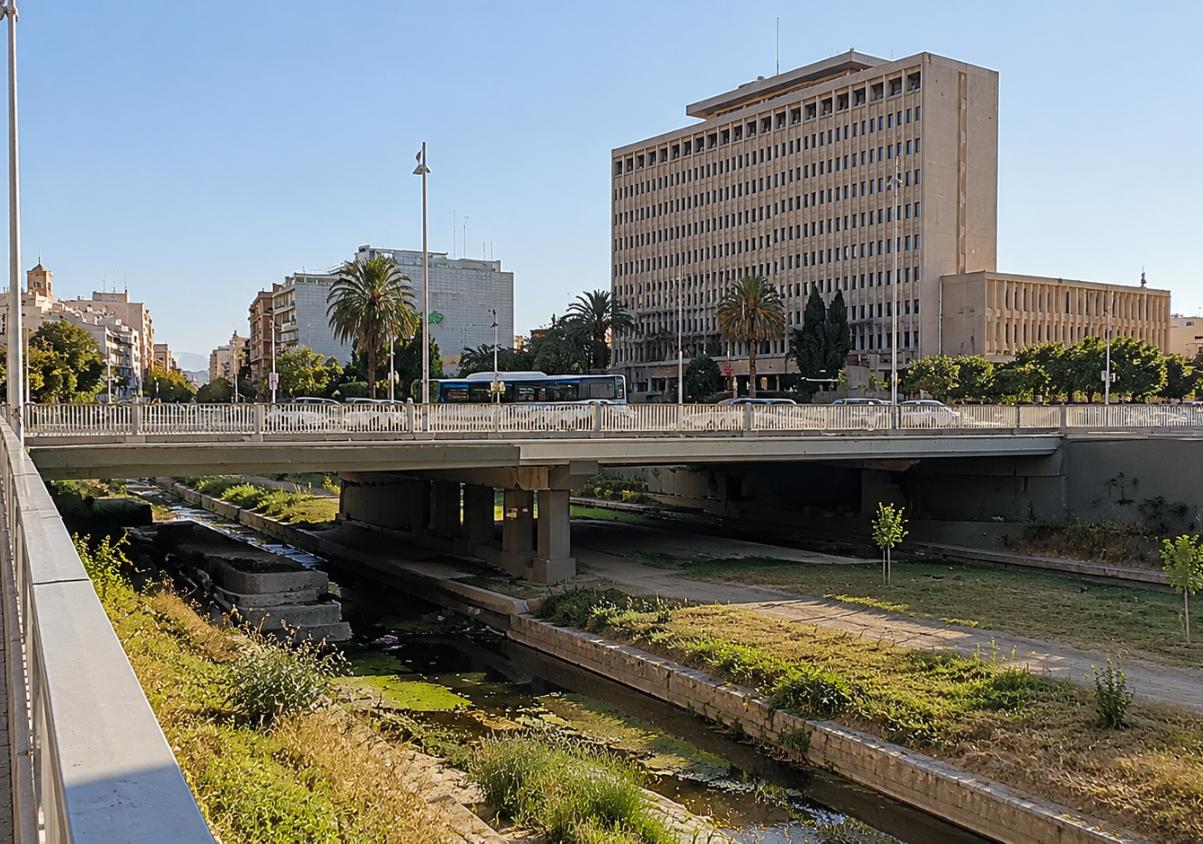

Tetuán Bridge is set to change part of its current appearance by introducing greenery and new places to sit beside the Guadalmedina. Málaga City Council has put out to tender a project to refurbish the northern pavement with four large planters combining plants, trees and built-in seating.
The scheme, promoted by the municipal environmental sustainability department, has a base tender budget of €95,998.44 including VAT and a planned construction period of two months once work begins.
The tender was published on 28 September 2026, with companies able to submit bids until 21 October at 1:00 pm.
Four large planters that will also work as benches
The project does not involve a structural redesign of the bridge.
Instead, the aim is to make better use of the northern pavement by adding four large-scale landscaped elements that bring shade, colour and new resting areas for pedestrians.
The pieces will be built using high-performance UHPC concrete and designed to serve a double purpose: containing vegetation while also functioning as urban furniture.
Two of the planters will be large standalone elements, while the other two will be made up of modular sections that can be combined into straight and curved shapes.
The planned finish is white concrete, with a design intended to fit into the existing surroundings without requiring major structural changes.
Six trees and 294 smaller plants
The biggest visual change will come from the vegetation.
The project includes six medium-sized ornamental trees, together with two groups of palms.
They will be joined by 294 smaller plants, distributed across several types of ornamental planting.
The proposal includes:
- 80 bulb plants;
- 90 perennial ground-cover plants;
- 48 ornamental grasses;
- 36 ground-cover shrubs;
- 40 seasonal plants.
The mix is intended to give the planters a stronger year-round presence rather than relying on a single species or flowering period.
Delonix regia among the proposed tree species
One of the tree species proposed for the scheme is Delonix regia, an ornamental tree known for its broad canopy and striking flowers.
The technical project allows this species or another with similar characteristics to be used, meaning the final choice may depend on practical and technical considerations during construction.
The scheme also includes groups of Areca palms, which will be combined with the lower-level planting.
The overall aim is to create small landscaped compositions rather than simply placing conventional plant pots on the pavement.
How the plants will be maintained
The new planters will include a drainage and soil system designed specifically to support plant growth.
The base will use materials such as volcanic gravel or expanded clay to improve drainage, together with a geotextile membrane.
Above this, the planting medium will be made up of topsoil, compost and sand.
The surface will also include materials to help limit weed growth and will be finished with pine bark mulch.
The intention is to give the vegetation conditions closer to those of a conventional landscaped area, despite being installed on top of a bridge structure.
Automated irrigation connected to the existing network
All the new planting will be supported by an automated irrigation system.
The installation will connect to the existing network in the Guadalmedina area, with pipes running towards the new planters.
The system will include polyethylene piping, drip irrigation and specific watering points for the trees.
Remote irrigation control is also included in the project.
This will be particularly important because the vegetation will be located in an exposed urban setting without direct access to natural soil.
No drilling or structural alterations to the bridge
One of the main technical requirements is to ensure that the work does not affect the structural performance of Tetuán Bridge.
The planters will be independent elements placed on top of the bridge deck, without modifying the load-bearing structure.
The weight of the modules, soil, water and vegetation has been taken into account in the design so that the bridge’s capacity is not compromised.
The project also avoids drilling into the slab, reducing the risk of water infiltration.
Existing rainwater drainage systems will also remain unaffected.
A project on the bridge rebuilt after the Metro works
The work will take place on a section of the bridge that was itself heavily modified during construction of the Málaga Metro.
The bridge deck and part of the northern pavement were removed to allow rail infrastructure to be built beneath the Guadalmedina riverbed.
The bridge was later rebuilt and reopened to traffic.
This new project does not aim to change that structure, but rather to introduce landscaping and seating to improve the pedestrian environment.
Almost €96,000 and two months of work
The project has an estimated contract value of €79,337.55 before VAT.
Including taxes, the tender budget rises to €95,998.44.
The procurement process is being handled through a simplified open procedure and establishes a construction period of two months.
At the time of publication, no contractor has yet been appointed, so the exact start date will depend on the tender process and subsequent formalisation of the contract.
More greenery on one of the crossings over the Guadalmedina
Tetuán Bridge is one of the crossings linking both sides of the Guadalmedina in central Málaga.
The intervention is intended to turn part of this busy pedestrian route into a more welcoming space without resorting to a major redevelopment.
If completed as planned, the northern pavement will gain trees, palms, nearly 300 plants and new places to sit.
The scheme therefore follows a broader urban trend: introducing greenery into spaces traditionally dominated by concrete, paving and transport infrastructure.

Latest news

Similar News

Comic-Con Málaga 2026: Opening Hours, Tickets, Guests and Complete Visitor Guide
Málaga

Málaga heads into early October with strong hotel demand driven by Comic-Con and the San Miguel Fair
Málaga

MálagaCrea 2026 Music Final Brings Four Acts and Guest Performer Anadie to Málaga
Málaga