University of Málaga studies how a new La Rosaleda stadium could affect the Teatinos campus
The University of Málaga has launched four major studies to determine whether a stadium for up to 55,000 spectators can coexist with faculties, classes, exams and the future expansion of the campus.
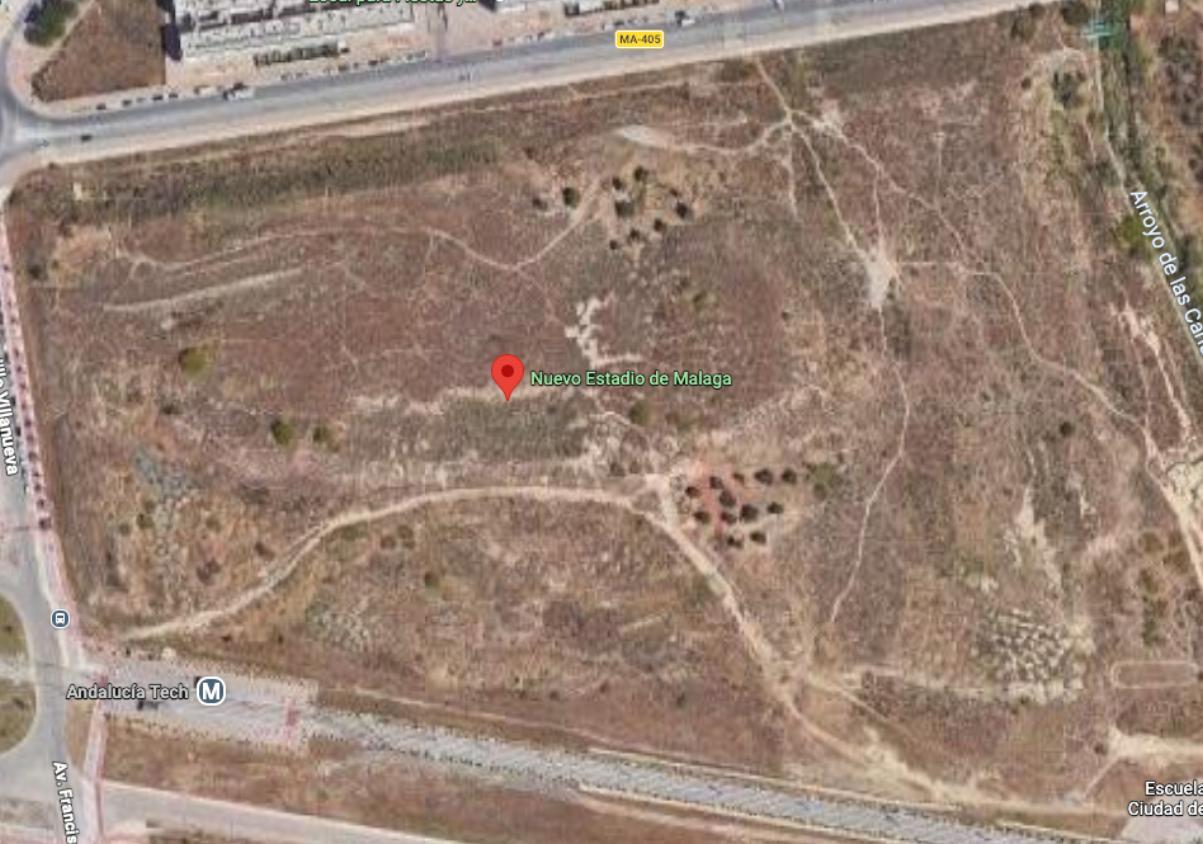

The possible construction of a new La Rosaleda stadium in Teatinos has entered a new phase. After a study commissioned by the public authorities identified land owned by the University of Málaga as the preferred option for the future stadium, the UMA has now begun its own assessment of what such a major venue would actually mean for the campus.
The University is not only looking at the value of the land.
Issues such as traffic, the Metro, noise, security, major events, classes, exams, green areas and future university facilities are all being examined.
The aim is to determine under what conditions a venue for up to 55,000 spectators could coexist with one of Andalusia’s largest university campuses.
The University has not approved the stadium
Although Teatinos has been identified as the best-rated location, building the new stadium on university land has not yet been approved.
The University created an internal commission after reviewing the conclusions of the study prepared by Typsa and Fenwick Iribarren, with support from Legends Global and Andersen.
That report analysed five potential locations: the current La Rosaleda site in Martiricos, the University expansion area, San Cayetano, Lagar de Oliveros and Manzana Verde.
The university site received the highest overall assessment.
The UMA must now determine what accepting a development of this scale would mean for its own land and long-term plans.
A university plot of more than 66,000 square metres
The proposed site lies within the expansion area of the Teatinos campus.
The plot covers approximately 66,037 square metres and belongs to the University of Málaga.
One argument in favour of the location is that planning regulations already allow sports-related uses in the area and much of the surrounding infrastructure is already developed.
The area also benefits from Metro connections, bus services, road access and large parking areas linked to the campus.
However, the University wants to know whether those advantages would really be enough to handle the demands of a large stadium.
How do you move 55,000 people in a few hours?
Mobility will be one of the most important issues.
It is not enough simply to know that Teatinos has Metro and bus connections.
The commission wants to calculate what would happen when tens of thousands of people arrive or leave the area within a very short period of time.
The analysis will need to consider the real capacity of public transport, the impact on road traffic and whether additional access routes or special services would be required.
The issue is particularly relevant because much of the Metro network near the campus runs at street level.
A stadium that would not only be used for football
Another important factor is that the new La Rosaleda is not expected to operate only on Málaga CF matchdays.
The preliminary plans envisage a venue capable of hosting concerts, major events and other activities throughout much of the year.
That significantly changes the potential impact on Teatinos.
Instead of dealing only with around two dozen football matches each season, the University must consider a venue with frequent activity and repeated large-scale crowds.
Classes and exams next to major events
Coexistence with university life is another major question.
The UMA wants to study what could happen if a concert or an event attracting tens of thousands of people coincides with a teaching day, exam period or research activity.
Noise, movement of people, security and pressure on public space could directly affect students, lecturers and staff.
For that reason, the study will not focus only on the exact plot where the stadium might be built.
What happens to the future expansion of the campus?
The proposed site forms part of an area the University had earmarked for its own future development.
The arrival of the stadium could alter plans for new buildings, facilities, shared spaces and green areas.
The commission will therefore assess which university projects could be affected and how the campus might need to be reorganised.
This is especially important in the long term, as the stadium would remain in place for decades.
Noise, emissions and resource use
Environmental impact is another part of the assessment.
The University wants to study noise levels associated with football matches, concerts and other major events.
Traffic-related emissions, energy consumption, water use and other resources will also be considered.
The possibility of frequent year-round use means these factors have to be analysed beyond football matchdays alone.
Security inside and around the campus
Large crowds also create new security requirements.
The commission will need to estimate what additional resources would be necessary during matches and major events.
That includes not only the stadium itself, but also nearby faculties, parking areas, pedestrian zones and other parts of the campus.
The UMA is particularly interested in identifying any extra costs that the University itself could be expected to absorb.
The land has been initially valued at around €50 million
One of the first economic figures to emerge places the value of the land at around €50 million.
However, that does not mean this would be the final price of any future agreement.
It is an initial estimate of the market value of the site and will form part of the broader financial analysis.
The University wants to study the full operation before deciding what economic conditions would be necessary.
Indirect costs also matter
The value of the land is only one part of the equation.
The UMA also wants to understand what additional expenses could result from the stadium.
These could include security, infrastructure upgrades, changes to university planning and other costs linked to having such a major venue on campus.
Any future negotiation would therefore involve much more than simply agreeing a price for the plot.
A stadium estimated at around €414 million
The study commissioned by the public authorities estimates that building an entirely new stadium in Teatinos could currently cost around €414 million.
Demolishing and rebuilding La Rosaleda on its current Martiricos site was estimated at approximately €434 million.
The Teatinos option also received a stronger assessment for factors including mobility, parking, land availability and development potential.
These figures are still preliminary and could change once a definitive project exists.
Between 45,000 and 55,000 spectators
The final capacity has not yet been decided either.
Current studies refer to a range of between 45,000 and 55,000 spectators.
A 55,000-seat venue would be considerably larger than the current La Rosaleda, which has a capacity of around 30,000.
Preliminary proposals have even considered a partially sunken stadium to reduce its visual impact.
However, there is still no final architectural design.
There is no definitive design yet
This is another limitation facing the University’s current work.
The commission can analyse scenarios and broad figures, but it still does not know exactly what the future La Rosaleda will look like.
The final orientation, design, access points and capacity have not yet been confirmed.
Images published so far are conceptual studies rather than a final construction project.
Four major reports before any decision
The University commission is working across four main areas.
The first focuses on mobility, security and the impact on the surrounding area.
The second looks at coexistence with academic activity and the future planning of the campus.
The third covers legal and property-related issues.
The fourth will examine the economic and financial aspects of a potential agreement.
Together, these reports are intended to provide a complete picture before the University takes an official position.
The final decision will rest with the UMA’s governing bodies
The commission itself cannot approve or reject the project.
Its findings will later be submitted to the Rectorate, Governing Council and Social Council of the University of Málaga.
These bodies will be responsible for considering the evidence and deciding the University’s institutional position.
The commission is also not yet the formal negotiating body with Málaga City Council, the Andalusian regional government, Málaga Provincial Council or Málaga CF.
Initial results could arrive in early 2027
The current expectation is for the bulk of the studies to be completed around February 2027.
Some partial findings could emerge earlier.
Until then, the university site will remain the preferred option in the technical studies, but it is not yet a final decision.
The key issue will be whether the advantages offered by Teatinos can be made compatible with the needs of a university that must continue to operate and expand.
A decision that could transform Teatinos for decades
The arrival of a new La Rosaleda would represent one of the biggest urban changes in Teatinos since the development of the campus and the arrival of the Metro.
A stadium for tens of thousands of people could generate new connections, services and economic activity.
But it would also bring major flows of traffic and visitors into an area whose primary function remains academic.
That balance is exactly what the University of Málaga now wants to measure before taking any decision.

Latest news


Similar News

Virgen del Rosario Procession in El Palo This Saturday: Full Route and Times
Málaga

Málaga Musical to close after 47 years as historic instrument shop prepares its farewell
Málaga

University of Málaga Values Land for New La Rosaleda Stadium at €54 Million
Málaga