


Málaga rallies to donate blood after deadly Toledo train crash: how to help the injured
Málaga's Blood Transfusion Centre extended its opening hours following the devastating train accident in Urda, as residents are urged to continue donating blood to support survivors and maintain essential hospital supplies
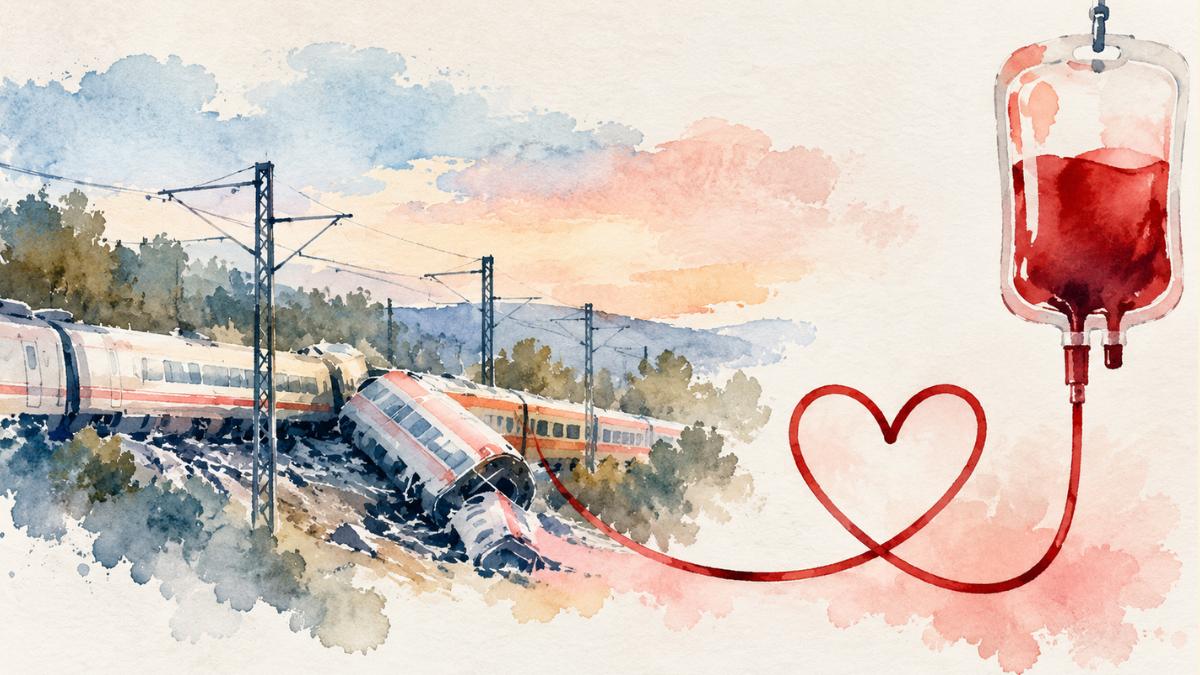

The devastating train crash in Urda, Toledo, on Wednesday, October 28, has left dozens of people dead, many others injured and families facing unimaginable grief. In response to the tragedy, Málaga has joined the nationwide effort to support survivors, with an emergency extension of opening hours at its Blood Transfusion Centre and an appeal for residents to donate blood.
The Blood, Tissues and Cells Transfusion Centre in Málaga, located within the Hospital Civil complex, opened exceptionally on Wednesday afternoon from 5 pm to 9 pm, allowing residents to donate blood in response to the medical needs arising from the accident.
The initiative comes at a time of exceptional concern, as hospitals work to maintain sufficient blood supplies to treat injured passengers and provide the medical care they may require.
Alongside the grief for those who have lost their lives, blood donation offers a practical way for the public to help those still fighting to recover.
Málaga responds to the Urda train tragedy with an appeal for solidarity
The railway accident occurred on the morning of Wednesday, October 28, near Urda in the province of Toledo, on the high-speed railway line connecting Madrid with Andalusia.
The incident involved a Renfe AVE train and another train operated by Iryo, both associated with the railway connection between Madrid and Seville.
The collision triggered a major emergency response involving medical teams, rescue services and security personnel.
While authorities investigate the circumstances surrounding the accident, the immediate priorities remain treating the injured, identifying the victims and supporting their families.
Málaga has expressed its deepest condolences to the families of those who died and its solidarity with everyone affected, joining relief and support initiatives organised across Spain.
In emergencies of this magnitude, blood donation becomes particularly important in supporting hospital treatment.
Málaga Blood Transfusion Centre opened until 9 pm following the accident
The Andalusian Regional Government announced the exceptional opening of Málaga's Blood, Tissues and Cells Transfusion Centre on Wednesday, October 28.
The facilities remained open from 5 pm to 9 pm, beyond their normal opening hours for that day, to receive residents wishing to help through blood donation.
The centre is located within the Hospital Civil complex on Avenida Doctor Gálvez Ginachero in Málaga.
The emergency extension was intended to strengthen blood supplies in response to the healthcare needs arising from the railway disaster.
Can you still donate blood in Málaga today?
Yes. Although the extraordinary opening hours announced for the Blood Transfusion Centre applied specifically to Wednesday, October 28, residents can continue donating at authorised blood donation locations throughout Málaga province.
According to the Andalusian Health Service's published schedule, a blood donation session is planned for Thursday, October 29, at CESUR Málaga Este, in El Palo, from 9 am to 2 pm.
Another donation session is scheduled at the Casa de la Cultura in Villanueva del Trabuco, from 5 pm to 9 pm.
Availability and opening hours should be confirmed before travelling, as schedules may change.
The latest information is available on the official Málaga Blood Transfusion Centre website.
Why donating blood is so important after a major accident
Blood is an essential medical resource that cannot be artificially manufactured to replace human donations.
During emergencies involving large numbers of injured people, such as a major railway accident, hospitals may require blood transfusions to treat severe bleeding and perform emergency surgery.
Donated blood can be separated into different components, including red blood cells, platelets and plasma, which are used according to each patient's medical needs.
Maintaining adequate blood supplies is essential for responding to emergencies without compromising the treatment of other patients.
The need for blood does not disappear once the initial emergency response has ended.
Hospitals continue to carry out operations, cancer treatments and other procedures that depend on a reliable supply of donated blood.
For this reason, health authorities emphasise the importance of donating regularly and following the guidance provided by blood donation centres.
Who can donate blood in Málaga?
People wishing to donate must meet certain basic requirements designed to protect both donors and patients receiving transfusions.
General eligibility conditions include:
- Being between 18 and 65 years old, subject to exceptions assessed by healthcare professionals.
- Weighing more than 50 kilograms.
- Being in good general health.
- Having no fever or symptoms of an active infection.
- Bringing an official photographic identification document.
- Eating normally before donating rather than arriving on an empty stomach.
- Avoiding alcohol in the hours before donation.
Before donating, medical staff will conduct a health assessment and any necessary checks to determine whether the person can donate safely.
When might you need to postpone donating blood?
Certain circumstances may temporarily prevent someone from donating blood.
These include recent tattoos, piercings or certain invasive procedures, surgery, some infections and particular medications.
Temporary restrictions may also apply during pregnancy, after childbirth or following travel to certain countries.
Waiting periods vary depending on the circumstances, so the final decision about whether someone is eligible to donate must always be made by healthcare professionals.
Why blood donations will continue to matter in the coming days
The public response immediately following a tragedy is extremely valuable, but hospitals need a stable and continuous blood supply.
Blood components have limited storage periods, and their use depends on each patient's clinical needs.
This means that, alongside those who donate immediately, people who arrange donations over the following days and weeks can also make an important contribution.
Not everyone needs to visit the same donation centre or donate on the same day.
Organised, regular blood donations, following official healthcare recommendations, help turn an immediate act of solidarity into sustained support for the health service.
Málaga previously showed remarkable solidarity after the Adamuz railway disaster
This is not the first time Málaga province has responded to a railway tragedy with an exceptional increase in blood donations.
Following the train accident in Adamuz, Córdoba, in January 2026, Málaga's Blood Transfusion Centre recorded a sharp rise in the number of people coming forward to donate.
According to figures released by the centre's management at the time, 512 units of blood were collected on one of the days following the accident, compared with the usual daily average of approximately 200.
This represented a 156% increase, reflecting the willingness of Málaga residents to help in times of crisis.
That response highlighted the province's ability to mobilise and the importance of having an established community of committed blood donors.
Now, following the tragedy in Urda, supporting the victims has once again placed blood donation at the heart of the public's response.
How to help victims of the Toledo train accident
In addition to donating blood, residents can help by following guidance from the relevant health authorities and avoiding the spread of unconfirmed information.
Families affected by the accident are facing an extremely difficult time, making it essential to respect their privacy and rely on official sources for updates.
Renfe has established the helpline 900 101 020 to assist victims and relatives, while Iryo has provided 900 001 403.
The Castilla-La Mancha regional authorities have also made 900 122 112 available for information related to the accident.
These numbers are intended for people seeking information about those affected and the assistance services available.
Málaga mourns the victims of the railway tragedy
The grief caused by the accident has also prompted an institutional response in Málaga.
The City Council announced the suspension of part of its public programme and organised a minute's silence in memory of those who lost their lives.
Municipal representatives expressed their condolences to the victims' families and their support for the injured, joining the wider mourning following the disaster in Toledo.
At a time like this, no words can fully ease the pain of losing a loved one. Nevertheless, supporting grieving families and mobilising essential medical resources remain vital parts of the response.
A blood donation can help those who need it most
The exceptional opening of Málaga's Blood Transfusion Centre was one of the measures introduced to make it easier for residents to support those affected by the Urda train accident.
Although that special donation session has now ended, people can continue donating blood through the usual donation centres and scheduled sessions organised by the Andalusian Health Service.
Amid the grief for those who have died and the concern for those who remain injured, every successful blood donation helps maintain an essential medical resource.
Málaga is once again demonstrating that, when tragedy affects the entire country, solidarity can take the form of something as simple and meaningful as donating blood.
Our deepest condolences go to the families of those who lost their lives, and our thoughts are with the injured, their loved ones and the emergency teams working tirelessly to respond to this tragedy.

Latest news



Similar News
Renfe strike in Málaga on October 29: train timetables, affected services and minimum operating levels
Provincia de Málaga

Málaga records its hottest summer since 1961 with temperatures reaching 44.6C and exceptionally warm nights
Provincia de Málaga
Marvel turns Málaga’s Roman Theatre and Alcazaba green for Avengers: Doomsday
Provincia de Málaga
