Myopia on the rise among young people in Málaga as opticians warn of growing vision problems
The Andalusian College of Opticians and Optometrists warns that six in ten young people aged 16 to 30 are short-sighted, highlighting the importance of regular eye examinations and early detection
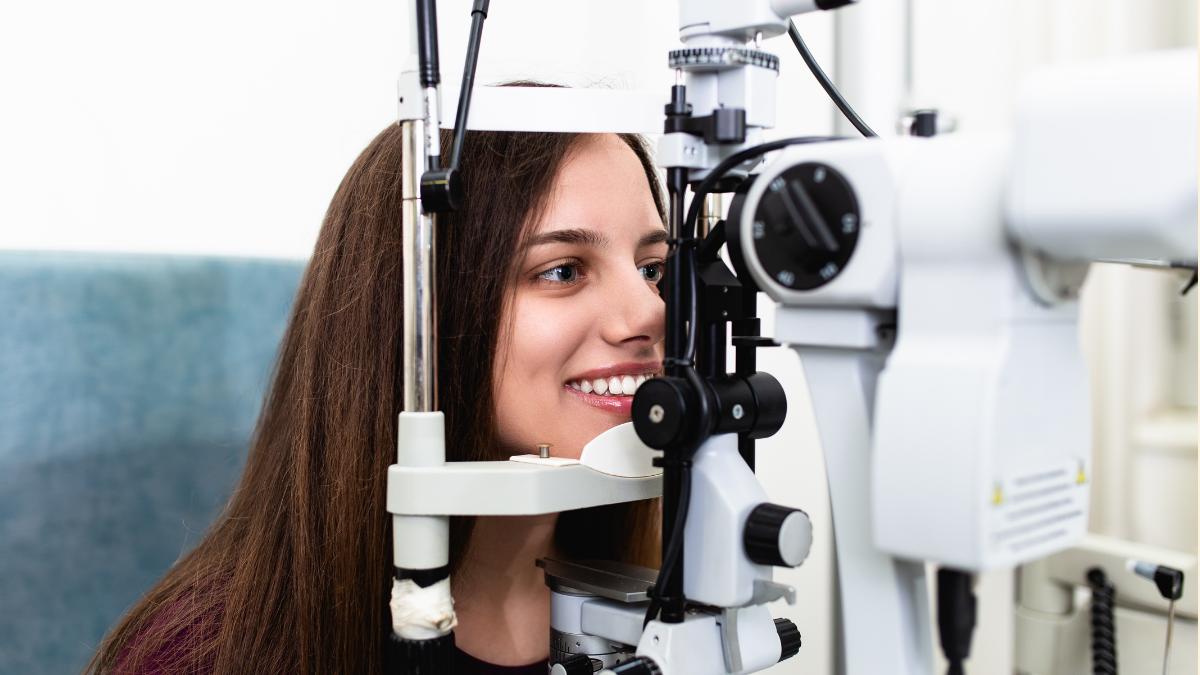

Vision problems are affecting an increasingly large proportion of the population, with particular concern surrounding the growing number of young people developing short-sightedness. The Andalusian College of Opticians and Optometrists has raised awareness of a situation that also affects Málaga: two out of every three people experience some form of visual impairment, while myopia has increased significantly over recent decades.
The trend is particularly striking among younger generations. According to figures reported by the professional association, around 60% of people aged between 16 and 30 are short-sighted, compared with approximately 30% in the previous generation.
Another concern is the number of people living with undiagnosed vision problems. Professionals estimate that around three million people in Spain may have an undetected visual condition, potentially affecting everyday activities such as studying, driving and working.
Myopia rates have doubled in a generation among young people
One of the most concerning developments for eye care professionals is how rapidly children's and teenagers' visual habits have changed.
Esteban Moreno, treasurer of the Andalusian College of Opticians and Optometrists, has warned that the proportion of young people with myopia has doubled compared with the previous generation.
Myopia, commonly known as short-sightedness, is a refractive error that makes distant objects appear blurred. Although it can be corrected with glasses or contact lenses, its progression requires monitoring, particularly during childhood and adolescence.
Screen time and less outdoor activity raise concerns
Experts associate part of the increase in myopia with changes in modern lifestyles.
Smartphones, tablets, computers and video games now account for a significant proportion of children's leisure time, meaning many young people spend more hours focusing on objects at close distances.
Prolonged near work and reduced time spent outdoors are associated with the development and progression of myopia, although genetics and other individual factors also play an important role.
The shift in childhood habits is particularly significant. Activities that previous generations commonly enjoyed outdoors have increasingly been replaced by digital entertainment at home.
Eye care professionals therefore recommend taking regular breaks from close-up activities and encouraging children to spend more time outdoors.
Myopia can continue progressing into adulthood
Although myopia often develops during childhood, it does not necessarily stabilise when adolescence ends.
Its progression may continue throughout secondary school, sixth form and university, sometimes extending into the mid-to-late twenties.
This makes regular eye examinations particularly important for students, as an outdated prescription can make it difficult to see classroom boards, follow lessons or carry out certain activities.
The professional association also warns that international trends highlight the importance of preventive measures.
Some East Asian countries have reported particularly high rates of myopia among certain younger populations, prompting initiatives to encourage outdoor activities and improve early detection.
Nearly 17,000 children in Málaga have benefited from the Plan VEO scheme
Financial support for glasses and contact lenses has become an important way of improving access to vision correction.
Plan VEO, introduced by Spain's Ministry of Health, provides financial assistance of up to €100 towards glasses or contact lenses for children aged 16 and under.
Andalusia is among the Spanish regions with the highest participation in the programme. According to figures released by the Andalusian College of Opticians and Optometrists in early October, more than 102,000 applications had been recorded across the region, with over 1,500 participating optical establishments.
Málaga has 244 participating opticians
In Málaga province, 244 optical establishments are participating in the programme, which has reportedly assisted nearly 17,000 children.
The scheme aims to reduce the financial difficulties some families face when purchasing prescription glasses or contact lenses.
Uncorrected vision problems can affect children's learning, concentration and general wellbeing, particularly during their school years.
How to apply for the €100 glasses allowance
Applications are processed in person at participating optical establishments.
Families must provide proof of the child's entitlement to publicly funded healthcare and have a valid optical prescription.
For children under six, the prescription must be issued by an ophthalmology service. From the age of six, prescriptions may also be provided by an optometrist at a participating establishment.
If the glasses or contact lenses cost less than €100, the scheme may cover the full amount. When the price exceeds this figure, families pay the difference.
The programme also covers contact lens maintenance solutions, subject to its established conditions.
Spain's Ministry of Health has also approved the continuation of Plan VEO throughout 2027.
Official requirements and participating establishments can be found on the Spanish Ministry of Health's Plan VEO website.
From presbyopia to cataracts: how vision problems change with age
Myopia is not the only condition concerning eye care professionals.
Different visual needs and eye diseases can develop throughout life, requiring regular examinations and, in some cases, specialist medical attention.
Presbyopia commonly develops after the age of 40
Presbyopia, often referred to as age-related long-sightedness, usually begins to appear between the ages of 40 and 45.
It involves a gradual reduction in the eye's ability to focus on nearby objects as part of the natural ageing process.
Common symptoms include needing to hold a mobile phone or book further away to read comfortably and having difficulty focusing on small print.
Cataracts, glaucoma and retinal diseases
As people grow older, detecting conditions such as cataracts, glaucoma and certain retinal diseases becomes increasingly important.
Cataracts cause the eye's natural lens to become progressively cloudy, while glaucoma can damage the optic nerve and lead to irreversible vision loss.
One of the main dangers of glaucoma is that it can progress without noticeable symptoms during its early stages.
Although elevated intraocular pressure is a major risk factor, glaucoma can also develop in people whose eye pressure falls within the normal range.
A comprehensive eye examination may therefore involve additional tests and, when necessary, referral to an ophthalmologist.
Opticians recommend having an eye examination at least once a year
Prevention is one of the main recommendations made by the Andalusian College of Opticians and Optometrists.
The organisation advises having a vision examination once a year to check prescriptions, identify possible abnormalities and determine whether specialist attention is required.
People can gradually become accustomed to deteriorating eyesight without noticing exactly when the problem began.
This is particularly common when vision changes slowly or affects each eye differently.
Regular examinations are important for children, adults and older people, although the appropriate frequency may vary depending on age, medical history and individual needs.
Anyone experiencing sudden vision loss, severe eye pain or other acute symptoms should seek urgent medical attention rather than waiting for a routine appointment.
Andalusia plans to introduce 48 optometrist positions in public healthcare in 2027
Eye care services are also expected to undergo changes within Andalusia's public healthcare system.
According to the Andalusian College of Opticians and Optometrists, the Andalusian Health Service (SAS) plans to introduce 48 optometrist positions during 2027.
The initiative is intended to improve patient care and address delays in ophthalmology appointments.
New professionals will work alongside ophthalmologists
The first appointments are expected to be within hospitals, where optometrists would collaborate with ophthalmology departments.
Their responsibilities would focus on visual assessments, identifying refractive errors and carrying out other tasks within their professional scope.
Patients showing signs of eye disease would be referred to an ophthalmologist for further investigation and treatment.
The professional association's longer-term objective is to expand the workforce to approximately 150 optometrists, potentially extending their services to primary healthcare centres.
The College believes these additional professionals could help significantly reduce waiting lists, although the actual impact will depend on how the service is implemented and organised.
Eye health is about much more than wearing glasses
The increase in myopia among younger generations, together with the number of undiagnosed vision problems, highlights the importance of looking after eyesight throughout life.
Financial support for children, the introduction of additional healthcare professionals and regular eye examinations are different approaches to improving access to vision care.
In Málaga, where nearly 17,000 children have reportedly received assistance through Plan VEO, the challenge goes beyond simply providing glasses to those who need them.
Identifying vision problems early, correcting them appropriately and preventing them from affecting education, employment and everyday life are essential priorities for improving the population's eye health.

Latest news