José Carlos García begins a new chapter in Málaga with ‘Ahora, libre’, his most personal project yet
The Málaga-born chef leaves behind 15 years at Muelle Uno and returns to the former Café de París in La Malagueta with a more intimate, personal concept rooted in his origins.


José Carlos García has closed one of the most important chapters of his career to begin a new and far more personal one. After 15 years at Muelle Uno, the Málaga chef has moved his restaurant back to the historic former Café de París premises in La Malagueta, the place where he first began to build his professional identity.
The new project is called ‘Ahora, libre’, a name that reflects the stage he has reached both personally and professionally.
It is not simply a change of location. It is also a different way of approaching cooking, service and the relationship with diners after more than two decades at the highest level of gastronomy.
The idea is clear: to preserve the standards, produce and Málaga identity that have always defined his cooking, while working with greater creative freedom and without allowing external expectations to dictate every decision.
Returning to where it all began
The move back to La Malagueta has a strong personal meaning.
The new restaurant occupies the premises that were once home to Café de París, the family restaurant where José Carlos García began working in the kitchen alongside his parents.
It was also there that he received one of the most important pieces of news of his career: his first Michelin star.
More than two decades later, the chef is returning to the same place, but from a completely different point in his life.
The experience accumulated over the years now allows him to reconnect with those memories without trying to recreate the past.
The aim is to use his origins as the starting point for something new.
Fifteen years that helped define Muelle Uno’s food scene
His previous chapter began 15 years ago at the Port of Málaga.
During that period, the José Carlos García restaurant became one of Muelle Uno’s most recognisable gastronomic destinations and one of the leading fine-dining restaurants in Málaga city.
From there, he welcomed guests from around the world and developed a cuisine closely linked to Málaga produce and the Mediterranean.
García considers those years fundamental both professionally and personally.
They also coincided with a period in which Málaga’s tourism and restaurant scene was undergoing a major transformation, and his restaurant helped increase the visibility of local gastronomy.
Closing that chapter does not mean rejecting it.
Because of its importance in his career, García sees the move as a natural evolution.
‘Ahora, libre’: a statement of intent
The name of the new project is deliberate.
‘Ahora, libre’ reflects the desire to cook with fewer constraints and to create a restaurant that is more closely aligned with the chef’s current personal and professional outlook.
Over time, his understanding of success has changed.
Awards still matter and high standards remain central to his work, but he no longer wants the pursuit of recognition to determine what he should cook or how he should do it.
His priority now is to enjoy the process more, maintain the same level of commitment and ensure that each guest has a memorable experience.
That sense of freedom is at the heart of this new stage.
A cuisine deeply rooted in Málaga
Although the setting has changed, the connection with Málaga remains intact.
The Mediterranean, local fish and seafood, inland produce, vegetables and traditional recipes continue to be the main foundations of his cooking.
What changes is the way they are interpreted.
At this point in his career, García is interested in recovering recognisable flavours and giving them a personal reading without adding unnecessary complexity.
Experience, in his view, also teaches you when to let the product speak for itself.
Gazpachuelo, Motril prawns and Málaga goat
The new proposal brings back ingredients and dishes closely associated with the local food culture.
These include references to gazpachuelo, Motril prawns, Málaga goat and the traditional dessert tocino de cielo.
There is also space for dishes connected with García’s own career and with the history of the building.
Café de París reappears as a reference in some of the creations, linking the new chapter to the place where his professional journey began.
The menu continues to place a strong emphasis on the sea and Mediterranean produce.
A smaller, more intimate restaurant
The move from Muelle Uno to La Malagueta also changes the scale of the project.
The new restaurant has a more intimate atmosphere, with a closer relationship between kitchen, dining room and guest.
That sense of proximity is one of the aspects José Carlos García wanted to recover.
After many years working within larger structures, he was looking for a space where he could be more present during each service and where the overall experience felt less distant.
Lourdes Luque continues to lead the dining room
The project remains a shared one.
Lourdes Luque, José Carlos García’s wife, continues to manage the dining room and plays a central role in the restaurant experience.
Her contribution is especially important in this new phase, where hospitality and direct contact with guests carry even more weight.
Kitchen and dining room therefore work as two parts of the same concept.
The intention is for the experience to go beyond the plate and include the way guests are welcomed, guided and looked after.
Michelin recognition is no longer the centre of every decision
For years, José Carlos García was one of Málaga city’s main Michelin references.
The Michelin star still has a special meaning for him.
Receiving his first star at Café de París marked one of the defining moments of his career, while his later project at Muelle Uno was also recognised soon after opening.
However, this new stage brings a different order of priorities.
Excellence remains essential, but the food is no longer designed primarily around retaining or gaining distinctions.
Recognition will always be welcome, but it will not determine the direction of the restaurant.
Michelin already reflects this new chapter
The Michelin Guide has already listed the restaurant at its new location on Calle Vélez Málaga, 8, between La Malagueta and the Centre Pompidou.
The guide describes the project as a more intimate and personal stage, focused on creative Andalusian cuisine and a contemporary interpretation of Málaga and Mediterranean traditions.
The restaurant continues to offer à la carte options and tasting menus, with produce as the main thread.
The wine list also gives particular attention to white wines, in keeping with a cuisine strongly connected to the sea.
From Muelle Uno to just a few hundred metres away
The move may feel significant gastronomically, but geographically it is much smaller.
The new restaurant is only a short distance from Muelle Uno.
It sits close to the Centre Pompidou and just a few minutes from La Malagueta beach.
The restaurant itself presents the move as a new chapter following 15 years at the Port of Málaga, with this new phase in La Malagueta beginning in late September 2026.
Málaga has changed alongside him
The gastronomic landscape José Carlos García finds today is very different from the one he knew at the start of his career.
Málaga now has a much broader restaurant scene, with a wide range of styles, a new generation of chefs and a stronger presence of local produce in fine-dining concepts.
For García, one of the biggest changes has been the confidence Málaga has developed in its own gastronomic identity.
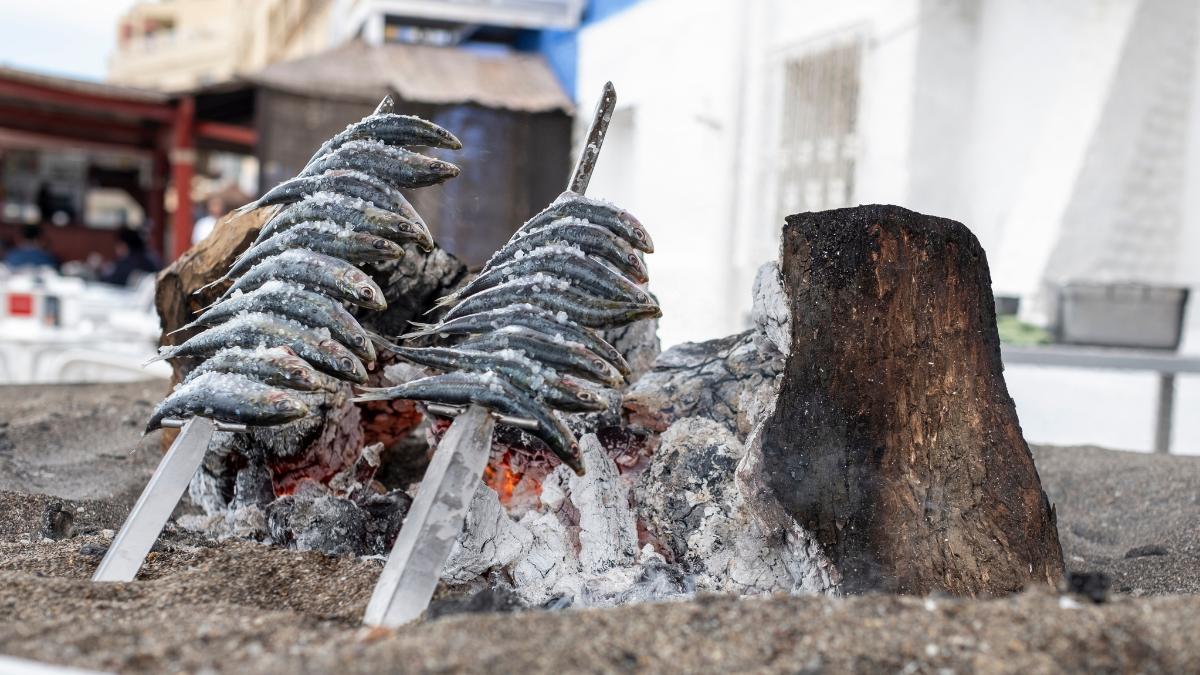
Fish, espetos, inland produce, traditional recipes and local producers have gained visibility.
The city has also become a destination where food is increasingly central to the visitor experience.
Growing without losing local roots
For the chef, the challenge now is to continue growing without losing that connection to place.
Málaga gastronomy still has significant room to evolve, but that progress should, in his view, continue to place local identity and produce at the centre.
His own restaurant follows that philosophy.
Although it uses contemporary techniques, creativity and a fine-dining framework, the starting point remains familiar and recognisable.
Málaga is still at the heart of everything.
No plans for a restaurant empire
This new stage also changes the way García looks at the future.
For now, he is not planning a strategy based on opening multiple venues or developing a large restaurant group.
His intention is to focus his energy on this new restaurant and allow it to develop its own personality.
After decades in the profession, the objective is not necessarily to do more.
It is to choose more carefully what he wants to do.
Cooking, travelling and continuing to learn
His vision for the coming years is relatively simple.
He wants to remain in his kitchen, work with a strong team and continue welcoming guests who are interested in what he has to offer.
He also wants time to travel, discover new products and explore other ways of understanding gastronomy.
Continuous learning has always been part of his career and will remain so.
If, in a few years’ time, he still wakes up with the same desire to cook and surprise diners, he will consider the project a success.
Beyond fine dining: good produce and shared tables
José Carlos García’s relationship with food does not end when he leaves his own restaurant.
When eating out, he is not always looking for sophisticated experiences.
Well-cooked fish, espetos by the sea, a traditional stew or excellent raw ingredients can be just as rewarding.
Honest cooking and meals shared with family or friends remain part of what first made him fall in love with the profession.
That same idea also runs through his new project.
A return to the beginning without looking backwards
‘Ahora, libre’ is a return, but not an exercise in nostalgia.
José Carlos García goes back to the former Café de París after 15 years at Muelle Uno, but with a very different understanding of his profession.
The goal is no longer simply to grow, win awards or meet external expectations.
The priority now is to cook from a more personal place, stay closer to the guest and maintain high standards without sacrificing freedom.
And to do that, he has chosen exactly where everything began.

Latest news


Similar News
Costa del Sol looks for new espeteros to preserve one of its most traditional trades
Málaga
The Machine Starts Engines in Malaga
Málaga
These are the 7 restaurants recommended by the Michelin Guide for their 'good cooking' that still don't have a Star
Málaga