Buying a home in Málaga now requires more income than the average household can afford
Málaga is among the major Spanish cities where buying a home with a mortgage has become most difficult. A new study by Tecnocasa and Pompeu Fabra University places its mortgage accessibility ratio at 117.7%, behind only Palma, Madrid and San Sebastián among the main cities analysed.
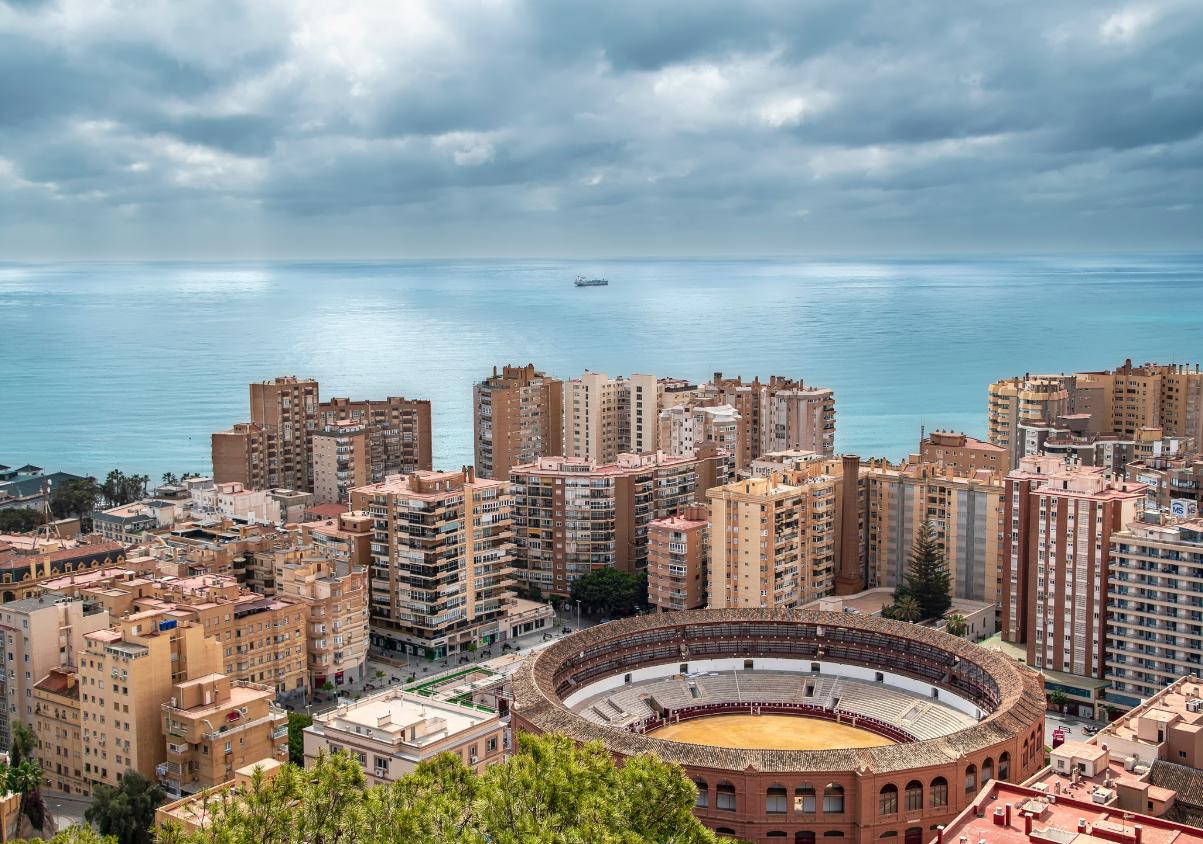

Buying a home in Málaga with a mortgage has moved beyond the reach of the average household under standard financing conditions. Rising property prices and the widening gap between household income and housing costs have placed the city among the least affordable major housing markets in Spain.
This is one of the main conclusions of the study Accessibility to Homeownership with a Mortgage in Spain in 2026, produced by the Tecnocasa Group–Pompeu Fabra University Chair for Housing Market Analysis.
The report gives Málaga a Mortgage Accessibility Ratio of 117.7%, one of the highest figures among Spain’s largest cities.
Only Palma, at 151.7%; Madrid, at 139.9%; and San Sebastián, at 139.8% record worse levels of affordability. Barcelona follows Málaga closely at 115.8%.
What does Málaga’s 117.7% ratio actually mean?
The figure does not mean that a household would literally need to spend 117.7% of its monthly salary on mortgage repayments.
The study uses an indicator called the Mortgage Accessibility Ratio, which compares the income a household would need to finance an average-priced property with the actual average household income available in that area.
The calculation assumes a mortgage covering 80% of the purchase price, repaid over 25 years, and uses the commonly accepted benchmark that mortgage payments should not exceed roughly 30% of household income.
When the ratio rises above 100%, it means that an average-income household does not earn enough to purchase an average-priced home while remaining within those financing limits.
In Málaga, the 117.7% result shows that this balance has already been lost.
Málaga joins Palma, Madrid, San Sebastián and Barcelona
The difficulties associated with buying a home are not evenly distributed across Spain.
The study identifies particularly high pressure in major metropolitan areas and key tourist destinations, where housing prices have increasingly moved away from the purchasing power of local residents.
The five major cities with the highest mortgage accessibility ratios are:
- Palma: 151.7%
- Madrid: 139.9%
- San Sebastián: 139.8%
- Málaga: 117.7%
- Barcelona: 115.8%
All five are above the 100% threshold, meaning that an average-income household would not be able to buy an average-priced home using the standard mortgage assumptions applied in the study.
Málaga’s position in this group shows that housing pressure on the Costa del Sol is no longer simply a matter of expensive property. It has become a question of whether local households can realistically afford to buy at all.
Housing affordability has worsened sharply in just five years
Málaga’s situation is part of a much broader trend affecting Spain as a whole.
According to the Tecnocasa-UPF study, in 2021 only 9% of Spain’s population lived in areas considered to have limited mortgage accessibility.
By 2026, that proportion had risen to 30%.
At the same time, the share of the population living in areas classified as highly affordable has fallen dramatically, from 53% to 22% in five years.
This means that restricted access to homeownership is no longer limited to a handful of prime neighbourhoods or expensive capitals.
An increasing number of municipalities now show a growing mismatch between property prices, household income and mortgage financing conditions.
Property prices alone do not tell the full story
One of the main messages of the study is that looking only at house prices gives an incomplete picture of affordability.
Two cities can have very different average prices and still face similar accessibility problems if household incomes are also very different.
That is why the indicator combines several factors: property prices, household purchasing power and the conditions required to finance a purchase.
Lázaro Cubero, Director of Analysis at Tecnocasa Group and one of the authors of the report, argues that tracking housing prices alone is no longer enough to understand whether families can realistically buy a home.
The purpose of the accessibility ratio is precisely to measure how far housing costs have moved away from what an average household can finance.
The study covers 741 Spanish municipalities
The analysis goes far beyond Spain’s largest cities.
The report examines 741 municipalities with more than 10,000 inhabitants, allowing researchers to identify substantial differences between local housing markets.
The study relies on data from public institutions including the National Statistics Institute, the Notaries of Spain and the Bank of Spain.
For the first time, the 2026 edition also provides a much more detailed picture of the 40 largest cities in Spain, breaking down affordability by postcode.
This makes it possible to identify major differences even within the same city.
Your postcode can also determine whether buying is realistic
Looking at a city as a whole can hide major differences between neighbourhoods.
The new postcode-level analysis shows that within the same urban area there can be substantial variations in how difficult it is to buy a home.
Some of the least affordable areas in Spain include Son Rapinya in Palma; Castellana, Salamanca-Goya, Retiro and Chamartín in Madrid; Vallvidrera-Tibidabo in Barcelona; and the historic centre of San Sebastián.
The Chair has also developed an affordability traffic-light tool allowing users to check conditions in Spanish municipalities with more than 10,000 inhabitants and, in the 40 largest cities, drill down to postcode level.
An 80% mortgage still requires significant savings
The report focuses mainly on whether a household can afford the monthly repayments, but buyers face another important obstacle before they even reach that point.
The model assumes that the bank finances 80% of the property price.
That means buyers must have enough savings to cover the remaining percentage, in addition to the taxes and other costs associated with the purchase.
As a result, housing affordability does not depend only on whether a household can meet the future monthly mortgage payment. There is also a substantial upfront savings barrier.
In expensive housing markets, that initial amount can become another major obstacle for first-time buyers.
Málaga faces one of Spain’s largest housing-income gaps
Málaga’s position in the study highlights a problem that goes beyond expensive property.
The key issue is the distance between the price of an average home and what an average-income household in the city can realistically finance.
With a mortgage accessibility ratio of 117.7%, Málaga is part of a small group of major Spanish cities where that balance has clearly broken down under the methodology used in the report.
And the national trend suggests the problem is becoming more widespread: in just five years, the share of Spain’s population living in areas with limited mortgage accessibility has risen from 9% to 30%.
Housing conditions still vary greatly from one municipality and neighbourhood to another, but the report leaves one particularly important conclusion for Málaga: average property prices have moved far enough away from local incomes that a conventional mortgage is no longer viable for the average household under the criteria analysed.

Latest news




Similar News

Málaga approves three-year moratorium on new hotels and tourist apartments in residential areas
Málaga

Luxury Branded Residences Reach a Market Value of €2.5 Billion on the Costa del Sol
Málaga