Fuengirola beach drones carry out nine rescues and more than 2,600 operations this summer
The four aircraft monitoring the coastline logged 384 flight hours during June and July, with more than 90% of their work focused on surveillance, control and prevention.
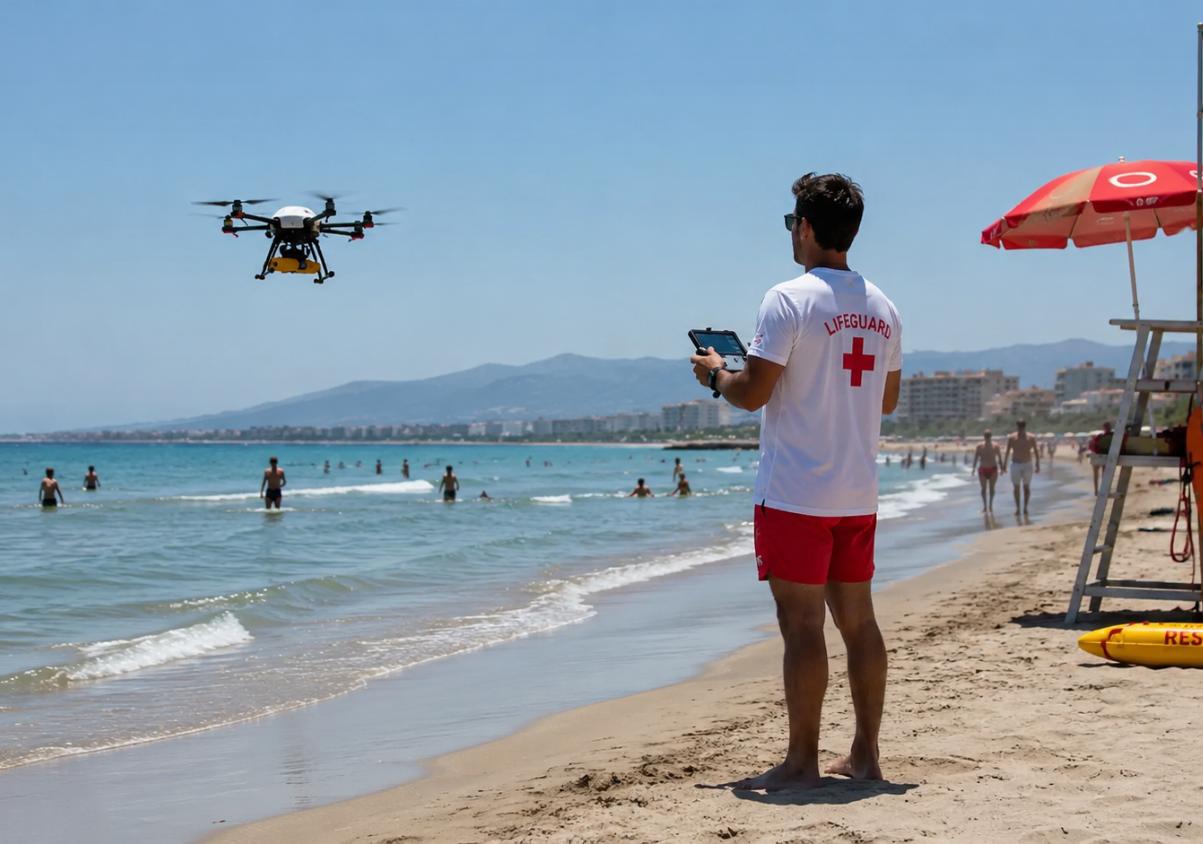

Technology has become an increasingly important part of beach safety in Fuengirola. During June and July 2026, the four drones monitoring the coastline carried out nine rescue or assistance missions involving swimmers, alongside thousands of operations aimed at preventing emergencies before they happened.
In total, the aircraft completed 384 flight hours and 2,653 services during the first two months of the summer operation. Around 85% of those missions involved routine surveillance and monitoring of bathing areas, while close to another 10% were linked to preventive work.
The system operates in coordination with lifeguards and gives emergency teams a rapid aerial view of what is happening in the water, helping them locate swimmers in difficulty and deploy the necessary resources more quickly.
Four drones monitor Fuengirola’s coastline
The aerial surveillance service has been operating since 1 June from four strategic points along Fuengirola’s beaches.
Its main purpose is not simply to intervene once an emergency has already happened, but to help prevent incidents in the first place.
From the air, operators can monitor bathing areas, identify risky situations and relay information to the lifeguard and rescue teams working from the shore.
Fuengirola was also one of the earlier destinations on the Costa del Sol to introduce drones as part of its beach safety system, and the technology has now been used for several years alongside more traditional rescue resources.
This combination provides a perspective that is difficult to achieve from land alone, particularly when beaches are crowded or when a swimmer moves far from the shoreline.
The drones can drop flotation devices from the air
The nine rescue and assistance missions recorded in June and July highlight one of the system’s most striking capabilities.
When someone is in difficulty, a drone can rapidly locate the swimmer and fly towards them while lifeguards prepare to intervene from the beach.
If necessary, the aircraft can release a flotation device into the water, giving the person something to hold onto until a rescue boat, jet ski or lifeguard reaches them.
Those extra seconds can be particularly important when strong currents, exhaustion or distance from shore make it difficult for a swimmer to return safely.
The drones do not replace lifeguards. Instead, they act as an additional tool that can detect incidents sooner and support a faster response.
More than 3,000 preventive actions on Fuengirola’s beaches
The summer safety operation goes far beyond the work carried out by the drones.
Fuengirola’s lifeguard and rescue service, made up of 55 professionals and operating daily from 11am to 8pm, recorded 3,390 preventive actions during June and July.
A significant number involved warning bathers away from potentially dangerous areas.
There were 1,213 warnings to people in zones considered unsafe, as well as another 1,092 warnings linked to marked currents.
Lifeguards also issued 325 warnings to people swimming while a red flag was flying, when sea conditions meant bathing was prohibited.
Other interventions involved non-motorised vessels entering swimming areas, fishing activity, animals and missing persons.
31 water rescues during June and July
While the drones carried out nine rescue or assistance missions, Fuengirola’s lifeguard teams recorded 46 water interventions during the first two months of summer.
Of these, 31 were rescues, nine involved searches, five were assistance operations and one was an extraction.
These are among the incidents that require the fastest response and the closest coordination between lifeguards, rescue boats, jet skis and, when needed, the drone teams.
The wider safety operation is also supported by Local Police officers assigned to the summer service and 14 beach patrol staff.
Minor injuries and jellyfish stings account for most medical assistance
Lifeguards also provided 686 medical treatments during June and July.
Minor cuts and wounds were by far the most common reason for assistance, accounting for 469 cases.
Jellyfish stings came second, with 148 people treated, while teams also dealt with weever fish stings, dizziness, fainting, burns, heat-related problems, dislocations and sprains.
Although most of these incidents are relatively minor, the figures show the scale of the day-to-day work carried out by lifeguard stations during the busiest months of the year.
Almost 2,900 accessibility services
Another important part of the beach operation is ensuring that people with reduced mobility can also enjoy Fuengirola’s coastline.
During June and July, 2,845 accessibility services were provided across the municipality’s four beaches.
The highest number was recorded at Fuengirola beach, with 1,388 services, followed by Los Boliches-Las Gaviotas, with 1,272.
There were also 163 services at Castillo beach and 52 at Carvajal.
These figures form part of a broader system combining prevention, rescue, medical assistance and accessibility throughout the summer season.
Fuengirola strengthens safety during the busiest months
The figures from June and July show that much of the work involved in beach safety happens before a rescue becomes necessary.
The drones alone carried out more than 2,600 services, while lifeguards recorded thousands of warnings and preventive interventions.
The ability to monitor the coastline from the air also makes it easier to spot situations that may be difficult to detect from the sand and coordinate a quicker response from rescue teams.
With August still under way and Fuengirola’s beaches in the middle of the peak summer season, the service remains active to protect a population that rises significantly during the holiday period.
Fuengirola beach safety figures for June and July
🚁 Operational drones: 4.
🕐 Drone flight hours: 384.
📡 Drone services: 2,653.
🛟 Drone rescue or assistance missions: 9.
👨🚒 Lifeguard and rescue professionals: 55.
🩹 Medical treatments: 686.
⚠️ Preventive actions: 3,390.
🌊 Water interventions: 46, including 31 rescues.
♿ Accessibility services: 2,845.
🚩 Warnings for swimming under a red flag: 325.
The figures show how drones have moved beyond being an experimental technology and become an everyday support tool for the professionals working on Fuengirola’s beaches, particularly in surveillance and prevention tasks that can stop a risky situation from becoming a serious emergency.
All figures for June and July can be checked in the official report published by Fuengirola Town Hall on its beach drone surveillance service.

Latest news




Upcoming events
17
Sep
La Pequeña Cuba Gastro-Cultural Festival in San Pedro Alcántara 2026
18
Sep
World Wellness Weekend Marbella 2026
18
Sep
Candlelight: Queen vs. ABBA in Málaga
18
Sep
Candlelight: Coldplay and Imagine Dragons in Málaga
18
Sep
3 de Corazones – Pancho Céspedes, Enrique Ramil and José Luis Jaén in Málaga
Similar News
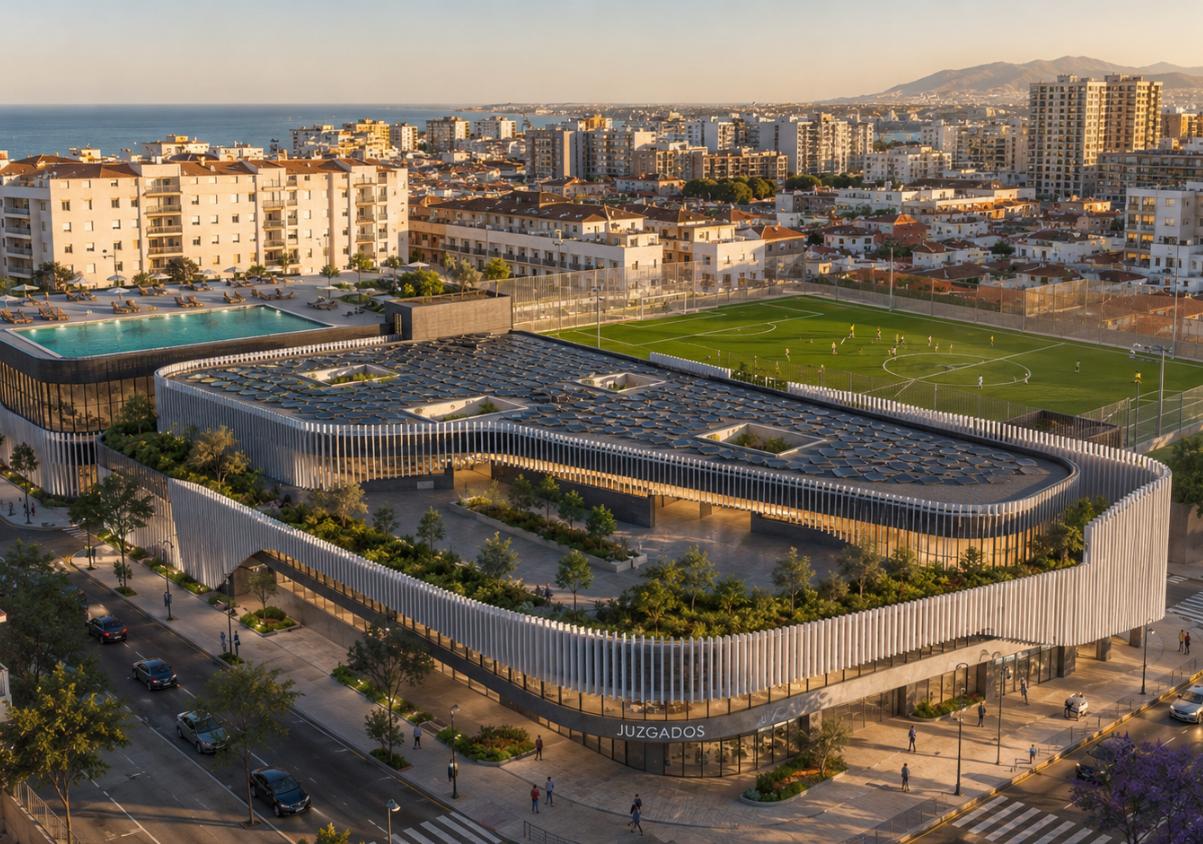
Los Boliches begins its biggest transformation yet: the €48.7 million complex set to reshape this part of Fuengirola
Fuengirola
Bioparc Fuengirola turns August evenings into an experience of nature, animals and live shows
Fuengirola