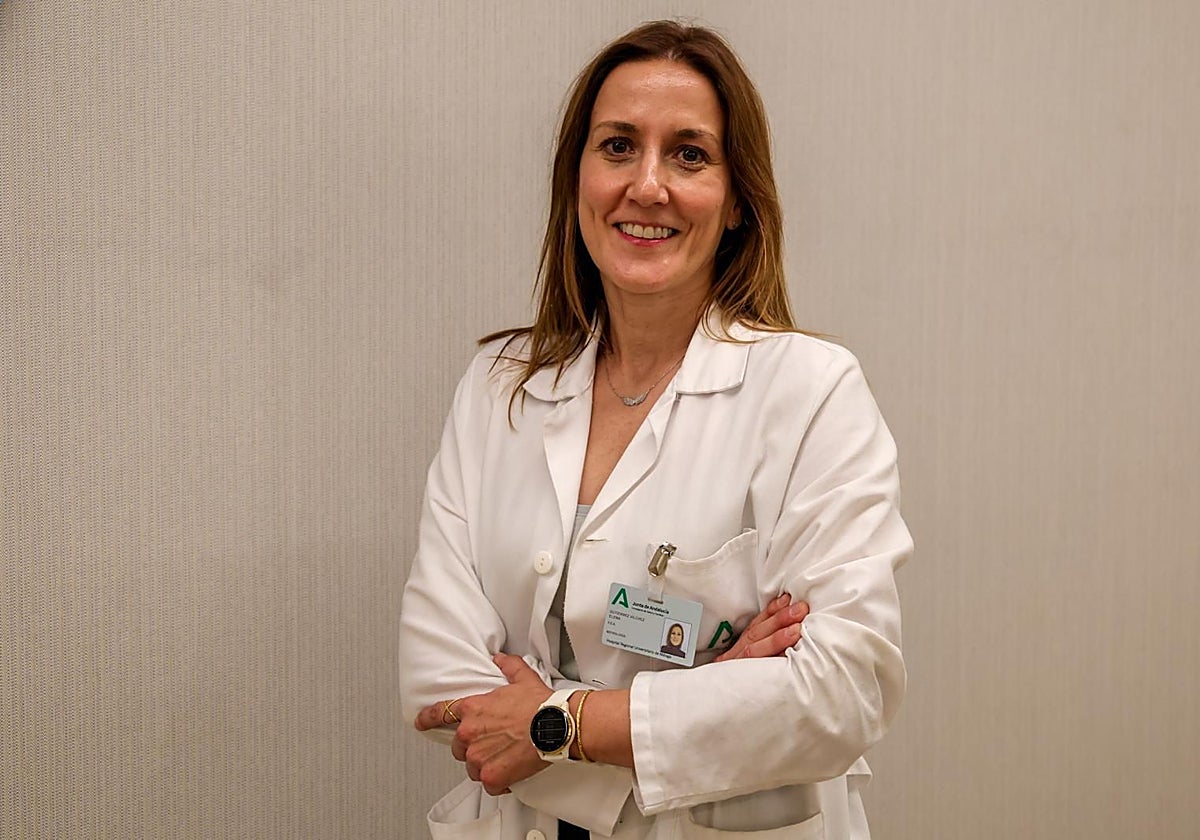
"30 years ago, a teenager talking about sadness was just that; now, it's interpreted as a mental disorder."


13/05/2026 at 00:06h.
This expert warns that the increase in mental health problems among adolescents reflects greater emotional distress and a society that is increasingly individualistic and dependent on social networks. Eva Rivas alerts that the pressure for success, loneliness, and the lack of face-to-face connections are behind the rise in anxiety, depression, self-harm, and eating disorders among young people, especially among adolescent girls.
—Youth has always been a tumultuous phase, but what is happening now that so many minors have mental health issues?
—There are several factors that explain the increase in demand for mental health services. One is the increase in emotional distress. We live in a society undergoing many changes that directly impact them. For the first time in many generations, the future outlook is worse than that of their parents. Access to housing is delayed, the job market is threatened by new technologies, and global warming is a constant concern.
Previously, it was thought that progress would solve problems, but this generation is experiencing a shift in that perception. This is reflected in the immediacy with which they want to live: they are focused on the present and do not project into the future. There is a certain hopelessness, and they feel they must live in the present because the future is uncertain.
—What role do social networks play?
—There is a very rapid and profound change in the way of communicating. Their communication is heavily mediated by digital platforms and social networks, where they feel obligated to display success, beauty, or an ideal image.
This prevents them from feeling supported in a vulnerability that is completely normal in adolescence. The current way of relating increases the feeling of loneliness: "I am the only one suffering this."
During the pandemic, the use of social networks increased significantly, and in the following two years, we saw more anxiety, depression, self-harm, and eating disorders, such as anorexia.
If young people primarily relate through images that promote ideals of beauty, success, and thinness, they constantly compare themselves to these references. The image becomes the means to achieve happiness.
Adolescents are the group that complains most about unwanted loneliness, even more than older people. You can have many contacts, but not have anyone to turn to when you really need it.
—In such a competitive society, what does it mean for a young person to show vulnerability?
—Society conveys the message that one must be successful and self-sufficient. Feeling bad is interpreted as an individual problem, when in reality it is something normal, especially in adolescence.
What has changed is the difficulty in accompanying each other. Forming a community and social bonds is essential for well-being, but now showing fragility can imply marginalization.
We live in an individualistic society where it is expected that each person solves their problems alone. Young people internalize this and, instead of seeking support, resort to behaviors such as self-harm or dietary restrictions.
—Is the family also failing?
—Communication channels with parents often break down during adolescence. Many parents tell us that their children become more isolated, locking themselves in their room and spending the day chatting.
A certain degree of isolation is normal, but if the relationship with peers is limited to the screen, what we mentioned earlier occurs. Moreover, the time adolescents spend with friends in person has decreased significantly.
In the increase in demand for mental health, there are two factors: on one hand, the real increase in distress; on the other, a change in the way it is interpreted. Now there is more talk about mental health, there is less stigma, and experiences are identified as anxiety or depression.
Thirty years ago, an adolescent spoke of sadness or conflicts; now it is interpreted as a mental disorder. This is not always positive, because not all distress is a disease.
We live in a society that promotes constant happiness. If one does not feel well, they believe something is wrong and turn to mental health services instead of relying on their natural support network.
—Are we facing the worst situation in child and adolescent mental health?
—Yes, there is a perception that it is a significant problem. Organizations like the WHO warn of a sustained increase over the last decade.
There is a part of real distress and another of interpretation. Factors such as immigration also influence. Young people living in countries where they have no roots, with little family support and possible experiences of discrimination, have a very high risk of mental health problems.
—What is the profile of the patients?
—In terms of numbers, we mainly see adolescent girls. Being a female in adolescence is a greater risk factor than being a male.
In childhood, there are more problems in boys, such as ADHD or conduct disorders, but from puberty onwards, girls predominate, who also express emotional problems more.
The most common are depressive symptoms, anxiety, stress, self-harm, and pathological eating behaviors.
—How does the type of family influence?
—If a young person does not have a supportive family, they are at greater risk. There can be neglect, loneliness, or lack of attention.
But this does not only occur in dysfunctional families. Many families, even functional ones, delegate to screens due to lack of time or work pressure.
Problems appear at all social levels, although they are more severe in contexts of greater stress, such as poverty, immigration, or lack of resources.
—Are cases being underestimated?
—There are many things that can be done. Increasing resources in mental health is necessary, but not sufficient.
Social policies are also needed: support for families, education, social services, and environments that promote community. Urban planning should promote meeting spaces: squares, parks, and neighborhoods where children can play and families interact.
Mental disorder has always existed, but how it is interpreted and where help is sought has changed. It is positive that there is less stigma, but there is also an excess of medicalization of everyday distress. Sometimes, what is needed is community, not professional intervention.
—Are professionals overwhelmed?
—Yes, absolutely. We ask for more resources, but even when they increase, they are still insufficient.
The demand has grown not only because of more distress, but because now it is interpreted as a disorder what was previously understood as part of life. In difficult times, what is needed is companionship, but now people turn directly to the professional.
- More topics
- Society
- Depression
- WHO
- Social Networks
- Mental Health

Latest news