Elena Gutiérrez: "Living donation is the best option for our kidney patients"
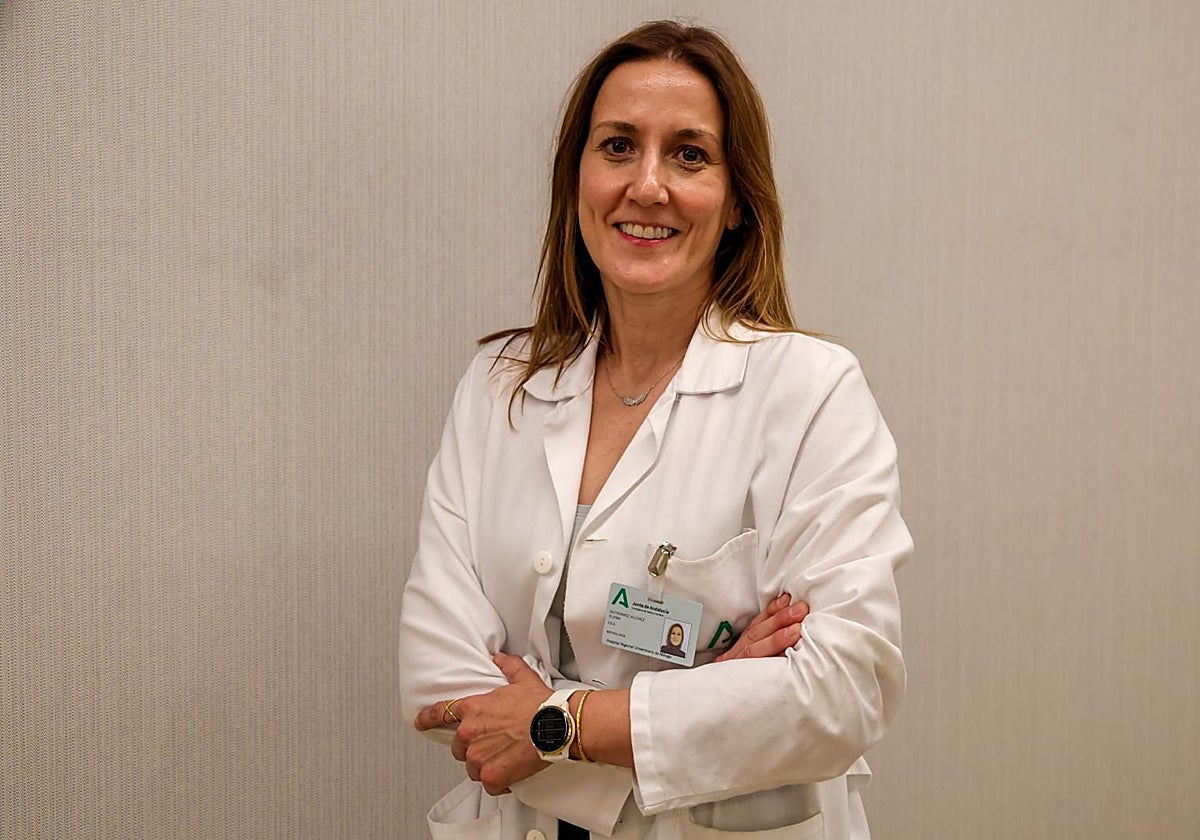

02/06/2026 at 00:09h.
-The Regional University Hospital leads Spain in the number of kidney transplants, which can be done with a living donor. However, this practice is declining, with 11 last year, nine less than in 2023. How do you evaluate these records?
-These are low figures. We are performing far fewer living donor transplants than we should. It is the treatment of choice for patients with chronic kidney disease and yet, it is an underused method. People think there is no need to promote this route because there are many deceased donors, but these donors are increasingly older and with more associated pathologies.
-What do you attribute this decline to?
-It must be considered that wanting to donate does not always mean being able to donate. Approximately more than 50% of donor-recipient pairs that start the study eventually do not proceed with the donation.
We conduct a very thorough medical examination and must ensure that the donor can continue leading a completely normal life. As soon as we detect the slightest risk to the donor, whether related to the surgery or potential future problems from having only one kidney, we are the ones who halt the process.
-What are the main advantages of living donation?
-It is the best therapeutic option. And it is because it is a scheduled surgery. This means that all risks are more controlled. An emergency surgery, performed under unforeseen circumstances, is not the same as a surgery organized in advance. Also, being scheduled, the recipient can start immunosuppressive treatment sooner, which reduces the risk of rejection.
Additionally, the results are better because the kidneys from living donors last longer than those from deceased donors. They are organs from completely healthy individuals and the ischemia time is minimal. There is a surgical team working with the donor and another in the adjoining operating room with the recipient. As soon as the kidney is removed, it is immediately implanted. There is also usually greater compatibility, especially when there is a family relationship, which further improves the results.
-But it must not be easy to make such a significant health decision...
-Many patients are afraid of subjecting a family member to surgical intervention. They think that donating a kidney poses a great risk, but we have to break down those barriers.
-What requirements must a donor meet?
-The first thing is to check that there is no absolute contraindication. Then we begin a complete study. Initially, blood compatibility is assessed, although nowadays this is not always a definitive impediment. In some cases, we can overcome this incompatibility through desensitization treatments of the recipient, something that is only possible because it is a scheduled surgery.
The recipient starts a specific treatment about a month before to receive an incompatible organ. The results of these transplants are comparable to those of compatible ones and, in any case, better than continuing on dialysis or receiving an organ from a deceased donor.
-What is the donor evaluation process like?
-The study is very thorough. Blood and urine tests are performed to check kidney function, imaging tests such as an abdominal CT scan with contrast to study the anatomy of the kidneys and arteries, and a complete assessment by anesthesiologists, cardiologists, pulmonologists, and urologists.
Donor surgery is performed by laparoscopy, a less invasive technique that reduces hospital stay and speeds up recovery. Additionally, psychologists also evaluate the donor. When the entire medical and psychological study is completed, the case goes through the Malaga Ethical Care Committee, made up of specialists outside the Nephrology service. Then, the donor goes to court accompanied by a nephrologist, a urologist, and the transplant coordinator to legally ratify their decision to donate.
"Our priority is to protect the donor and ensure that the decision is always free and voluntary"
-What psychological impact does it have on donors?
-Very positive. Most feel that they have done one of the most important and beautiful things in their life. They are giving life. Our priority is always to protect the donor and ensure that the decision is completely voluntary. Consent can be revoked at any time, even on the day of the surgery. Moreover, these donors not only benefit the direct recipient but also other patients on the deceased donor waiting list, because they free up an organ for someone else. The benefit is double.
-Is there a possibility in Málaga to donate a kidney to a stranger?
-Yes. There is the figure of the altruistic or 'good Samaritan' donor. These are people who wish to do good for society and can donate a kidney without knowing the recipient. They must also undergo a very thorough medical and psychological examination. Once approved, they enter the national cross-donation program of the National Transplant Organization, where numerous Spanish hospitals participate along with Portugal and Italy. In this program, crosses between incompatible pairs are performed. Sometimes, a single altruistic donor has enabled chains of several transplants.
-What is the surgical procedure like for the donor?
-In approximately 90% of cases, we use the left kidney because the renal vein is longer and facilitates the implant in the recipient. The extraction is performed by laparoscopy, making it a less invasive surgery, with fewer days of admission and a faster recovery.
The hospital stay is usually three or four days and full recovery takes several weeks.
-And with so many days off, do they have any specific labor protection?
-Yes. A specific leave for living donation has been approved. It is not considered a temporary disability due to illness and allows receiving 100% of the salary without the need for a minimum contribution period. This is an important measure because many donors are the main economic support for their families and could not afford to be off work for several weeks.
- More topics
- Transplants
- Regional Hospital of Málaga
- Málaga

Latest news



Upcoming events
17
Sep
La Pequeña Cuba Gastro-Cultural Festival in San Pedro Alcántara 2026
18
Sep
World Wellness Weekend Marbella 2026
18
Sep
Candlelight: Queen vs. ABBA in Málaga
18
Sep
Candlelight: Coldplay and Imagine Dragons in Málaga
18
Sep
3 de Corazones – Pancho Céspedes, Enrique Ramil and José Luis Jaén in Málaga
Similar News