"Internet promised freedom and has become the greatest mechanism of control imaginable"


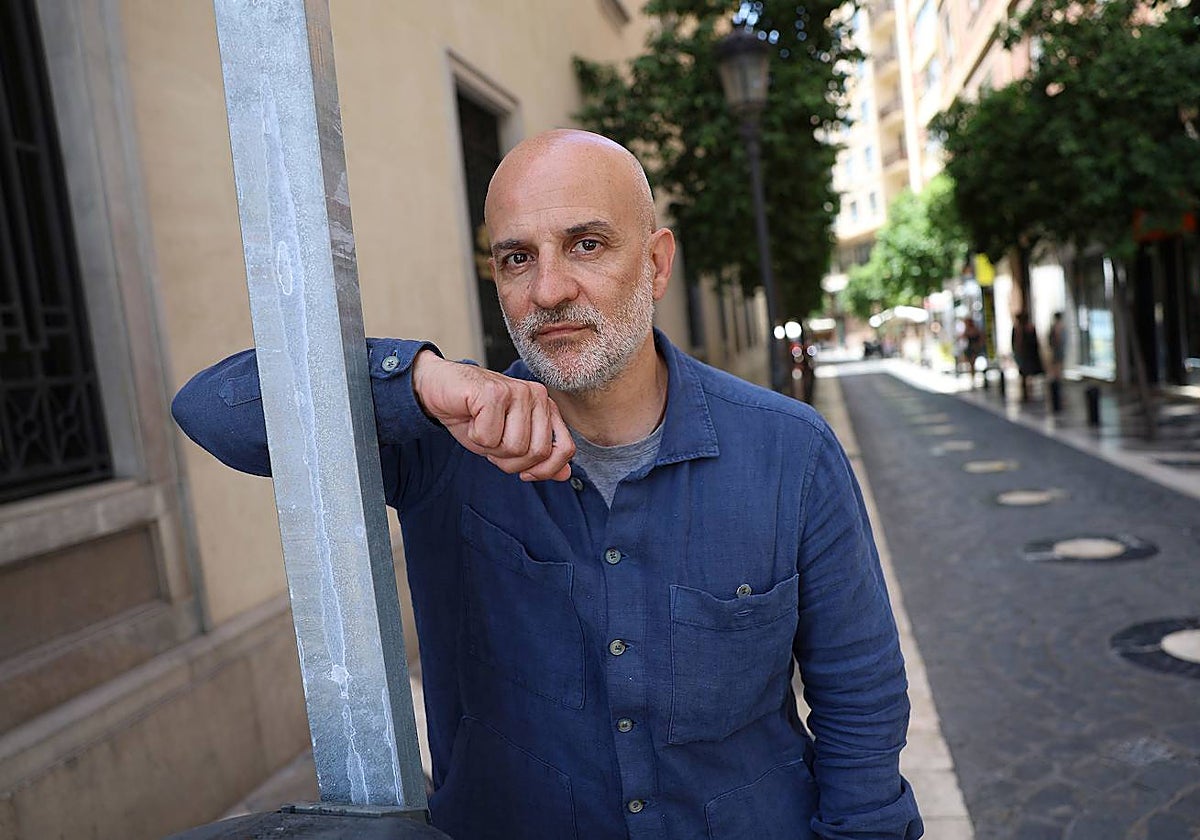
9 May 2026 at 00:01. Thirty years after publishing “Trainspotting”, the novel that captured the disillusionment and excesses of an entire generation, Irvine Welsh continues to observe the world … with the same blend of cynicism, anger and fascination. The Scottish writer is visiting the Málaga Book Fair to present his new novel, “The Long Knives”, a dark tale steeped in masculinity, precariousness and self-destructive choices. The conversation, however, drifts towards Brexit, British decline, new addictions and a ‘post-cultural’ society dominated by algorithms and billionaires, against whom he lashes out with the same rebellious spirit he had in his twenties, still intact now that he is approaching seventy. Welsh also does not hold back in his criticism of the UK’s political direction or of Donald Trump.
–I believe this is your first time in Málaga. Are you enjoying the city?
–Yes. You know what? I went for a short walk today and found it very interesting. This afternoon I want to go to the beach and have a bit more of a stroll.
–Your latest novel is quite dark. What was the final impetus for writing it?
–I was thinking a lot about all those debates in England about toxic masculinity and how young men no longer read, no longer take an interest in culture, become radicalised, turn racist, hate women and all that. And I wanted to go back to that moment in life, which I think usually happens in your early twenties, when men start to take a serious interest in romance for the first time. When you’re a child, your parents and family are the most important thing in your life. Then, when you’re a teenager, your friends become the most important thing. And then comes that moment, in your early twenties, when you start thinking seriously about love and your girlfriend or partner takes that place.
–Why are you so interested in that age?
–I’m fascinated by the fact that you have to make all the big decisions when you’re still practically a kid. Huge decisions: are we going to be together? Are we going to live together? Are we going to get married? Are we going to have children? How many? Are we going to focus on a career? Will one of us have a career and the other won’t? Do we stay close to our family or move to another city or country in search of opportunities? All those massive decisions happen when you’re in your early twenties and you don’t even know what day of the week it is because you’ve just come out of a bar, a party or a club.
“People vote for things that make them poorer. That’s always fascinated me.”
–Are you worried that rebellion has become more of a pose for social media, a facade, than a genuine attitude?
–I don’t think too much about those things. I’m not too involved in politics because, honestly, all the parties are more or less the same. None of them are going to actually give back to the community the resources or power they’ve taken away. And anyone who tries to do so ends up completely marginalised and destroyed. So we keep playing the same frustrating game over and over again. And I’m not particularly keen on being part of that.
–What, then, are you interested in exploring as a writer?
–I’m very interested in the way people act against their own interests. That fascinates me. People take drugs that kill them. They vote for political parties that are going to make them poorer. They vote for things like Brexit even though they know it’s going to harm them. I’m interested in understanding the origins of that mechanism, both individually and collectively. It’s always fascinated me. And that’s really what my writing is about. Exploring why people do things that are bad for them, things that ruin their future, and yet they feel a desperate need to do them.
–I wanted to ask you whether understanding evil can become a way of justifying it.
–I’m not sure I fully understand the question.
–I’m referring to the difference between understanding something and justifying it, to the moral ambiguity of your characters.
–As a novelist, as a writer of fiction, I’m not in a position to justify things, nor to condemn them. What I want to do is observe how people behave and what the consequences of that are for themselves, for their families, for their friends and for the community in which they live. That’s what interests me. If you think of something like Brexit, for example, people voted for something that was going to make them, their families and their communities poorer, and yet they voted for it. My job isn’t to condemn them or to justify them. My job is to try to understand what mechanisms led them to make that decision. People take dangerous drugs, lead hedonistic and self-destructive lifestyles, put their health at risk… And I’m interested in understanding why that happens.
–And why does it happen?
–I think it often stems from a need for drama. If people lead boring, rigid, completely regimented lives, they feel the need to break free from that in some way, even if it’s in a destructive, pointless or stupid way.
‘The new digital addictions are far more dangerous than heroin’
–This year marks the thirtieth anniversary of ‘Trainspotting’. What do you still understand about those characters, and what aspects do you no longer relate to?
–I actually relate to all of them. You have to identify with them to be able to write them. They’re all very recognisable archetypes: the cynical intellectual, the compulsive one, the womaniser, the violent, impulsive madman, the kind-hearted loser who tries to do the right thing but always fails… And I think we all have a bit of those characters inside us. That doesn’t mean we’re Begbie or Sick Boy or Renton, but we do have enough of their traits in us to recognise ourselves. That’s what interests me: you can go a long way with those characters because they represent very recognisable human traits.
–Does it bother you that many people have turned ‘Trainspotting’ into something cool, overlooking the desperation of its characters?
–Not entirely. It’s something that happens with any work that becomes a success. It ends up as a meme, a parody or a cultural icon. I don’t feel any particular emotional connection to that. If someone does a parody of my work or of *American Psycho* on television, I feel exactly the same. I don’t take it as either a positive or a negative thing.
–In your books, you talk a lot about heroin and drugs. How do you view new addictions, such as screens, chemsex or algorithms?
–I think they’re far more dangerous than heroin because they affect everyone and because we can’t escape them.
We have built our own prisons. The internet promised freedom, but it has become the greatest mechanism of control imaginable because it is in the hands of very few people. It is controlled by large tech corporations that serve their own interests rather than the interests of the community. We have to find a way to reclaim the internet. We are in a very sad place because the internet tells us what to do. Algorithms and artificial intelligence offer us reduced versions of ourselves. We live in a post-culture society. Language is no longer about expression or art but about instructions. And I think we need to seriously rethink what we are doing because right now technology is controlling us.
“The billionaires have managed to get many people to support exactly those who are destroying their lives”
–You are concerned about precariousness and poverty, but it also seems that people are becoming increasingly distracted.
–Exactly. The big problem is distraction. The world’s resources and the resources of its citizens are being absorbed by the system and concentrated in the hands of a few. Meanwhile, most people waste their lives staring at screens, making Zoom calls and jumping from one stimulus to another. It is a dystopian society and we have to stop this. We have to distribute resources more equitably. The two things that have been destroyed by technology and corporate capitalism are free enterprise and social democracy, which were the foundations of post-war civilisation.
–And what is the way out?
–We need to return to a society where people can set up small businesses, thrive and feel useful. And we also need a welfare state that looks after people, educates them and empowers them. Because right now we are becoming uneducated through the internet. We’ve become a sort of dopamine junkies, jumping from one stimulus to the next, consuming fragments of decontextualised information that mean nothing. Everything ends up reduced to slogans. We live in a post-truth society. In England, for example, the only significant Jewish leader I can recall in a major political party ended up being accused of anti-Semitism. What sort of world is that? It’s completely absurd.
–Are you surprised that we still have a public health service in Spain?
–Well, yes and no. I’m a bit surprised, but I shouldn’t really be, because that used to be the norm across much of Western Europe. It existed in the UK too, and has gradually been whittled down to a bare minimum. In the US, it practically doesn’t exist at all. Europe is still trying to uphold certain values of a civilised society, and I hope it has luck because the UK is moving completely away from that. And it’s not just about money or the economy. It’s about losing an entire social structure that has been part of British culture since the Beveridge Report and the post-war consensus: the idea of looking after the working class that rebuilt the country.
–How are you experiencing this drift in England?
–Right now we’re in a terrible situation in England. And you almost have to feel a kind of perverse admiration for the billionaires who control the press and propaganda, because they’ve managed to get many people to support exactly those who are destroying their lives. You’ve got parties full of billionaires openly saying: ‘We’re going to take your money away, we’re going to destroy the NHS, but vote for us because there are refugees arriving in small boats’. And it works. It’s absolute madness. But it didn’t happen overnight. We’ve been subjected to that propaganda for nearly fifty years. It was already there when I was a child, but back then there were still strong trade unions, a more robust social democracy, an educated working class capable of putting what was happening into context. And that’s been lost.
–Do you sense a certain subservience among European leaders towards Donald Trump?
–Yes. And I think it’s a mistake. You can’t appease someone like that. You have to tell him to fuck off. History has already taught us what happens when you try to appease tyrants and give them legitimacy.
“When you see people walking around with their mobile phones glued to their faces, you think: is this really progress?”
–And what about your own gentrification? Because we’re talking about all this in a five-star hotel. What does Irvine Welsh do today that his twenty-year-old self would never have accepted?
–Probably enjoying a hotel as lovely as this one, yes. My younger self would look at me and say: ‘Keep your feet on the ground.’ He’d probably be in a bar looking for drugs or a party. But, actually, I still do a lot of the same things. I still go drinking in the same bars, I still have the same friends in Edinburgh and London. I still go to parties and clubs. I don’t take as many drugs or drink as much as I used to, of course, but a lot of things are still the same.
–And what have you learnt from privilege and success?
–Not much, to be honest. I lead a more comfortable and organised life, but mainly thanks to my wife. She organises everything and makes our home nice and cosy. If it were up to me, I’d probably still be living exactly the same as before. I don’t pay much attention to those things. I think that when you share your life with someone, your standards change because the other person is usually better than you at that sort of thing.
–If you had to rewrite the famous ‘Choose life’ today, what would it sound like?
–I’d say something like: ‘Choose life. Choose to try and clean yourself up. Choose to buy a vacuum cleaner. Choose a wife to sit in front of the telly with. Choose children who drive you a bit mad’... But I probably wouldn’t choose mobile phones. It’s funny because you see pictures from the fifties, sixties or seventies and everyone was smoking constantly. And now we walk down the street with these gadgets glued to our faces all the time (he points to a mobile phone). And you think: ‘Is this really progress?’ Because it seems a bit mad too

Latest news