"That the risk of hantavirus is low does not mean that it should be minimized"


07/05/2026 Updated 08/05/2026 - 00:13h.
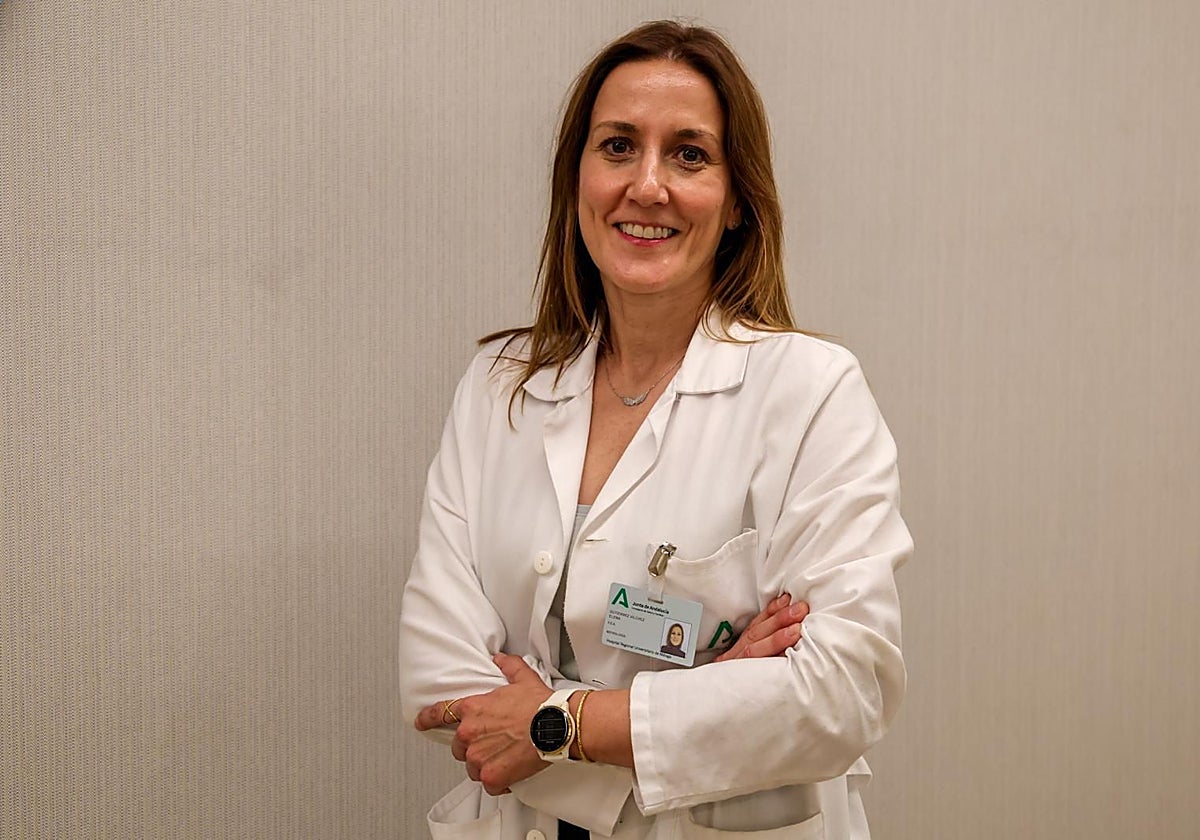
Biologist Ana María Ortega Prieto is the co-researcher in charge of the 'Immune Response to Viral Infections' group at the Biomedical Research Institute of Málaga (IBIMA Bionand Platform). Her research focuses on human viral infections, especially hepatitis B and C, HIV, and coronavirus, as well as the study of the innate immune response.
Also a doctor in Molecular Biosciences, one of the most authoritative voices in the field, she remembers that "this is not a new or unknown virus, as cases and outbreaks associated with hantavirus have been known for decades in different parts of the world" and highlights that the great media and public impact of the outbreak is due to Spain's direct involvement in health management and the "greater social and media sensitivity to any infectious outbreak" that exists after the coronavirus pandemic.
—What exactly is hantavirus and how does it spread?
—Hantavirus is not a single virus, but a group of viruses that primarily use rodents as reservoirs. Typically, people get infected by inhaling particles contaminated with rodent urine, feces, or saliva, for example, when cleaning closed spaces where mice have been. However, in this specific outbreak, there is talk of the Andes virus, a type of hantavirus that can also be transmitted between people, although this is rare and usually requires close and prolonged contact.
—What health consequences can it have and what symptoms should alert the population?
—Hantaviruses can cause severe diseases and death in humans. In the case of the Andes virus, it can cause what is known as hantavirus cardiopulmonary syndrome. Initially, it may seem like a flu infection, presenting with fever, muscle pain, fatigue, and abdominal discomfort. However, it can rapidly worsen within a few days and lead to severe, even fatal conditions.
"The Andes virus can be transmitted between people, although this is rare and usually requires close and prolonged contact"
—In the case of the cruise ship, how can an infection occur in an apparently controlled environment?
—It's true that a cruise ship is a very controlled space. However, it is also a closed space where many people live together for days or weeks, sharing cabins, dining rooms, and other common areas. On a cruise ship like this, there may be several hypotheses. The first is that someone might have been infected before boarding or during a stop in an area where the virus circulates, through contact with rodents or environments contaminated by their droppings. Then, since it's the Andes virus, there could have been some transmission between people in conditions of very close and prolonged cohabitation, such as cabins or shared spaces. Another possibility is the presence of infected rodents on the ship.
—If the ship arrives in Tenerife, what kind of health and logistical operation is usually activated for disembarking and managing potential cases?
—The expectation would be to perform diagnostic tests along with a medical assessment of the people on board to identify suspected cases and close contacts. Those with symptoms or suspected of infection would be isolated, either on the ship or in a hospital if required. Close contacts might be quarantined or under active surveillance during the incubation period. For the rest of the passengers, measures would depend on their level of exposure and what the health authorities dictate.
—Is there a real risk to the population in Spain or are we looking at a very localized episode?
—For the general population in Spain, the risk is low, as this is a very localized episode and probably due to exposure in an area where the virus naturally circulates. However, the fact that the risk is low does not mean it should be minimized. It's a virus that can cause severe disease and, in the case of the Andes virus, can be transmitted between people. Therefore, it is important to maintain close surveillance to cut any possible chain of transmission.
"It is important to maintain close surveillance to cut any possible chain of transmission"
—After the experience with COVID, many fear another health crisis: could hantavirus cause a pandemic or should we see it in another context?
—It's important to see it in another context. COVID-19 was caused by a new respiratory virus, with very efficient transmission between people through respiratory routes. In contrast, the Andes virus was identified decades ago, is a known virus, and does not transmit as easily. There can be person-to-person transmission in some cases, but it usually requires close and prolonged contact. Therefore, with what we currently know, it does not have the same pandemic potential as other respiratory viruses. Having said that, it's important to keep in mind that there is no zero risk, as viruses are continuously evolving, which is why maintaining good epidemiological and virological surveillance is crucial, especially when dealing with viruses that can cause severe disease.
—What can a person do in their daily life to reduce the risk of contagion, even though it is a rare virus?
—In Spain, the risk in everyday life is very low but there are simple measures that can further reduce it. The most important is to avoid direct contact with rodents, their nests, or their droppings, especially when cleaning closed spaces that have been unused for a long time. In such cases, it is advisable to ventilate well before entering or cleaning. Another general hygiene recommendation, although not specific just for hantavirus, is to avoid drinking directly from cans or containers that may have been stored in unhygienic places or with the presence of animals.
- More topics
- Hantavirus

Latest news