"We are operating on younger and younger patients with obesity"


07/05/2026 at 00:01h.
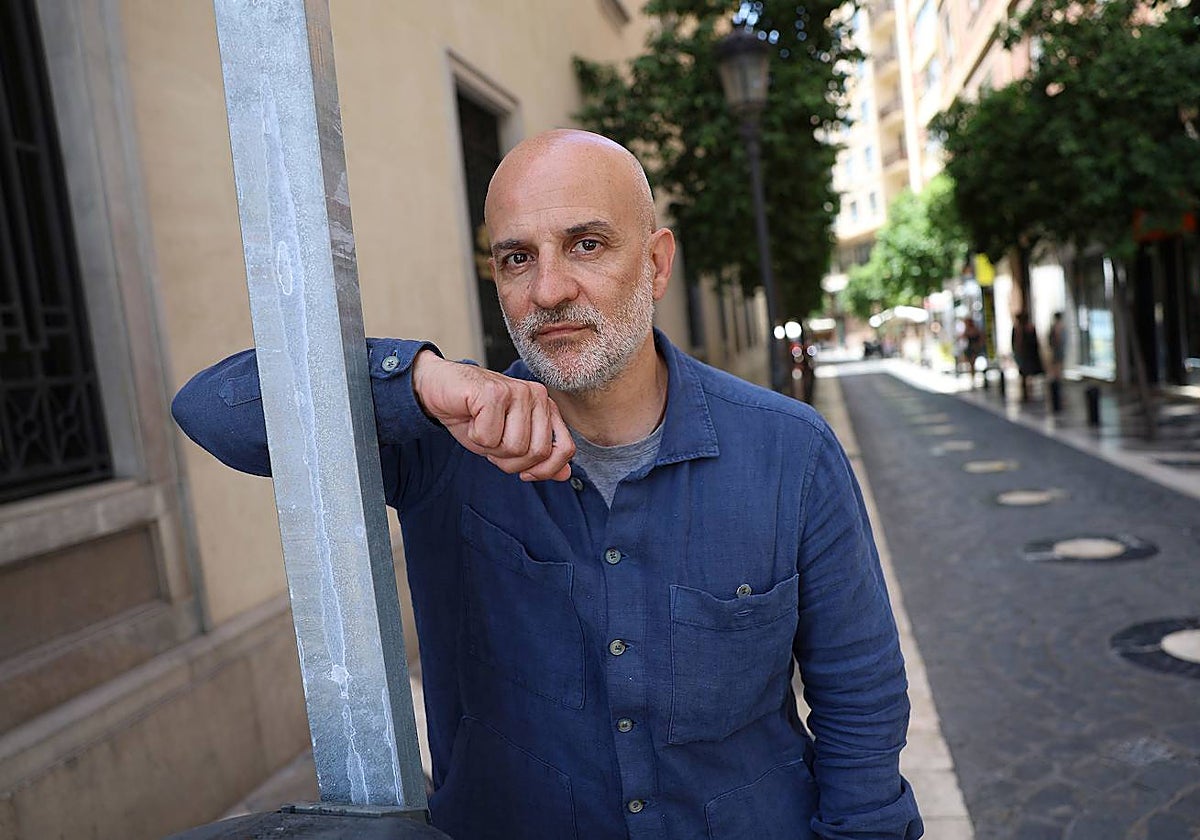
Dr. Luis Ocaña is the coordinator of the Endocrine, Bariatric, and Sarcoma Surgery Unit at the University Clinical Hospital Virgen de la Victoria. He has chaired the organizing committee of the XIV Congress of the European Section of the International Federation of Surgery and Other Therapies for Obesity (IFSO-EC 2026), which is being held in Málaga from Wednesday to Friday. In this interview, he discusses the reality of the pathology and is emphatic: "We are facing a disease full of stigma; we must accept that it is a chronic pathology."
—Bariatric surgery has long been seen as a last resort. Now, with GLP-1 analog drugs (Ozempic, Wegovy, Mounjaro, among others), what is the role of bariatric surgery?
—For the past two or three years, very good drugs have been appearing: they achieve weight loss approaching the standards of bariatric surgery. This should not be a confrontation. We are complementary. I now see cardiologists, endocrinologists, pulmonologists talking about how patients with these drugs cure other diseases, besides losing weight. And it reminds me of surgeons 20 years ago when we started talking about metabolic surgery and we said: "Hey, our patient no longer has diabetes, no longer has hypertension." What will be the problem? Surgery is a definitive treatment. Medication is not. Medication depends on continued treatment. It is true that the patient must learn sufficiently new healthy habits, dietary and physical activity, to not be so dependent on it.
—What benefits has robotic surgery brought?
—It is, undoubtedly, not just the future, but the present: it is safer, has fewer complications, shorter average stays, less pain. Availability is still not implemented as we would like in all hospitals or units, but progress is being made in that direction.
"Robotic surgery is not just the future, but the present: it is safer, has fewer complications, shorter average stays, less pain"
—Childhood and adolescent obesity is a significant problem in Andalusia. Are you seeing increasingly younger patients in the operating room?
—Without a doubt. This is our pending subject: primary care and prevention. We are basically dedicated to secondary prevention, which is to make as early a diagnosis as possible, and also to tertiary prevention, which is to perform the best surgical treatment, but we lack primary prevention, which is also the most expensive and involves society and, above all, politicians the most. Campaigns must be run from the very beginning that encompass all of this, because patients are increasingly younger. We go to schools and see that children are increasingly obese. There is a very curious example: liver disease. The liver takes a long time to show symptoms and fail, sometimes 20, 30 years. But what happens? If we start with severe obesity at 10 years old, when the patient is 40, 50 years old, a liver transplant is already necessary due to fat and metabolic liver disease from obesity. There will not be enough livers for everyone.
Real life
—After this intervention comes real life. How do you ensure that the patient does not regain weight in four or five years?
—We don't look for culprits, we aim to work jointly with the patient, but it is undeniable that the patient has to be the main actor throughout the process; commitment is very important. We cannot forget that this disease is so complex that it comes from many causes and to think that the patient has caused it is to not understand anything about a pathology that is very serious and conditioning: it is known that on average they live 10 years less than the rest of the population if they do not undergo surgery or put some solution to their extreme obesity. Of course, the life that appears afterward is a different one, they have to be prepared. I can tell you anecdotally that there have been patients who have come to see me after having lost 80 or 100 kilos, telling me that I have ruined their lives. They don't like their bodies, they don't go to the beach, they don't have family gatherings, they don't meet with their friends because they used to meet to eat and they no longer call them, but you also have to be prepared for all these work, life, relationship, couple, sexual aspects, related to sports, dressing, economic aspects, life is totally different. But, on the other hand, they stop taking medication for diabetes, they will only take one drug for hypertension instead of three. Some stop using the machine to sleep and many return to sports in a really efficient way."
"There have been patients who have come to see me after having lost 80 or 100 kilos to tell me that I have ruined their lives"
—What percentage of weight loss is achieved with this surgery?
We start talking about success in bariatric surgery when the patient loses more than 60% of the excess weight, not the total weight. Almost all bariatric techniques achieve this, at least for the first two years. That's where we reach the goal we have set. Then come the more difficult years, which is to maintain it. There the team has to be very attentive. I think that the bariatric patient should be followed for life.
Image of Luis Ocaña, specialist surgeon in bariatric surgery. (MARILÚ BÁEZ)—There is an ethical debate about whether surgery should be performed earlier, when the patient still does not have serious damage...
—My personal opinion is that we should not wait for them to have associated diseases to start some therapies in them, even surgery. We cannot wait for the patient to be so overweight that they become diabetic at only 30 years old.
- More topics
- Obesity
- Diabetes
- Hospital Clínico de Málaga
- Málaga
- Robotics

Latest news