


The writer doctor from Marbella
Unicaja Prize for Journalistic Articles. For 31 years, he ran the clinic in the neighboring town of Monda, where he organizes the flamenco festival, just like in Istán. Tourism in Marbella and the Nazis.
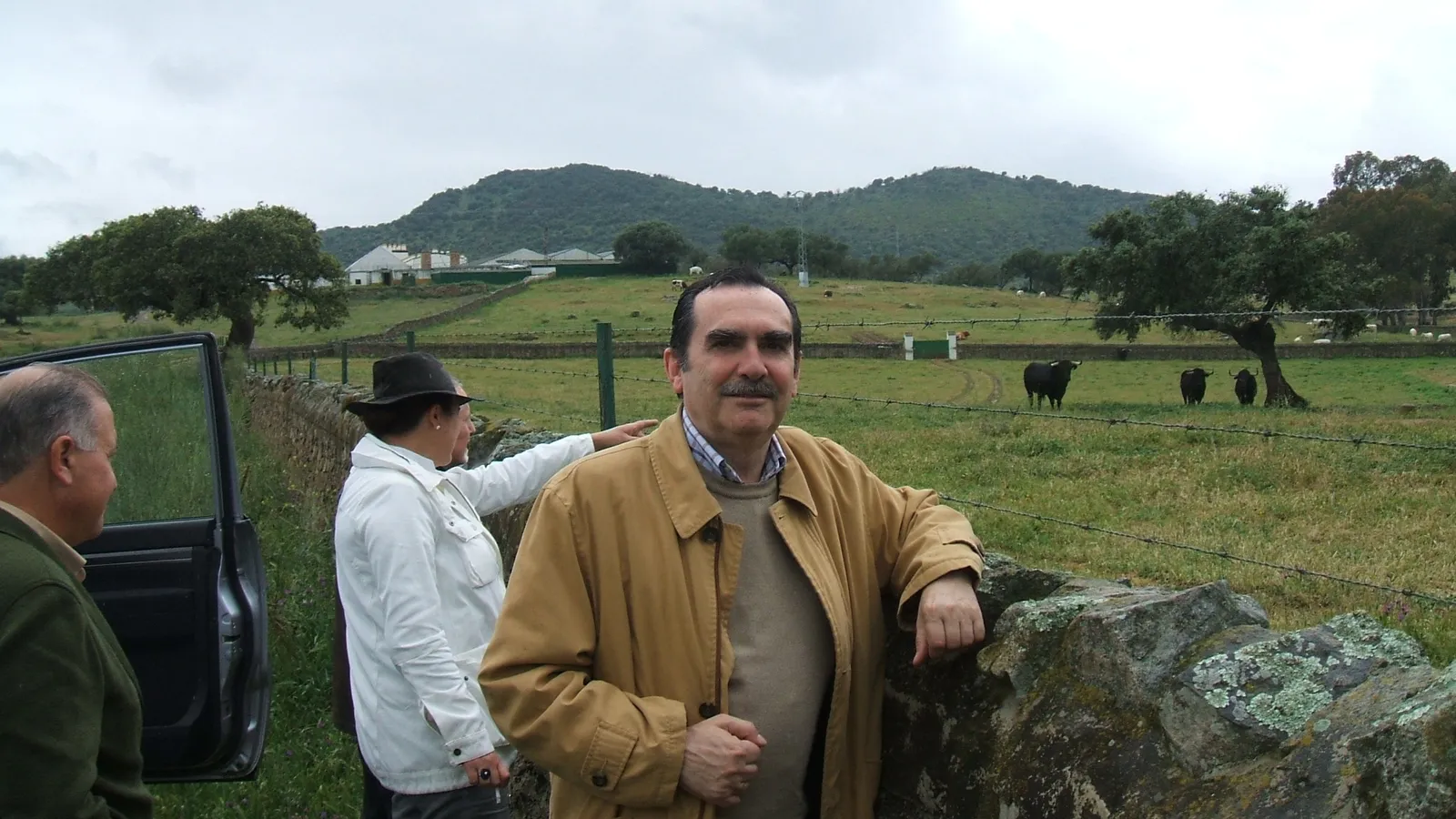

There was no schedule. People took the liberty to drop by whenever they wanted. There was an unwritten rule, at quarter past ten I was in the office. From Monda, I was captivated by the independence and freedom. I never did on-call shifts. In the office, it was just the nurse and me. By twelve, patients would start arriving. One day because of a soap opera, another due to the market. I had freedom, and in return, I provided quality in the doctor-patient relationship. I am very straightforward, but in medical matters, I am very orthodox. I wanted to practice top-level medicine, like at Carlos Haya hospital, says Juan Macías, a retired doctor, writer, lover of flamenco, bullfighting, and theater.
What I liked most were the house calls. That independence and freedom. The office involved a lot of bureaucracy, which horrified me, and the pressure of knowing when it started but not when it would end. If they didn't call me for medical visits, I would go myself. I loved walking through the streets, meeting one person or another, reaching the homes of the elderly or disabled, sitting on their beds and chatting. They came to see me for everything and for advice of all kinds, some still call me. I could see fifty to ninety patients a day, some repeated visits the next day and the day after. I got quite skilled at handling that, at one I would have a little drink and in the afternoon I would return to Marbella. Monda is a very particular town, with very sharp people, with whom I maintain a love story, when I go I get a bath of hugs and kisses. I still remember the name and both surnames of each one, even the social security number of eighty percent of the 2,500 inhabitants I have attended.
In Canillas de Aceituno, the first town where I worked as a doctor, I lived the most media-covered episode. It was the festivity of the Virgen del Pilar, I was 24 years old and had gone to the disco, where I met a girl from the town with whom I danced all night. After accompanying her, in the early morning, around three or four, I was notified that I had to attend to a seriously injured person. I found myself in the office with a guy who had cuts on his arm down to the bone. He had come to the town to see his girl, I don't know what had happened to him, only that the doctor who was going to treat him was the one who had been dancing with her. I gave him a tremendous stitch-up. The same director of the Diario Costa del Sol, Agustín Lomeña, came to interview me and headlined across the page: “The young doctor saves a man's arm.”
In Marbella, where I had a private practice, it was peaceful. Modest people also came, which I loved, like the employees of the Town Hall. Sometimes Adnan Khashoggi or Henri Roussel would drop in, the pharmacist who also owned the La Zagaleta estate. I saw José María Íñigo, who came with his child, and the Argentine humorist Joe Rigoli, who took more care of the child than his father. At Clínica Marbella, which at that time did not have a very good reputation, I treated the digestive system, with doctors Sánchez Cantos and Cabello we formed a good team and managed it well.
I have been going to the bullfights with my father since I was ten years old. Back then the bulls were wilder, today you can die of disappointment. The bulls now are educated, like from a private school, very docile. An article led me to a gala dinner of ABC, with aristocrats, people of power, and writers. And I asked, why me? “The article that pleased the jury is yours, but it did not meet the objective of the prize: the defense of bullfighting,” they told me. I am contradictory, I really like bullfights, but they have become somewhat tedious to me, everything is very mechanical. I understand the suffering of the bull, I can't get used to it. I understand that many people cannot stand it, as long as it is a sincere feeling. It seems reasonable to be anti-bullfighting. I don't know if the anti-bullfighter feels the suffering of the bull or if it's an ideological stance. Raising a bull costs money, the spectacle is very expensive, a bullfight has too many expenses. The future of bullfighting is very bleak. In a school, you ask students about bullfights and it sounds foreign to them.
The audience at the barrier is not the same as those in the boxes. If it were up to these, the bullfighters would never cut an ear, they don't shout. Everything comes from the sun stands, I compare it to the dialogues of the movie Rebecca. The first is the wicked aristocrat, then she meets the poor young girl who gives her love. The lower area is warmer than the upper one.
Flamenco on the radio and on Cadillac vinyls was daily, at twelve or thirteen years old I was horrified to listen to Juanito Valderrama. Until one day, at the bar counter with my father, I heard a song, a voice with passion. I like that, I said to myself. It could be Antonio Mairena singing bulerías and then I got into it, little by little. In Granada, I encountered a student environment of flamenco. In the main hall, they brought El Borrico de Jerez, it was the resurrection of the gypsy flamenco, which until then had been in the catacombs, that flamenco hooked me deeply. When I finished my degree, my brother asked me, what gift did I want. Meeting Antonio Mairena at the festival of his town (Mairena del Alcor, Seville). I met him, I started writing flamenco articles with Gonzalo Rojo. I struck up a friendship with the Mairena family, the most genuine. I met Chano Lobato, I got fully into flamenco, even in parties. I had a radio program in Málaga, Cuarto de los cabales, I went three nights a week, after finishing work until nine or ten. I did it for a year, I couldn't do it anymore.
Gypsy singing is one thing and flamenco is another. Flamenco is sung by non-gypsies, gypsies can also sing it, those are prettier, more melodious, musical songs, like malagueñas, fandango, or taranto. Gypsy singing, like the toná, martinete, seguiriya, soleá, tango, bulerías with its rhythm, can be sung by non-gypsies perfectly, but something will always be missing. What has nourished flamenco has been misery, illiteracy, marginalization, that is the breeding ground for flamenco that is worth it, that says something to me. The broken singing, not the pretty singing. The singing reflects a veiled protest, because in the years they were forged they couldn't protest much. The gypsies of the past lived it. Fortunately, that situation has changed. For the singing it was worse, I struggle to compose a poster that I like. The gypsy of today, fortunately, lives integrated.
The attractive aspect that flamenco has for an intellectual and anyone with sensitivity must be given up for lost. The way out for flamenco singing is to repeat that in a refined tone, because a singer today is a bank employee, normal and ordinary. How do you put in the mouths of these singers lyrics like: They should stab you badly; There are gunshots in this street, or They should cut off the little bell and the tongue. Not all are that tragic, but they have come from where they have come, you put them in the mouth of a boy today or you put others; that is no longer flamenco, it is something else.
The mayors asked me to organize the flamenco festivals, the one in Istán has been going for 30 years and the one in Monda for a decade. I knew the artists from before, I called them personally, I saved the intermediary. Thus I have been able to bring Antonio Mairena, Terremoto father, Agujeta, Juan Talega, El Borrico, Manolito de María or el Chino. Cancanilla de Marbella is a friend of mine, very good, he has lived in Madrid, working in tablaos relatively well, accompanying the dance as Chano Lobato did. Cancanilla deserves a street, a bust, he is a very reliable singer, a gypsy from here.
The father of Manolo Sanlúcar, Isidro, was like a grandfather to me, I had a great time with him. One day he told me: “I like being with you, in the living room, I'm going to get the best guitar I have and you're going to sing me rhythm singing until I get tired”. I was singing for an hour, and he was thrilled. He had played with La niña de los Peines, did some tour and left it for his bakery. He taught everything to his son.
At 20 years old I was sending articles to newspapers and from there I didn't stop. At first it would be a bit pompous, typical of a novice. I wrote in newspapers and in Fenebús, the bus company magazine, I did it about trips, they paid for the hotels, each month I wrote an article. I won the XXIV Unicaja Prize for Journalistic Articles José María Pemán, for A Tear for Miguel Mihura. Now I am going to publish Fresa blanca, a novel, somewhat autobiographical, about love from different classes, until I believe I achieve true love. I don't quite see myself writing a novel, this is the second one.
“Everyone who goes to a medical consultation is afflicted. (...) He suspects that the patients are both: the one who wants to correct his ailments and the one who listens to them, to avoid or alleviate them,” wrote Manuel Alcántara in the prologue of The Cynical Eye, by Macías.
It is a satire of society, based on what happened there. I remember a lady who went to the office and asked me for sick leave. I asked her if she was working. “I'm on the PER and it's so they don't call me”. I gave her the leave, the woman came to pick it up and brought me some little eggs from her chickens. “For your children,” she told me. Until she found some solution so they wouldn't call her and she didn't bring more eggs. They brought me the most unexpected things, like a skinned and prepared goat or a live goat. They also gave me gold things, everything, and almost daily.
Now I have 2,300 articles on Facebook, I started just before covid. It doesn't give much prestige, that doesn't bother me, because I have it. It's like football teams that play on a small field, with the audience on top, who notice the noise of the spectators. I have an audience, I answer everyone, the “likes” are repeated a lot. Then there are those who don't like and possibly are the most interesting. A former technician of the Don Pepe, tells me that I have about three thousand. I'm not worried, I write for myself.
The old gypsies had a very aristocratic instinct in dressing. I remember Manolito, the gypsy from Istán was slender, skinny, with an aquiline nose and piercing eyes. Even scary. He fixed wicker chairs or worked with tin when there were tin pots. A miserable life, living off stories or wherever he could. At the Istán fair he set up four packets of tobacco. We went to the fair, we had, not a booth, but a low place where we gathered, sang, and danced. Manolito was passionate. I gave him a brown suit and he came with it. With that suit he was buried. Always with the jacket, his sash, the elegance. Antonio Mairena, had a very ornate jacket, with a handkerchief, with jewels. He stayed at home for fifteen days and it was something to see, with those brand shirts, maybe bordering on tacky. The gypsy has tremendous grandeur and a lot of pride. There is a gypsy couplet that said: I carry the blood of kings in the palm of my hand. Although the kings treated them regularly. They are elegant, in dance. That aristocratic popular mix; the bourgeoisie on the other hand is the practical, the prosaic. Marbella for me is a prosaic city, without any lyrical element. It lives off the four little streets of the town and the shine.

Latest news




Similar News
Kristina Szekely, the First Multilingual Real Estate Agent in Marbella
Marbella

Lope de España, the butler who served the jet set of Marbella
Marbella
Félix Martín, the Chef Who Went from Unionist to Entrepreneur in Puerto Banús
Marbella
