


Félix Martín, the Chef Who Went from Unionist to Entrepreneur in Puerto Banús
He sculpted figures in margarine, former councilor for Tourism, wrote three books on pigeons, a hobby he discovered at his grandparents' house, who were the chauffeur and the maid for the Álvarez Quintero. Fabí González: biologist, musician, and school principal in Marbella
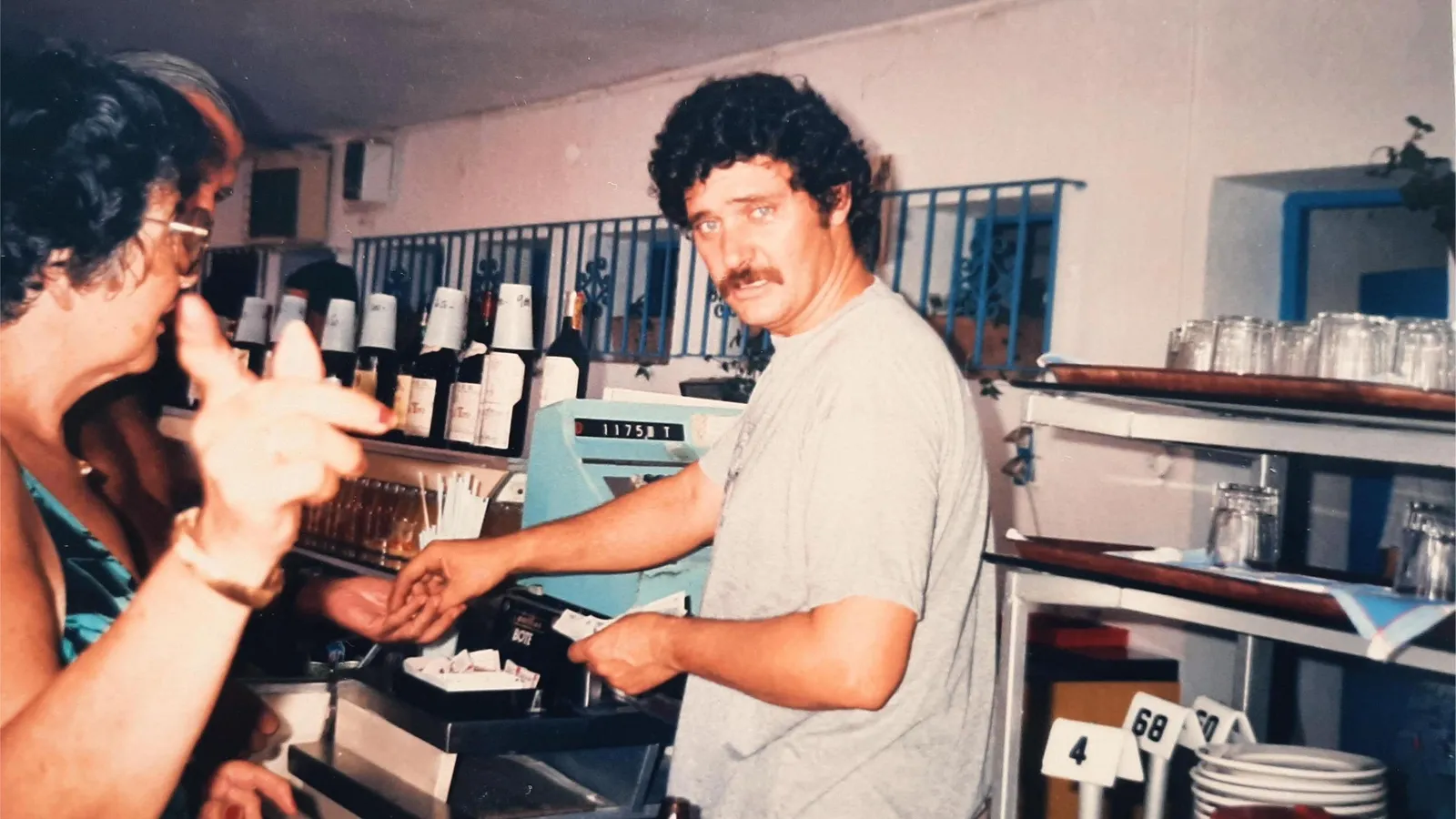

My grandfather was the coachman for the brothers Serafín and Joaquín Álvarez Quintero, and my grandmother was the maid, recalls Félix Martín Vilches, chef, trade unionist, businessman and councillor for Tourism in the first democratic municipal corporation. He arrived in Marbella to prepare the kitchens of the Hilton hotel three months before its inauguration in 1969. He came from the Conrad Hilton chain hotel in Madrid, after training for three years at the capital's cooking school.
When my grandparents got married, they left the Quinteros, became independent and became rag-and-bone men. They collected rubbish and charged for it. In the waste recycling, they found food for the pigs and from the remains of the ashes in the boilers they took advantage of the coal that had not been burned, after sifting it through a sieve. They made good money from that. My grandfather bought some farms, but unfortunately the government later expropriated them. The poor man lost the land where La Paz Hospital (Madrid) was built and a pine forest in La Moraleja.
Félix Martín, with margarine figures / M.H. They lived in a large house near Chamartín station, with pigeons sleeping on the roof. My grandfather didn't feed them, he just let them take refuge there. Once a week he would go up onto the roof and put them in a sack. It was the 1950s; a butcher on Mateo Inurria Street gave him fifteen pesetas per pigeon. A fortune!
When I got back from military service, I got married and went to work in Puerto Banús, at the Andalucía Plaza hotel, and from there I moved on to Torre del Duque, the most beautiful restaurant at the time; it stretched from the main road to the entrance of the port. The car park could hold 500 cars. In 1974, we held Liza Minnelli's gala there [she was hired to promote the marina after winning the Oscar for Best Actress in the film Cabaret]. Her performance cost José Banús a million dollars at the time. While waiters were brought in from Seville for the inauguration of Puerto Banús, on this occasion we had enough chefs at the Golf hotel to serve 2,000 seated guests. There were other smaller parties with Raphael, María Dolores Pradera and Alberto Cortés. I have never been interested in celebrities; we were in different worlds. I was in the kitchen, at the stove.
I only spoke to José Banús once, when I was appointed Councillor for Tourism in Marbella's first democratic municipal corporation in 1979. Cándido Fernández Ledo, who was his right-hand man, said to me: ‘Don José wants to talk to you’. He lived in his hotel.
¬ I hear you've been elected councillor.
¬ Yes, but I'm from the Communist Party.
¬ That doesn't matter; I've told Cándido that when you need him, he should leave work and go to the Town Hall.
I spent an hour talking about tourism with Banús.
[In the first municipal elections, on 3 April 1979, Alfonso Cañas (PSOE) was elected mayor, following an agreement reached with the PCE and the PSA.]
¬ We have to organise the Lady España contest, which is very important for Marbella, the mayor told me.
As Councillor for Tourism, I opposed it and it didn't happen. The meat market, with half-naked women in swimsuits, has never appealed to me. Ethically, I don't agree with it, I replied. I was against that kind of celebration, which also had to be subsidised. When it came to allocating the municipal budget, they asked me, ‘How much do you want to spend?’ All or nothing, I told them. If you keep the town clean, if the beaches are clean, if there are gardens and no crime, I don't need anything more than four advertisements. But if all this fails, whatever you give me will not be enough to counteract these shortcomings.
General view of La Siesta club. / M.H. I sensed that tourism was going to consume us, as has happened. On one occasion, in Greece, the tourism officials took us on a tour in a light aircraft and warned us: ‘Do you see this overcrowding? That's what you shouldn't do.’ I proposed that the height of the houses should not exceed the treetops. When I arrived in Marbella, atrocities were already being committed, such as
the Hilton hotel towers themselves. I was only a councillor for two years; I resigned because there were problems in the party, with people coming and going, doing as they pleased.
At the Hilton hotel, I made sculptures out of margarine to decorate the buffet, such as the Statue of Liberty, the Cenachero or the Faun. I taught myself, working at night in my house, staying up until one in the morning working with wood, bronze and iron; it helped me de-stress.
Conrad Hilton, president of the hotel chain / M.H. Without having any idea about trade unions, I looked for the most combative people in the hotels when the PCE told me that we had to create CCOO. I found seven or eight, with whom we met on Wednesdays at Emilio Ramos' restaurant in Puerto Banús. Before the Communist Party was legalised in 1977, the slogan was: ‘We have to take to the streets and show our faces, we have to come out of the closet’. I had to hand out membership cards to the militants. I spoke to Francisco Pando, the manager of the La Torre aparthotel in Nueva Andalucía.
¬ We're going to have a party.
¬ Isn't it the communists?
¬ No, it's a cultural association.
We called the press and handed out a hundred union cards. The police found out from the newspapers. The poor manager spent two days at the police station in Málaga. We got 2,500 members; at first it was free, then we charged a fee to cover the costs of the premises. For fighting for forty workers to earn a decent wage, eat well and have half an hour for lunch, I was punished. They sent me from La Torre del Duque to La Torre Nueva Andalucía.
With his colleagues in the kitchen. / M.H. At lunch for the staff, it was customary to make an extra plate for the bosses: the manager, the reception manager, the kitchen manager, the concierge manager and the housekeeper. Until one day I told the manager of the aparthotel that I was going to remove the extra plate and serve the same menu to everyone. At first, the bosses didn't speak to me, but they had to put up with it.
I have experienced two strikes in the hospitality industry; the biggest one was during Holy Week in 1979 and lasted for 18 days.
In the first one, which lasted five days in 1978, nothing was resolved. At the picket lines, when the Civil Guard had my yellow 600 on file, Luis Rojo from the UGT and I would change cars so that they wouldn't catch us when we went to the hotels. During this strike, a young man from Torremolinos [the CCOO union action secretary, Manuel Benítez Zotano], fed up with the strike not ending and us not achieving anything, threw himself out of the window.
Cañas reproached me for my absence from the plenary session to take office as councillor, when I still had everyone on strike. So I said to him, ‘Get yourself looking smart, take the official car and we'll get the people out of prison.’ There were more than a hundred people who took part in the picket line, and the police picked them up and took them to Málaga.
Strike day at the Los Monteros hotel. / M.H. I met many businessmen, but few as good as Cándido Fernández Ledo [CEO of Bansa, Puerto Banús, the Andalucía Plaza hotel and president of the Nueva Andalucía casino]. After the strike, he informed me that he had been appointed president of the hotel owners' association, AEHCOS. The Banús company, Bansa, with more than 500 employees, was the largest in Marbella after the Town Hall.
¬ What do you want for the next agreement to be negotiated?
¬ People are very fed up, there will be more strikes if we don't achieve what we want: to maintain purchasing power and a few other outstanding issues.
¬ That's done, bring together the UGT and CCOO and I'll get them to agree with the employers.
The agreement was signed in no time.
I remember when Fernández Ledo called us to tell us that the company was in trouble and was going to get rid of some work centres. He offered us workers the chance to run the La Campana club, which is now the mayor's office; the Los Naranjos golf club; the Torre de Nueva Andalucía restaurant and the La Siesta club. Four of us went to La Siesta, where Banús was losing money. We lowered the prices and increased the quality and quantity of the food. The seasons were from April to November, and we made a profit in the first year. Our offer was aimed at workers, with a self-service system; people took what was offered on a tray. Every day there was a special dish. It sold very well, people came from all over; the pool limited my capacity to 400 people. I had my son, who is a chef from the first class of La Cónsula.
After 23 years as an entrepreneur, I was tired, I was alone, and I transferred La Siesta to the Ocean Club [a luxury beach bar]. One day, after I had left, I went there at one o'clock in the afternoon and there was no one there. People arrived an hour or two later, when their hangovers had worn off. In a single day, they made more than I did in a whole month, selling champagne for €3,000 a bottle.
When I stopped working, I devoted myself to breeding carrier pigeons.
I've had up to 200 pigeons of 25 different breeds; there are 500 types, as well as tiny chickens, geese, ducks and rabbits. I had Noah's syndrome with animals. Pigeons have to be trained from a young age; I took them five and ten kilometres away so they could get their bearings with the four cardinal points. Every week we released them a little further away so that they would return home. From Dax, in the French Pyrenees, some would arrive the next morning, in less than 24 hours, after sleeping in the mountains of Ronda. It's very hard work; I gave it up four years ago, but I still have twenty pigeons left.
I have written three books about carrier pigeons. One is a biography of Carlos Márquez, a tribute to this man who knew so much about pigeons; for twenty years he was president of the Spanish Pigeon Fanciers' Federation and for eight years of the International Federation. The forum he organised brought together more than a hundred people. I also compiled a thematic dictionary on pigeons and another with a collection of eighty articles that I had published in different magazines.
I left politics but not my ideas; I still think the same way. As a businessman, I tried to put my ideas into practice: an eight-hour working day, two days off and 45 days of holiday. I wasn't going to do what I had previously criticised. The hospitality industry has changed little, even for the worse. After the strikes to achieve the eight-hour day and rest days, everything relaxed and things went back to the way they were, especially in restaurants. In hotels, the committees have more power; in small establishments, exploitation continues as before.
Before, to be a chef, you had to work in many different places to learn; now anyone can say, “I'm a chef”. I think there used to be more professionals in the hospitality industry, and also more servile people, from top to bottom. Because the customer is not always right, and I've always argued that.

Latest news


Similar News
The writer doctor from Marbella
Marbella
Kristina Szekely, the First Multilingual Real Estate Agent in Marbella
Marbella

Lope de España, the butler who served the jet set of Marbella
Marbella
