


Lope de España, the butler who served the jet set of Marbella
He picked lemons in Cártama, polished the silverware in hotels along the English Channel. From singing in supermarkets, he made it to TVE, performed at weddings, and at the San Pedro Alcántara fairs.


PPepa, the woman from the newsstand, wanted me to look impeccable on television. She collected money from the neighbours to buy me a navy blue suit for 28 December. On the Day of the Holy Innocents in 1990, I arrived at the studios in Madrid looking like a model, recalls Lope Martín Campaña. It was the second time in three months that the butler from San Pedro Alcántara had returned to TVE to sing his songs as Lope de España on the magazine programme Esta es su casa, presented by María Teresa Campos.
‘You have to come back. When you were on the programme, it was the day with the highest television audience,’ said co-presenter Cristina Morato when she called me to ask me to return. This time, La Gorda from the Mondragón Orchestra and a young man who had been rehabilitated from drug addiction by the Little Sisters of the Poor were also on the programme.
Every morning, Lope Martín Campaña used to walk into the Alcántara supermarket singing: ‘I am Lope de España/ for my art and my charm./ And everything I sing/ is loved by my people of San Pedro’, emulating the verses of the copla ‘I am Carmen, the one from Spain/ cigarette girl from Seville’.
The journalist Merche Miranda heard me sing every morning. Until we met at the dinner that the Gardening Club held on Flower Day at the Torremolinos conference centre, and she reminded me of the supermarket. ‘I'm going to take you to TVE!’ she said. Singing at a wedding. Morato called me to invite me to the programme that María Teresa Campos was premiering. They paid for a taxi to the airport and the flight to Madrid. On the way back, I travelled with Raquel Revuelta, who was then Miss Spain. I found myself on a television set with an audience, dressed as a butler, singing Yo soy el Lope de España. That afternoon, they applauded me more than they applauded Julio Iglesias.
Lope enjoyed his moments of glory with two performances on Televisión Española, after sharing his songs in shops, at weddings and in the booth he set up with Paquito El Pelotilla at the San Pedro fair. A grocery store decided to immortalise the event. It posted a video of Lope's performance on its Facebook wall, where it collects images of the town, with a phrase of recognition: ‘Thank you for staying forever in our San Pedro’ .
When I was twelve, I came with my father from Cártama in October, when the San Pedro fair was being held in the square. My father made lime, baking it in the oven, and had come with a lime kiln to the road to Ronda. From there, he travelled more than fifteen kilometres on a donkey, which took him two hours to reach San Pedro, picking strawberry trees along the way. Two months later, when the cement factory was built in Málaga, there was no more work for my father. We moved to Bilbao. As I was not yet old enough to work, they managed to find me a job at a car seat upholstery shop, using my older brother's name. At fourteen, now as Lope, I started working as a fitter in a mechanical workshop. Together with Rocío Jurado. I went to church with Acción Católica, they gave me a book, but I couldn't read.
When I was six and a half, my mother died and I stopped going to school. In Bilbao, I used to go to the Carmelite convent to listen to the choir. Father Vidal, who saw me coming every day with my stick, gave me a book and a card so that the next morning I could go to a school on his behalf. There I learned to read and write, and at fourteen I took my first communion.
The film El último cuplé (The Last Couplet) ran for six months at the most luxurious cinema on Gran Vía in Bilbao. My uncle went to see it thirteen nights in a row.
‘Joaquín, haven't you heard about the film yet?’ the usher asked him one day.
‘To see Sara Montiel's breasts and the slap she gives Alfredo Mayo, that's why I come,’ he replied.
On Sundays, domestic workers and soldiers flocked to the Vizcaya cinema in Bilbao. I went to see Westerns and some films starring Lola Flores, Juanita Reina or Carmen Sevilla. ‘I am Carmen, the one from Spain’ stuck in my mind. I sang it every day; Fernando Vázquez, El Guaro, an employee at the San Pedro pharmacy, said to me at the time: ‘You're not Carmen, you're Lope de España,’ and that's how it stayed.
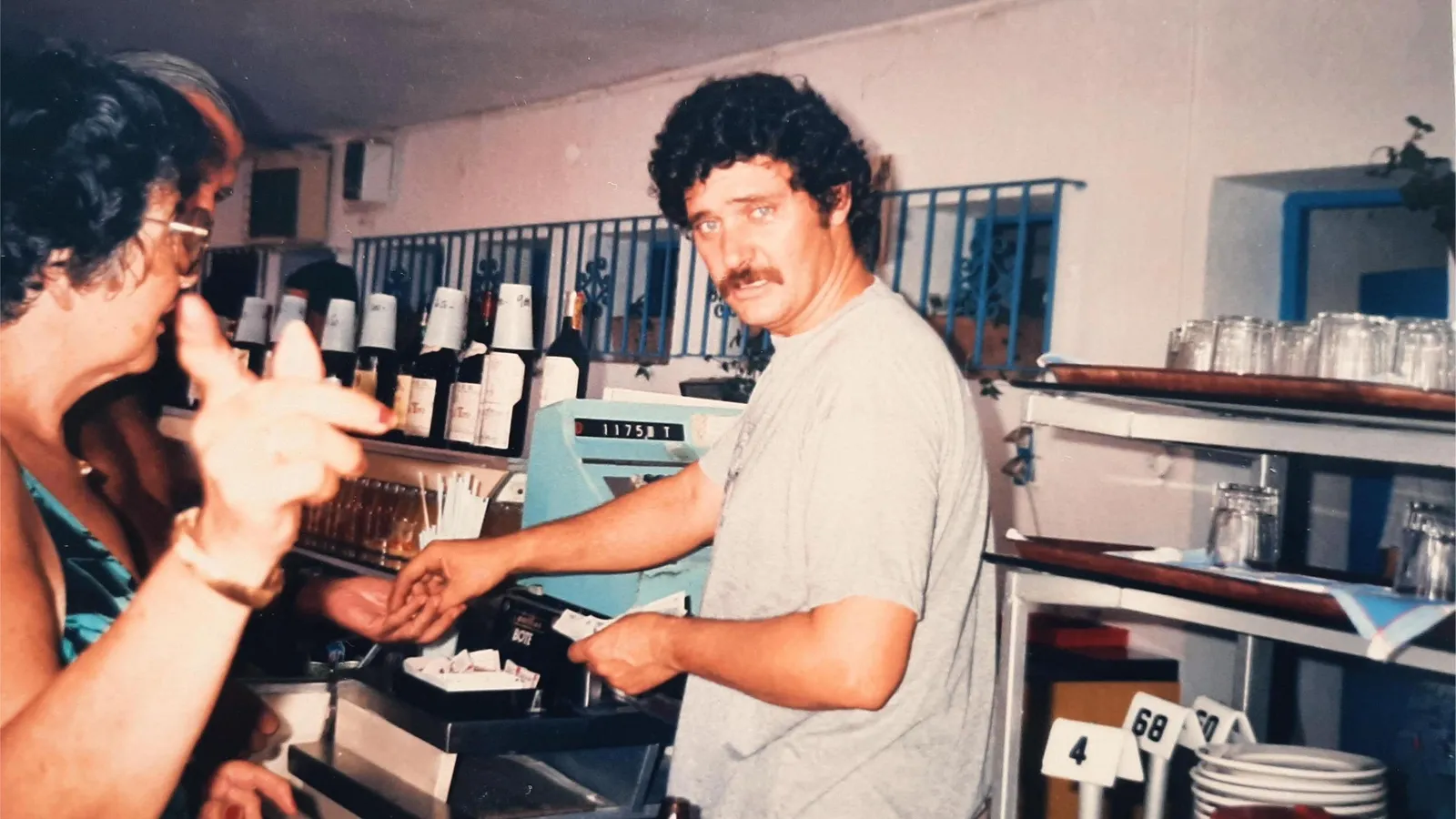
‘You're staying with us: three thousand pesetas a month, food and clothes: black trousers, white shirt and shoes,’ said Doña Remedios del Río [the soul of the Marbella jet set] when she saw me waiting tables at one of her daughters' first communions. With Remedios del Río at the Tostón party. They had a drugstore, where they sold fishing and photography equipment, magazines, a café, a boutique, a pharmacy, everything. They hired me as domestic staff, to serve the table and take the children to school; except for driving, I did everything. I took on the role of butler, as housekeeper. I had seen so many films about butlers that I loved playing the part. To do this, you have to be loyal, hard-working and honest. I stayed with this family for 33 years.
I saw Sean Connery, Philippe Junot, Fernando Rey and the film director, screenwriter and producer Rafael Gil pass through that house. I said to Aurora Bautista: ‘I've been in love with you ever since I saw you looking so beautiful in Locura de Amor’. ‘I love it when you say things like that to me,’ she thanked me. I often served meals to Laura Valenzuela, the first female radio presenter and TVE presenter, at Doña Remedios' house. Mingote and the painter Pepe Caballero, who gave me a painting, also used to come there. One day, there was a knock at the door. I went to open it and it was Jesús Quintero.
“I'm El Loco de la Colina,” he introduced himself.
“And I'm Lope de España,” I replied.
Jaime de Mora promised me a suit whenever he saw me, and I'm still waiting for it. On the birthday of Don Juan, Doña Remedios' husband, all the employees used to give him prawns and lobsters, which we bought in Algeciras. Jaime de Mora came, but to eat them; he didn't bring any gifts. Isabel Preysler, before she married Julio Iglesias, was like a Nancy doll.
I used to see her on Calle del Medio in San Pedro, she used to come to buy vegetables at Isabel Cuesta's. At the fair in the pharmacy. I served Jesús Gil his first breakfast when he came to talk to Doña Remedios to try to get her to join his group and she left to join the Independentista de San Pedro party [the local group that promoted the segregation of Marbella]. And I said my last goodbye to her on Holy Thursday. The procession was supposed to leave at ten o'clock at night, but she waited until quarter to eleven for Gil to arrive. A month later, she died.
At the pharmacy, she refilled nappies and baby food, cleaned the shop windows and the floor. There I saw José María Íñigo buying lice lotion. We took orders worth 25,000 pesetas in perfumery items to Athina, the granddaughter of Aristotle Onassis, at her villa, where you had to show your ID card to enter. I also saw Adnan Kashoggi and Raymond Nakachian passing by the pharmacy. He would say to people: ‘Don't call me Lopillo, call me Lope/ because my name is as famous as Don Quixote’.
To supplement the three thousand pesetas I earned, I looked for something else to do on my days off on Thursdays. I whitewashed the facades of the houses in San Pedro for Corpus Christi Day, and I didn't charge some of the old ladies. I also worked at the Gardening Club, or at weddings, such as the one held at the house of the Countess of Larisch when one of her sons got married.
I have also been to the house of the Duchess of Alba and sung at some of Gunilla's parties in El Ancón. Once, I was singing in the bar El Picapiedra when Beni de Cádiz came in and asked, ‘Where did this phenomenon come from?’ At the wedding of Juanito, Doña Remedios' son, I took off my jacket and started singing.
And Antonio El Bailarín was the one who said, ‘Remedios, where did this guy come from?’ At a gala at the Oasis complex, the surveyor Lino Ventura heard me sing and suggested I publish a book. He took care of typing up my verses and songs and opened a bank account to pay the printer, with the book selling for 500 pesetas a copy. In a week, I sold 250 copies of Lope de España, cancionero 1983, published by Gráficas Sur in Seville. I gave another 40 copies to Don Alfredo, the priest at the Virgen del Rocío church. He had come to collect a donation from Doña Remedios, and I wanted to make my contribution with the books. When the premises occupied by the church were sold, the new owner – who was going to turn it into a restaurant – found my books; the priest had not sold any.
As a young man, Lope picked lemons in his village. He then emigrated to the United Kingdom, where he learned to polish silver cutlery and trays.
In Cártama, he carried 250 boxes weighing 23 kilos each every day from the fields to where the lorries could reach, about 300 metres away. He transported them to Tana, a citrus fruit company in Murcia, which bought all the lemons in the village. He was always cheerful, singing all day among the lemon trees, which made life more enjoyable. Over time, I discovered that he had damaged vertebrae. In the fields, he carried about six tonnes per day, and at the age of 62, he had to retire due to incapacity for work.
An English couple asked a friend from Cártama, who worked in Torremolinos, if she knew anyone trustworthy to take to their home as domestic staff.
So my older brother went to the English Channel. Eventually, he sent me a plane ticket and a letter with a hotel contract for me to sign. I don't know English, so I didn't even read it. When I arrived in England, where you can only enter on holiday or with a work permit, I couldn't get through customs. My brother came with a man from the consulate, and I spent that night in a tiny hotel. The next day, they took me to the police and everything was cleared up. In a performance on TVE. I started washing dishes in a hotel with someone from Madrid. We worked from March to October and returned the following year. I had never eaten spaghetti before, I slurped it up, and that was also where I tried carrots for the first time. At the hotel, there were Italians, French, Portuguese, Spaniards, everyone except English people. On the island of Jersey, I worked at the Windmills and St. Brelades hotels on the English Channel. I spent three days a week cleaning the silverware in the dining room.
When I was at the hotel at the top of the island, I took my sister and brother-in-law to work at another hotel, which was at the bottom. I spent everything I earned during that time on fixing up my house in Cártama. An Italian colleague from the dining room said to me one day: Lope, you're from Malaga, you have Torremolinos there, why did you come here? We wrote to the Hotel Don Pepe in Torremolinos, and my brother and I ended up working in a laundry in Playamar. He learned English, I didn't.
I've always gone to football matches to cheer on my team: What's wrong with the San Pedro fans? They don't cheer on their players. Here's Lope from Spain to sing their songs.

Latest news



Similar News
The writer doctor from Marbella
Marbella
Kristina Szekely, the First Multilingual Real Estate Agent in Marbella
Marbella
Félix Martín, the Chef Who Went from Unionist to Entrepreneur in Puerto Banús
Marbella
