Are we talking about sex again?
Experts disagree on reviving the TV formats that addressed the issue in the 90s with Dr. Ochoa and Isabel Gemio as sexually transmitted infections run rampant.

Thirty-five years ago, Elena Ochoa was already a media figure of significance in Spain, and not precisely because of her marriage to one of the world's most prestigious architects. Lady Foster, who is now closely followed by the British press for her professional work at the helm of Ivorypress, an exquisite publishing house specializing in the art world, was back then simply Dr. Ochoa. She hosted 'Hablemos de sexo' ('Let's Talk About Sex') on public television, under the direction of Chicho Ibáñez Serrador, the first program on a then-taboo subject that stirred the country. The creator of the well-known 'Un, dos, tres' once again revolutionized the small screen with a formula that worked—42 episodes were broadcast—and was repeated four years later with 'Luz Roja' and the same host, although without sex as the main topic, the audience suffered.
In 1995, Antena 3, the first private television station that dared to offer sexual information without reservations, was right on target with Isabel Gemio hosting 'Esta noche, sexo' ('Tonight, Sex'). The show exceeded four million viewers and established the presenter as one of the most recognized faces of the network.
By the 2000s, sexologist Lorena Berdún became the new Dr. Ochoa. First on Telemadrid, where 'Me lo dices o me lo cuentas' ('Tell Me or Talk to Me') left no one indifferent. "We succeeded because we approached a taboo subject naturally; with openness, from a health perspective, and with the aim to educate, avoiding sensationalism," she recalls. The show was so successful that TVE did not hesitate to hire the Madrid presenter to replicate the format in 'Dos rombos'. However, the program produced by El Terrat, which left behind memorable images such as Berdún teaching how to use a condom with a banana, only lasted one season.
Ivonne Reyes, Enrique del Pozo, Mónica Naranjo, and even La Terremoto de Alcorcón were among other names associated with programs that addressed issues like premature ejaculation or female orgasm. But their results were rather modest, and the shows dedicated to delving into these topics eventually fell off the schedule. Thus, today, television is overflowing with images of erotic content in proposals that are hardly educational, while sexually transmitted infections (STIs) are skyrocketing.
Every day, more than one million STIs are diagnosed worldwide, with 376 million new infections per year due to chlamydia, gonorrhea, syphilis, and trichomoniasis, the most common, according to the World Health Organization (WHO). In Spain, the latest surveillance bulletin for these diseases indicates that the highest number of infections from chlamydia and gonococcus occur in the 20 to 24 age group. Additionally, HIV is also growing among young people. But not only have they let their guard down, as infections among those over 60 have tripled. Given this situation, should we talk about sex on television again?
"Sexual education is 'sanely' necessary. Many people trivialize sex, and pornography, misunderstood and unfocused, bears great responsibility for this,"
Lorena Berdún
Sexologist and presenter
"Sexual education is 'sanely' necessary. Many people trivialize sex, and pornography, misunderstood and unfocused, bears great responsibility for this. We need a lot of good information," reflects Lorena Berdún, who, however, is not so sure that programs like those that made her a reference in the field would have a place today. "Probably the question-and-answer dynamic would need to change. There is a lot of information on Google, but also an infinity of topics that could be addressed in depth," she points out.
TV, "a danger"
When it comes to these matters, television can be "very dangerous." This is how sexologist Roberto Sanz sees it, without forgetting "the media, economic, or survival interest" that could drive these types of spaces. "It's easy to fall into very stereotypical models, and that greatly distorts the usefulness and professionalism," he warns. If something is to be done in terms of sexual education, perhaps the most useful thing, he suggests, would be to turn to social networks, "where the vast majority of the population is." "Old formulas are things of the past and those programs were very marked by certain figures, with a background and even an ideology," he adds. What about a program directed at the elderly? "That might work. Those people still watch television," he highlights.
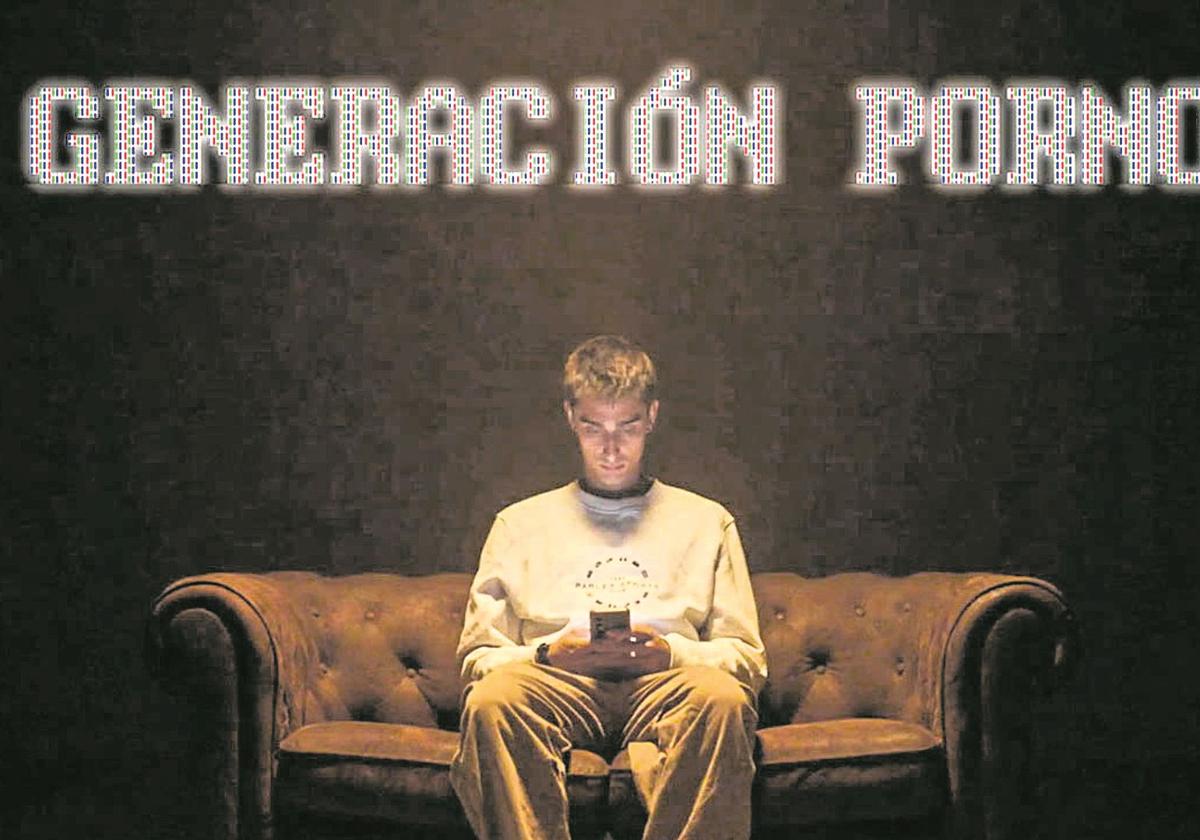
Shine Iberia has not hesitated to address the current relationship between teenagers and sex. This led to 'Generación Porno' ('Generation Porn'), a multi-award-winning documentary series that recorded good audiences a couple of years ago. "The program emerged from current events. In the production company, we are many women, some with teenage children, and we noticed that porn was in their conversations, in their lives, while news of minors raping in groups occurred," recalls Oiane Sagasti, its director. "We started to pull at the thread and discovered that there was a direct relationship with the consumption of online porn," she adds.
"For young people, STIs are something from another era, not their concern. They defend that you won't die from it!"
Oiane Sagasti
Director of 'Generación Porno'
In its television broadcasts, the program did not air 100% of the content gathered after testing the knowledge of the interviewed adolescents, which showed serious deficiencies in sexual education. "Infections? Some don't even know what they are. AIDS? It sounds familiar to some. And condoms? They don't use them, because they don't exist in porn, which also promotes group sex," indicates Sagasti,
For this group, claim those from Shine Iberia, sexually transmitted diseases are "something from another era, for old people, not their concern. They defend that you won't die from it!" A view shared by Santiago Frago, director of the Amaltea Institute of Sexology in Zaragoza. "For the young and not so young, STIs do not exist, unlike pregnancy, which is evident." But there are several causes, in his opinion, that contribute to these infections, among them, erotic play, "which has lost meaning at a social level and it is no longer necessary to know each other too much to have a sexual encounter." Moreover, "they no longer scare, due to the false belief that all have an easy solution. And then there are environmental factors, alcohol, substances, peer pressure, and informational errors that predispose to a lower perception of risk."
Frago acknowledges that the sexual dissemination of the 90s on television, "which focused on an idea of sex as something 'done' and not as something 'being', fulfilled its function, "especially in bringing sexuality out of hell, out of taboo. That, despite the conceptual gaps that were transmitted and that in its contents prioritized prevention criteria over promotion." But its revival now, he argues, "is not a priority." "In a very tumultuous and polarized socio-political context, there would be a risk that these spaces would become contaminated with ideology," he warns.
"In a polarized political context, there would be a risk of contaminating these programs with ideology"
Santiago Frago
Amaltea Institute of Sexology of Zaragoza
In this matter, the specialist even doubts the value of informational campaigns. Like the 'Póntelo/pónselo' ('Put it on'), which had a dual objective: to prevent STIs and unwanted pregnancies. "The campaign with its slogan was suggestive, but being designed by advertisers without sexological training not only had no effect, but it also led to more pregnancies by transmitting and promoting, subliminally, models of sexuality impregnated with genitality."
Doctor in Psychology from the Complutense University, Vanessa Fernández defends the role of the media in educating the population with the help of specialists in the field. However, she warns, if these programs "are not handled well and only talk about pleasure and sexual practices without any responsibility, that great weapon we could have to educate becomes a bullet that will harm, because it will encourage the practice of relationships and sexual arousal without discussing the most important thing, which is prevention," warns the author of 'Padres que echan humo. Cómo sobrevivir a los hijos adolescentes' ('Parents Who Smoke. How to Survive Teenage Children').

Latest news





Upcoming events
12
Nov
El Desembarco, la traición de Viriato at La Caja Blanca
12
Nov
HOMER El Mero Mero at Sala Trinchera Málaga
13
Nov
Marbella Startup Lab – Innovate & Collaborate
13
Nov
Candlelight: Coldplay & Imagine Dragons at Sala Fundación Unicaja María Cristina
13
Nov
Candlelight: Tribute to Ludovico Einaudi at Anantara Villa Padierna
Similar News


Bruno Mars Ends a Decade Without a Solo Album with 'The Romantic'
Málaga