Samurais, Lords, and 'Chevaliers' of La Mancha
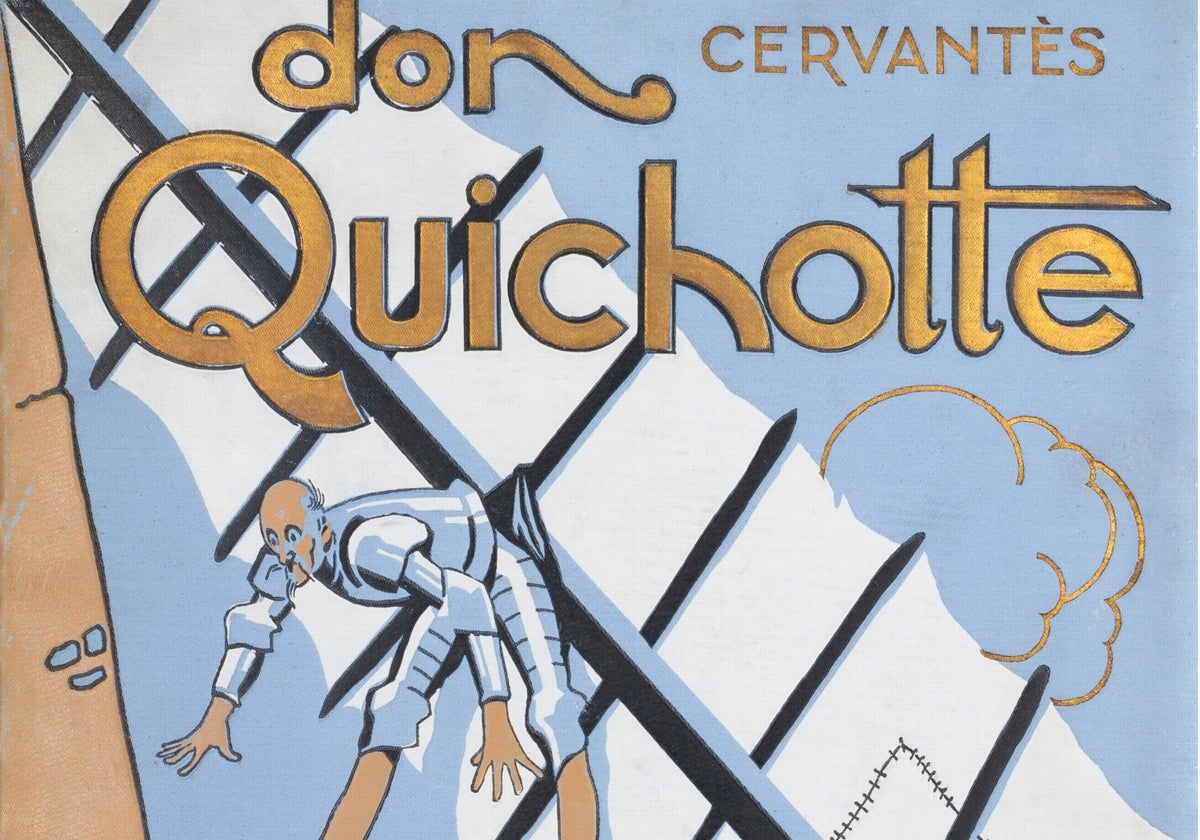

In Chapter XIII of the first part of 'Don Quixote', the Peralada Castle of the Rocabertí lineage is mentioned. There, in the Gerona region of Ampurdán, lies the formidable Quixotic collection amassed by bibliophile Miguel Mateu Pla. The adventures of the ingenious Hidalgo in a thousand and one versions and languages are being displayed outside the medieval fortress for the first time in an exhibition. Titled 'A Thousand and One Quixotes. From Paular to the Castle of Peralada,' it will be held at the Serrería Belga in Madrid - free of charge and near the Reina Sofía and Caixaforum - until November 23.
The collection includes more than 300 editions of the adventures of the ingenious Manchegan hidalgo in all sorts of formats and languages. It features valuable bibliographic gems, some unpublished, such as first editions, illustrated versions, or miniatures.
The invaluable collection holds 5,000 items, with over 1,000 editions of 'Don Quixote'. In this Cervantine Babel, there are magnificent and valuable rarities, like the first 'Don Quixote' printed on cork sheets by Viader in 1905, or a 1936 Japanese edition with illustrations by Serizawa Keisuke where Alonso Quijano and Sancho Panza are samurais.
Expand
1936 Japanese edition illustrated by Serizawa Keisuke where Alonso Quijano and Sancho Panza are samurais. R. C.The oldest of the editions collected by industrialist Miguel Mateu Pla (1898-1972), who bought the castle and the library from the Rocabertí, was printed in Valencia in 1605 by Pedro Patricio Mey, months after the prince edition by Juan de la Cuesta in Madrid, a print shop located a few hundred meters from the Serrería Belga.
It also includes first editions, such as the second part of the apocryphal Quixote by Fernández de Avellaneda (1614), the second part of the original by Cervantes (1615) or first translations into French (César Oudin 1614), Italian (Lorenzo Franciosini, 1622) and English (Edward Blount 1620).
In the 18th century, luxury editions shone, such as that of Pieter de Hondt (1746), Joaquín Ibarra (1780) - a major venture by the Royal Spanish Academy - or Gabriel de Sancha (1797-1798), the first annotated edition printed in Spain. Some early 18th-century translations, like those by Irishman Charles Jarvis (1742) or Scotsman Tobias Smollet (1755), would form the basis for others throughout history.
Early 1605 edition printed in Valencia by Pedro Patricio Mey. R. C.In the 19th century, meticulous editions by bibliophiles proliferated, including miniature 'Don Quixotes' in Spanish by the renowned Parisian printer Julio Didot and neo-Gothic bindings, a style called 'cathedral', very popular in the early decades of this century.
In the 20th century, the 1957 Paris edition shines with twelve original lithographs by Salvador Dalí and there are numerous editions aimed at children and young people, with attractive bindings and little textual rigor.
There are stickers, bookplates, letters, postcards, broadsheets, paintings, drawings, and engravings in a curious section with a very diverse Quixotic iconography. A highlight is an oil painting by Josep María Sert of the 'Camacho's Wedding' episode painted between 1929 and 1930 for the dining room mural of the Waldorf Astoria hotel in New York.
The exhibition also addresses the early connection of the knight errant with music. In 1614, a year before the publication of the second part of his adventures, the ballet 'Don Quixote' premiered and has continued to be a source of inspiration ever since.
"The works selected represent the entire corpus gathered since 1923 by Miguel Mateu, forming one of the most important private Cervantine collections in the world," confirms Susana García, curator of the Peralada Castle Museum and commissioner of the exhibition.
The subtitle of the exhibition refers to the pine forests of El Paular, where the trees were felled to provide the wood that was later transformed into paper for books like 'Don Quixote', and which came out of the Serrería Belga, active until the last third of the 20th century and today transformed into an active cultural center.
Enlightened Aristocrats
The enlightened Counts of Peralada, one of the titles of the Rocabertí, developed a task of patronage, philanthropy, and bibliophilia evidenced by the magnificent Library of their castle. Located in the Convent of Carmen, a significant building within the property, it occupies the space of the old monks' cells since 1888, the year when the counts undertook the transformation, eventually gathering about 28,000 volumes.
With the purchase of the Castle by the Barcelona industrialist Miguel Mateu Pla from the heirs of the Rocabertí family in 1923, the library grew thanks to his collecting zeal and bibliophilia. Today it holds about 100,000 volumes with notable collections such as incunabula, noble enactments, more than a thousand parchments from the 9th century, and hundreds of rare books.

Latest news





Upcoming events
12
Nov
El Desembarco, la traición de Viriato at La Caja Blanca
12
Nov
HOMER El Mero Mero at Sala Trinchera Málaga
13
Nov
Marbella Startup Lab – Innovate & Collaborate
13
Nov
Candlelight: Coldplay & Imagine Dragons at Sala Fundación Unicaja María Cristina
13
Nov
Candlelight: Tribute to Ludovico Einaudi at Anantara Villa Padierna
Similar News

Bruno Mars Ends a Decade Without a Solo Album with 'The Romantic'
Málaga