This is how kalimotxo began
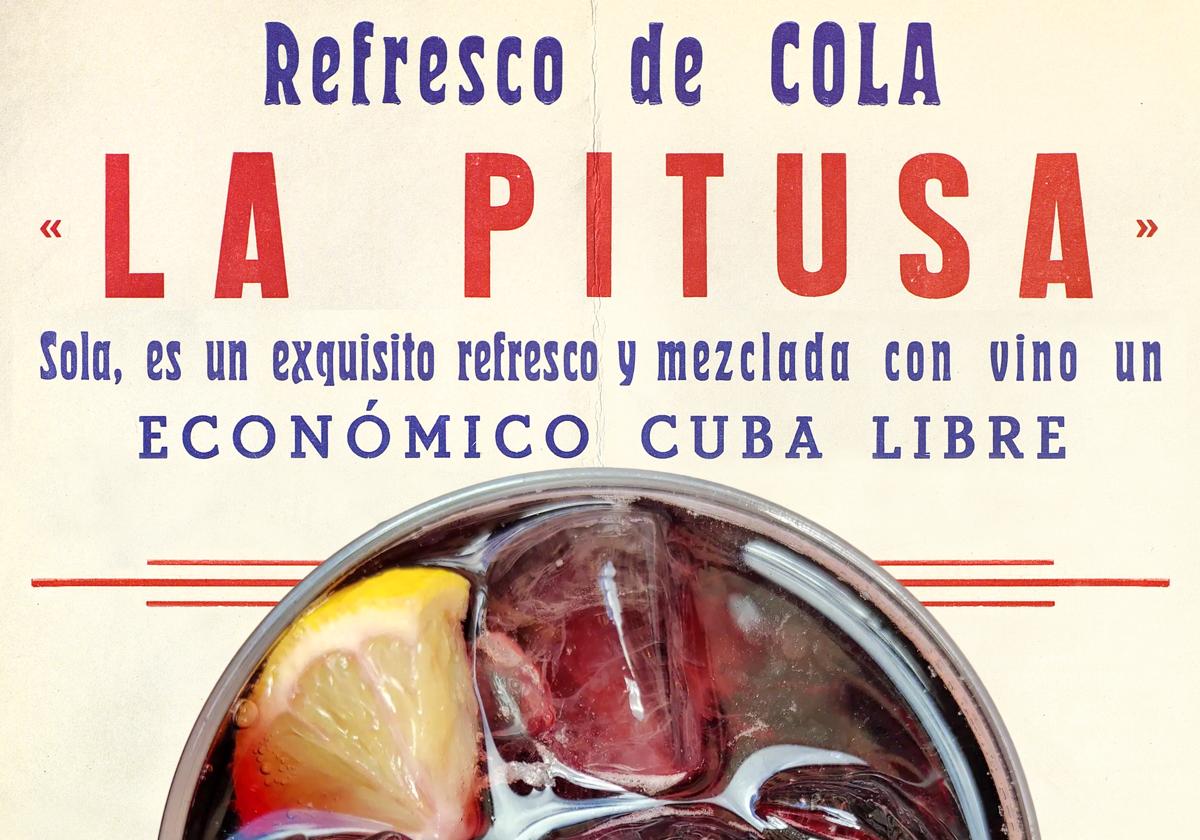

It happened a couple of months ago, while I was browsing the internet looking for documentation on the legendary soda brand 'La Pitusa'. I had in front of me, ... on the Digital Heritage website of Castilla-La Mancha, the first solid evidence that kalimotxo (in its Castilian version, calimocho) had other names in the past. The advertisement, printed in the town of Torrijos in Toledo in 1964, stated that La Pitusa with cola flavor was in itself "an exquisite refreshment and mixed with wine a cheap cuba libre".
Perhaps you might find it interesting that the very famous kalimotxo, a drink made from equal parts red wine and cola soda, is not a Basque invention but a fortunate denomination. The creators of the term have always admitted it, and that doesn't make their feat any less remarkable, even if it's only lexical: the Wikipedia page dedicated to that word is translated into 23 languages, drinks with that name have been manufactured in California or Romania, and in the municipality of Tacoronte in Tenerife, there has been for a couple of years a Calimocho/Kalimotxo street that very appropriately connects a Coca-Cola plant with a wine cellar. The original kalimotxo drinkers are also my neighbors, so my personal honor is at stake in telling their story faithfully. It happened on Saturday, August 12, 1972, the first day of the Old Port festivities in Algorta (Getxo) which are celebrated annually in honor of the neighborhood's patron saint, Saint Nicholas of Bari. The Antzarrak group (in Spanish, "geese"), consisting of about 25 youngsters who were not yet twenty years old, was in charge of organizing the festivities and had among their main responsibilities the management of the bar, improvised in a historic building in the fishing district of Algorta. The money raised there would help cover numerous expenses, so you can imagine the trouble when it was discovered that the 2000 liters of young Rioja wine they were going to sell to the public were spoiled.
To avoid financial disaster and try to disguise the taste, the Antzarrak proceeded to mix that spoiled wine with various sodas and liquors, looking for the best combination. The winner was the mix of red wine with Coca-Cola. All that was left was to get enough soda and give this concoction a name that wouldn't give any clues about the composition of the brew to potential consumers. All this has been recounted by members of the original group both in the media and in the book 'The invention of kalimotxo and anecdotes from the festivities' (2001), and although the versions differ slightly from each other, supposedly the drink was named from the fusion of nicknames of two friends: Kalimero and Mortxongo or 'Motxo'. Thus, the word 'kalimotxo' was born on that August 12th of '72, with everyone present being aware that they had not really invented anything new. As the aforementioned book recounts, one of the witnesses "commented that this mix was not new and that it was called Rioja libre, clarifying that it was a very minority drink, only for the gentry of Bilbao." Since then, it has been said that previously wine with Coca-Cola had been known as rioja libre, poor man's cuba libre, gypsy cubata, or worker's cubata, tincola, and other varied nicknames, but I had never found proof of its existence... until I saw that "cheap cuba libre" from La Pitusa.
In reality, the mix of wine with cola soda is neither Basque nor Spanish, but universal. The oldest clue leads us to New York in 1904, where according to the book 'Coca-Cola: an illustrated history' (Pat Watters, 1978) the first bottler of the brand in the Big Apple found that his best customers were Italian immigrants, especially those frequenting gaming salons. They had discovered that mixing Coca-Cola with their classic Chianti allowed them to drink all night without losing concentration on the cards. The combination of alcohol and caffeine also became popular in Cuba in the early 20th century thanks to the 'Cuba libre' with rum and the 'España libre', a version from the 30s made with Pepsi or Coca-Cola plus the Jerez brandy Tres Copas from González Byass. Among the hundreds of love letters that French philosopher Simone de Beauvoir sent to American writer Nelson Algren, there is a charming kalimotxo reference: in a letter dated December 1949, she remembered how, while together in France, he always insisted on lightening the good French wine with the -for her- detestable Coca-Cola.
I have not been able to prove that rioja libre was a thing of the Bilbao gentry, but indeed it did exist and was called that in the 50s, when the consumption of Coca-Cola took off in Spain. On June 12, 1959, the newspaper from Leon 'La luz de Astorga' published, regarding the recent Cuban Revolution, an article about the cubalibre. In some places, this cocktail had been renamed 'Fidel Castro', but the interesting part of the text is the mention of a new local competitor that was gaining ground: "the 'Rioja libre', based on half or a bottle of Coca-Cola and a good splash of Rioja or Rueda wine, which is the most consumed around here [...] although it may seem a strange mix at first, the glass of Coca-Cola and red wine is becoming increasingly popular under its own name".

Latest news





Upcoming events
12
Nov
El Desembarco, la traición de Viriato at La Caja Blanca
12
Nov
HOMER El Mero Mero at Sala Trinchera Málaga
13
Nov
Marbella Startup Lab – Innovate & Collaborate
13
Nov
Candlelight: Coldplay & Imagine Dragons at Sala Fundación Unicaja María Cristina
13
Nov
Candlelight: Tribute to Ludovico Einaudi at Anantara Villa Padierna
Similar News
Bruno Mars Ends a Decade Without a Solo Album with 'The Romantic'
Málaga