Memories of Jazz and Musical Mysteries
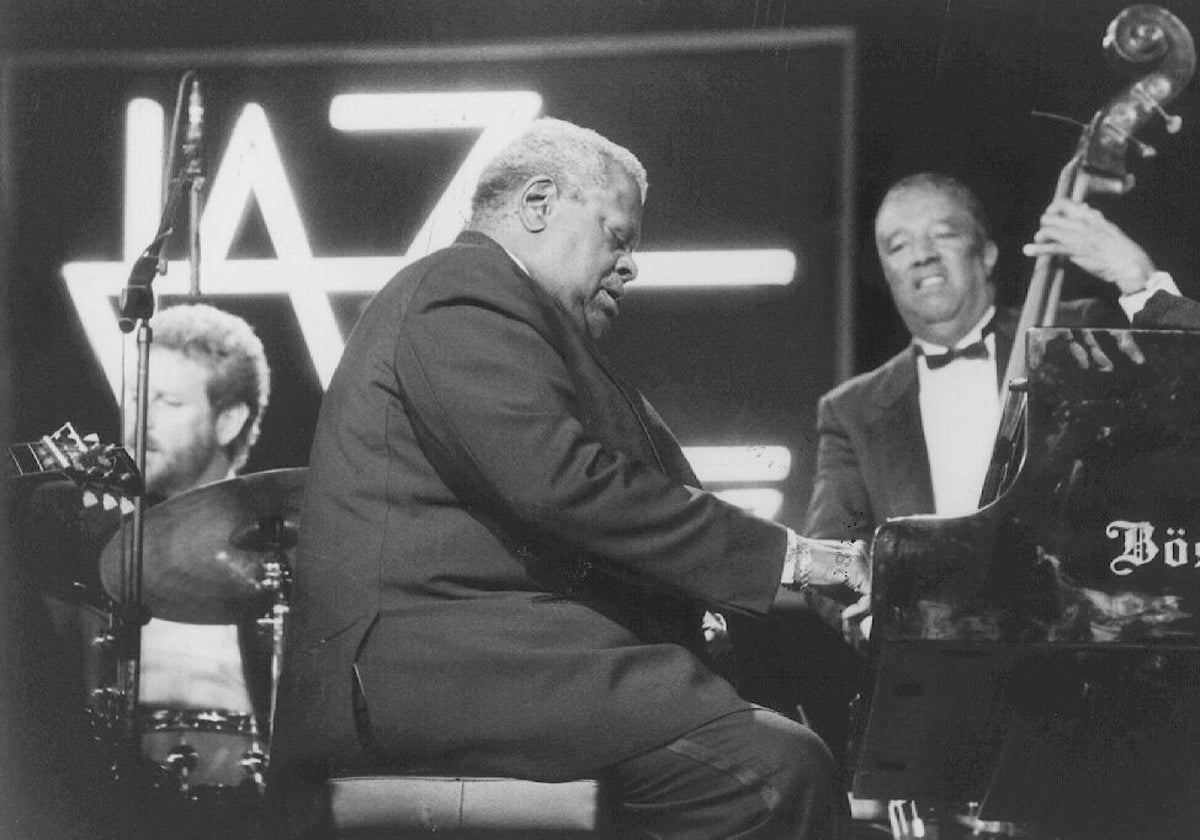

As we mark the centenary of the birth of one of the virtuosos of swing and jazz, Oscar Peterson, his music, which bridges the gap between early masters like Duke Ellington and new generations, has stood the test of time. His memoirs, 'My Life in Jazz' (Libros del Kultrum), are now also being published in Spain, where he shares his perspective on the craft: "Perfection is the only thing that matters," he states. This phrase aptly summarizes his career and performances. For instance, 'Tristeza,' recorded in 1971, a piece whose title suggests slowness and melancholy, yet it accelerates the tempo to the extreme, without missing a single note, conveying the exact opposite. Such was the genius of Peterson, who won eight Grammy Awards and recorded over five hundred pieces throughout his career.
With hands that could span 18 piano keys, Peterson (1925-2007) began playing in the 1940s in the style of Art Tatum and was part of orchestras now forgotten, but which during those years of glory toured and filled venues across Canada, his native country, emulating Benny Goodman. Peterson earned his living and learned the secrets of arrangements, improvisation, and composition. Reflecting on his time mostly spent in Montreal, Peterson described himself as a "jazz novice."
Influenced by artists like Dizzy Gillespie, Coleman Hawkins, and Barney Kessel, he continued on stage. Without even a temporary work permit, the Canadian arrived in New York, a stop that remains essential for those wanting to make it big in jazz, promoted by Norman Granz, one of the most important men behind the scenes in clubs and theaters. To remedy his legal situation, he would take to the stage as an impromptu guest among the audience. He even played at Carnegie Hall. Doors opened and he began receiving contracts. He formed his own band under his name as a label and, besides playing in the city, he hit the road.
At that time, he followed his mother's advice: if you want to record, call the record companies and tell them, he asserts in his memoirs. He succeeded. After some recordings he preferred never to reissue, in the 1950s he made a collection of tributes to Gershwin and Cole Porter, among others, and began recording a few years later with already established artists like Stan Getz, Lester Young, and Gerry Mulligan, which solidified his place in the music scene. Just that decade of activity produced 18 albums, the 'long plays' of the time. With Herb Ellis, he formed one of his most memorable ensembles, a real test for any musician. The piano, guitar, and drums trio. His albums are at the top of the best ever recorded in jazz. Shortly after, Peterson participated in a philharmonic orchestra.
Against Racism
It was also a time of discrimination and racism, which persisted in the southern United States where racial segregation was enforced. Peterson suffered from it and fought against prejudice with songs like 'Hymn to Freedom'. He was one of the first "black artists" to be on payroll, though he recalls the anger and indignation he felt when he had to move to "filthy" hotels or eat cold food.
Musically relentless, he also experienced the underworld and wild parties where Billie Holiday reigned. "The first thing I saw was a body rolling down the stairs towards me," writes Peterson. "I looked up and saw Billie Holiday at the top, with a Coca-Cola bottle in hand, aiming it at the person lying at my feet. She intended to throw it at his head (...) I was stunned to see that it was a bottle with cocaine. But I stayed a while longer, because I didn't want to offend her." With "elegance," Peterson avoided the destructive temptations that devastated many of the best musicians. "It didn't take long for me to realize that this was not my scene."
A Giant Among Giants
Incredibly fast and precise, a master of tempos and harmonics, with the old trick of many virtuosos of scatting over his notes and, occasionally, playing the role of a humorous master of ceremonies with guests of his stature, Peterson dedicates very close and personal portraits in his book to geniuses who passed through his life, like Coleman Hawkins (an "enigma"), Lester Young (the "presi"), Ella Fitzgerald (a "legend"), Billie Holiday ("mysterious"), Anita O'Day (the "lady"), Roy Eldridge ("speedy"), and Charlie Parker, with whom he recorded a legendary jam session and about which he provides details. "I began to realize that two of the soloists were not very eager to take over after Bird's solos (...) Curiously, it seemed that Parker did not notice the apprehension of the other two. He seemed to be thoroughly enjoying himself, listening to each of the other saxophonists with great attention, his head slightly tilted and appreciation painted on his face," writes Peterson. "Those of us in the rhythm section also enjoyed it immensely, for the challenge of playing for each of these great musicians, for the fascination of assessing their individual performance as they played." Peterson speaks like few others about music and its mysteries, and the humanity behind the magic.

Latest news





Upcoming events
12
Nov
El Desembarco, la traición de Viriato at La Caja Blanca
12
Nov
HOMER El Mero Mero at Sala Trinchera Málaga
13
Nov
Marbella Startup Lab – Innovate & Collaborate
13
Nov
Candlelight: Coldplay & Imagine Dragons at Sala Fundación Unicaja María Cristina
13
Nov
Candlelight: Tribute to Ludovico Einaudi at Anantara Villa Padierna
Similar News

Bruno Mars Ends a Decade Without a Solo Album with 'The Romantic'
Málaga