From Almojábana to Quesadilla: The Other Spanish Cheesecakes
Many of our traditional desserts made with cheese have disappeared or been replaced by foreign recipes.
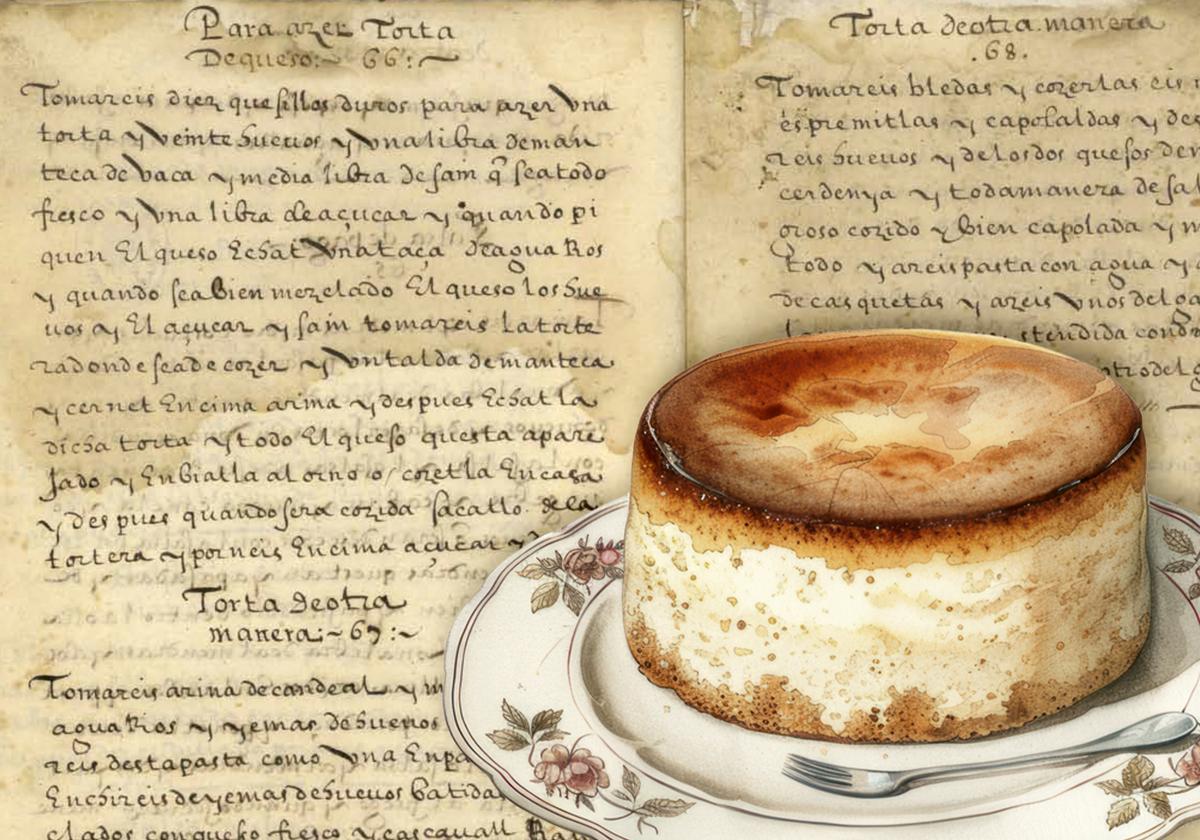

Food appears where it is least expected. It turns out that the placenta, the organ that develops in the uterus during pregnancy and delivers nutrients and oxygen to the fetus, is named because an Italian gentleman thought it resembled a cake. Surgeon Matteo Realdo Colombo coined the medical use of the word "placenta" in his book 'De re anatomica' (1559) due to the round and flat appearance of the tissue from which the umbilical cord emerges, similar—at least in Mr. Colombo’s opinion—to a layered cake made of dough, cheese, and honey, known by the same name since Roman times.
The sweet Latin placenta was an adaptation of the Greek plakoúnta (πλακοῦντα), the accusative form of plakoús (πλακοῦς), meaning "flat cake." Although in Ancient Greece this term was probably applied to any type of flat-looking bread or dessert, the version that became popular in Rome was described by Cato the Elder in 'De agri cultura' (160 BC), his manual on managing a rustic estate. In this work, we can find several culinary formulas, including a few cakes made with cheese: libum, savillum, spira, scriblita, and placenta. The latter, used as an offering to the gods, is Cato’s most detailed recipe and consisted of a filling of tender sheep's cheese, mixed with honey and layered with wheat and spelt dough; it was then baked on a base of bay leaves and finally drizzled with honey. This kind of cheesy, sweet lasagna not only led to the anatomical placenta (which until the 18th century in Spain was known as "secundina" or "pares") and other culinary masterpieces like tyropita or baklava, but it is also the oldest known cheesecake.
Obviously, it has little in common with its modern descendants, ideal for a world where humans had no teeth. Modern cheesecakes compete in creaminess, messiness, and inconsistency, emboldened by the soft texture of cream and cream cheese. Last week I told you that the famous "Philadelphia" type cheese was invented in the USA at the end of the 19th century, but it took much longer to reach our country. The first hints of a similar product being marketed are from the 1930s, and then the Civil War, its economic consequences, and the shortage of raw materials caused it not to become popular until well into the 50s. The first soft, unbaked cheesecakes appeared in the 70s due to foreign influence: suffice to say that in the 'Dairy Cookbook,' a delightful cookbook published by the National Dairy Committee in 1961, only three cheesecakes are listed, one with grated cured cheese, another with fresh Burgos cheese, and another with ricotta. When Simone Ortega published her '1080 Recipes' in 1972, she called a savory quiche with ham "cheesecake," and in 1984 she appeared on the TV show 'Con las manos en la masa' to demonstrate how to make a classic—and outdated, according to current trends—cheesecake with Burgos cheese and raisins soaked in rum, without any messiness.
But even this version is foreign to Spanish culinary tradition. The tradition had been the cakes—not tarts—of fatty, cured cheese, halfway between sweet and savory, embodied in such beautiful names as "quesadilla" and "almojábana." From the Hispanic Arabic almuǧábbana (made of cheese), the almujávena or almojábana was a sweet generally fried and made with cheese, flour, egg, sugar or honey, and aromas like rose water, mint, or spices. On the other hand, the old quesadillas were not like their Mexican namesakes, but according to the definition from the Dictionary of Authorities of 1737, "a certain type of pastry made of cheese and dough" that was prepared especially during Carnival and usually consisted of a soft filling cooked inside a hard dough base made of flour, egg, and lard. Both appear alongside three different types of hearty "cheese cakes" in one of the most interesting and complete manuscript recipe books of the Golden Age, titled 'Recipes and memories for stews, confections, scents, waters, cosmetics, glove seasonings, ointments, and medicines for many diseases.'
This was the norm until the early 20th century when we encounter the first recipe for "cheesecake" as such (not cake, nor tart, nor any other synonym) printed in Spain. It appeared on April 3, 1912, in the cooking section of the women's magazine 'La moda práctica' and as you will see, it is quite far from modern standards but could well be a real discovery.
CHEESECAKE: Gradually dissolve 120 grams of flour in half a liter of cold milk, adding 50 grams of grated Parmesan cheese and 50 grams of grated Gruyere. Then add 60 grams of butter. Season to taste. Then cook over low heat until it reaches a slight consistency, then incorporate two beaten egg yolks. With this dough, fill a flan mold, which will have been previously covered with a thin layer of dough made of flour, egg white, lard, and milk, and bake it. It is eaten cold, ideally with strawberry or apricot compote.

Latest news





Upcoming events
12
Nov
El Desembarco, la traición de Viriato at La Caja Blanca
12
Nov
HOMER El Mero Mero at Sala Trinchera Málaga
13
Nov
Marbella Startup Lab – Innovate & Collaborate
13
Nov
Candlelight: Coldplay & Imagine Dragons at Sala Fundación Unicaja María Cristina
13
Nov
Candlelight: Tribute to Ludovico Einaudi at Anantara Villa Padierna
Similar News

Bruno Mars Ends a Decade Without a Solo Album with 'The Romantic'
Málaga