Malaga has its own 'Roman city', with more than 3,000 years of history that you surely haven't visited yet.
The Acinipo archaeological site, near Ronda, can be visited for free from Wednesday to Sunday. It is one of the best-preserved Roman villas in all of Spain, located in Málaga, and the visit is free on this day of the week.
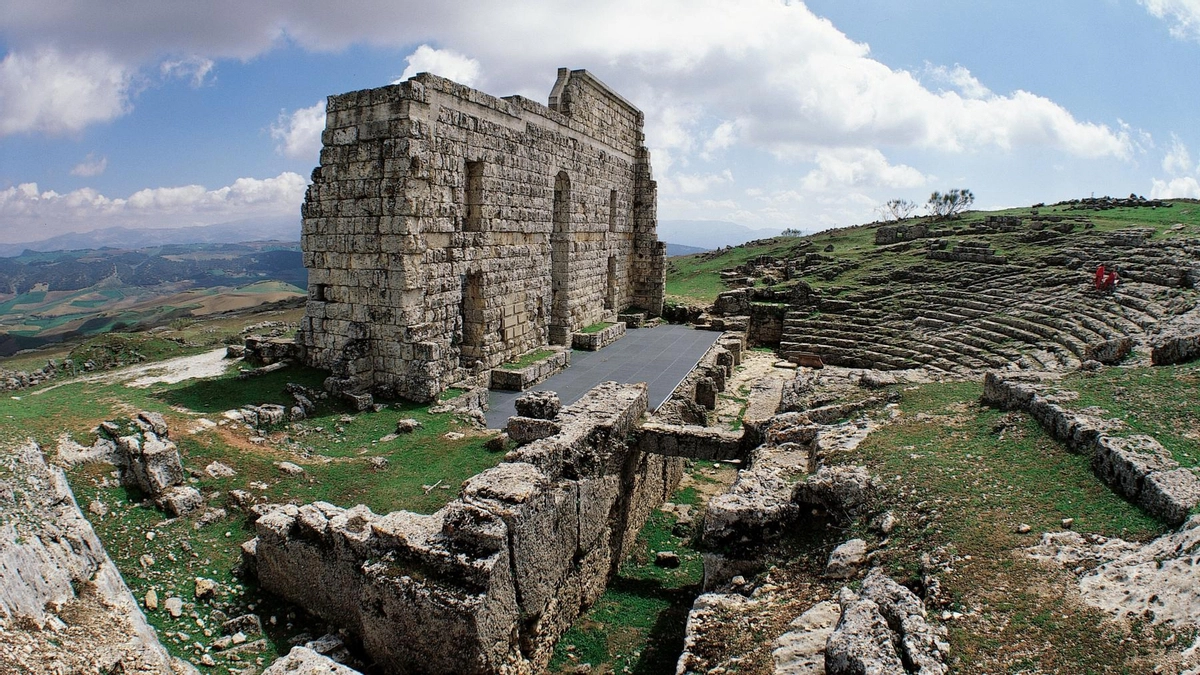

Just a few kilometers from Ronda, perched on a limestone plateau overlooking the landscape, lies one of the most impressive and lesser-known archaeological gems of Málaga: the Acinipo archaeological site, a Roman city that in its heyday rivaled the importance of Arunda, present-day Ronda. This site, also known as Old Ronda, houses one of the oldest and best-preserved Roman theaters in Spain, a testament to the power and grandeur the city reached between the 1st and 3rd centuries AD. If you are passionate about history, archaeology, or simply looking for a different excursion in Málaga, Acinipo is a must-visit. A Roman city frozen in time, waiting to be rediscovered by the curious.
A privileged enclave with more than 3,000 years of history
Located nearly 1,000 meters above sea level, Acinipo offered its inhabitants an unparalleled strategic position. Its visual command over the basins of the Guadalhorce and Guadalete rivers, its proximity to the trade routes of Roman Baetica, and the fertility of its lands made this settlement a nerve center of this region. But its history goes much further back: the earliest remains found in the area date from the Neolithic period, and it was during the Copper Age that a first stable occupation was recorded. Subsequently, the arrival of the Phoenicians and the Iberians marked the beginning of a cultural and economic evolution that reached its peak with Roman colonization in the 2nd century BC.
The importance of Acinipo in Roman times was reflected in its urban planning and constructions. Proof of this is that the city even minted its own currency, with symbols such as the vine and wheat, showcasing its agricultural wealth. However, its decline began in the 3rd century AD, when it gradually lost relevance in favor of Ronda. Finally, in the 5th century, the city was completely abandoned, leaving its ruins frozen in time, awaiting rediscovery by modern archaeology.
The Roman theater of Acinipo: a stage with views of the past
The great symbol of Acinipo is, undoubtedly, its Roman theater, built around the 1st century BC with a unique feature: its seating area is carved directly into the limestone rock of the plateau. With a diameter of 62 meters, this space was the epicenter of the city's social and cultural life, where classic plays were performed in front of hundreds of spectators. Although today only the structural elements are preserved, in its day it was decorated with sculptures, inscriptions, and marble columns that were looted after the city's abandonment.
Beyond the theater, in Acinipo you can also visit the ruins of what were its baths, a large manorial house (domus), remains of temples, and the ancient forum, the nerve center of public life. Several necropolises have also been found, where funerary urns, bone buttons, and bronze mirrors have been discovered, shedding light on the funeral rituals of the time.
A journey through time between history and nature
Despite its historical value, Acinipo remains a little-known destination for tourism in Málaga. However, a visit is a fascinating experience. The tour of the site allows you to delve into the history of a Roman city that is practically intact, where every stone tells a story of splendor and decline. Additionally, its privileged location in the Serranía de Ronda offers a spectacular natural environment. From the plateau, you can enjoy breathtaking views that, on clear days, reach as far as the Sierra Nevada. The tranquility of the place, away from tourist overcrowding, makes the visit even more special, especially in winter and spring, when the landscape is dressed in intense greens after the rains.
How to visit Acinipo and what else to see in the area
The archaeological site of Acinipo is open to the public from Wednesday to Sunday, with free admission from 9:00 AM to 2:30 PM. It does not have an interpretation center, but walking through its ruins is a true journey into the past. The trail that climbs up to the theater offers an unparalleled panoramic view and, as you move among stone heaps, you discover remains of columns, ashlars, and scattered sculptures, silent witnesses to the grandeur of the city.
Despite its historical significance, Acinipo remains off the radar for many travelers. Perhaps because its access is not well-known or because there are still many pending excavations that could reveal new discoveries about the city. What is clear is that this site is a hidden gem in the province of Málaga, a place where history is breathed in every corner and where nature and heritage merge into a unique experience.

Latest news





Upcoming events
12
Nov
El Desembarco, la traición de Viriato at La Caja Blanca
12
Nov
HOMER El Mero Mero at Sala Trinchera Málaga
13
Nov
Marbella Startup Lab – Innovate & Collaborate
13
Nov
Candlelight: Coldplay & Imagine Dragons at Sala Fundación Unicaja María Cristina
13
Nov
Candlelight: Tribute to Ludovico Einaudi at Anantara Villa Padierna
Similar News

Bruno Mars Ends a Decade Without a Solo Album with 'The Romantic'
Málaga