Why do some TV shows succeed while others fail?
Screenwriters Marta Sánchez and Alberto Macías, producer Jaime Banacolocha, and Diego Ávalos, Vice President of Content for Netflix in Spain and Portugal, reveal the ingredients of the success formula.
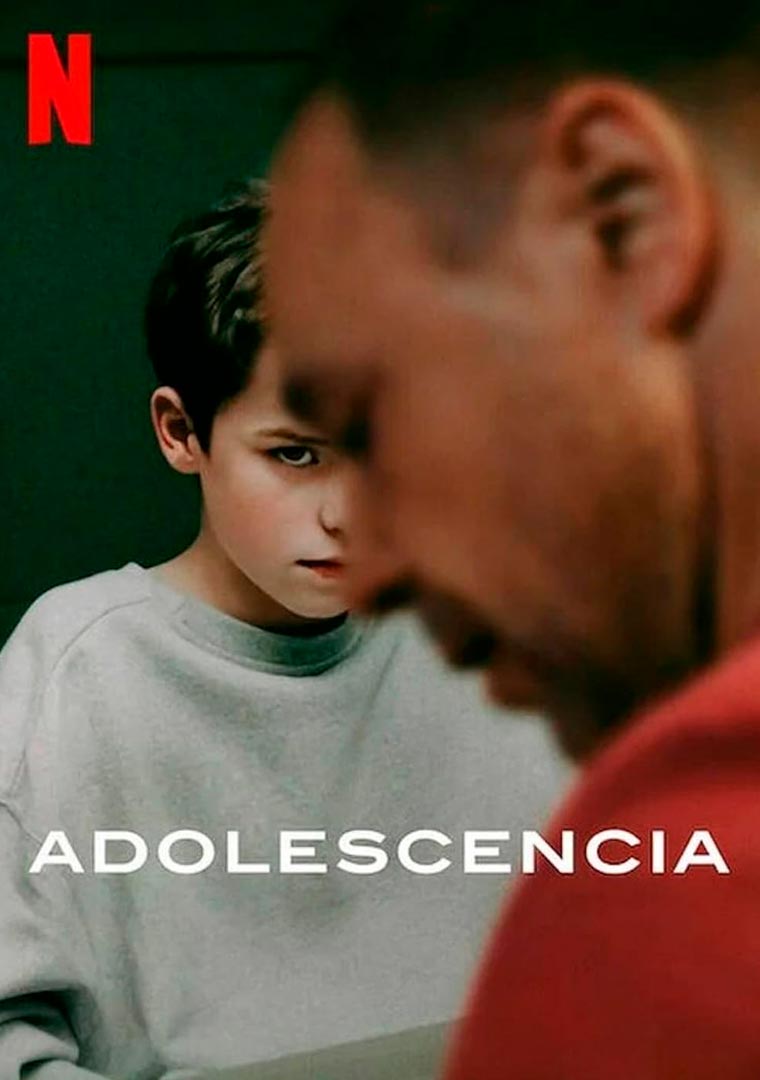

"If any Spanish production company had gone to offer 'Adolescence' to a platform or a television network, it wouldn't have lasted five minutes in that office. 'An episode of almost an hour with a child talking to his psychologist, and nothing else happens? We are not here to make a series that is shown in schools, but to entertain,'"
This is how Jaume Banacolocha, CEO and executive producer of Diagonal, believes they would have been dismissed. "And in the unlikely event that any network had dared, they would have asked for two 'strong' actors to play the parents of the murderer, Antonio de La Torre and Carmen Machi, for example, so as not to put all the weight on the child, who would have been very difficult to find."
So the producers have resigned themselves to producing the series they are asked for— "they tell you: 'I need a thriller with a fantastic girl who solves kidnappings and everything is very technological'"—and not the ones they would like to see. "I have a fantastic white romantic comedy fiction between two girls that I don’t know who to give to... It's curious that you then see those same plots in American and British series, but here they won't let you make them. Spanish fiction is demanded to be more intense, that the first episode be explosive."
Those are the series he would like to see (and make), as the producer says. It happened with 'Adolescence', a harsh drama about toxic masculinity and the dangers of social networks that narrates the murder of a teenager by her classmate, a 13-year-old. The British not only dared with the plot but also with the format: "In Spain, shooting in one continuous take is rare, I remember a scene like that at the end of 'Riot Police', a dinner among policemen, but it lasted only ten minutes."
'Adolescence' premiered on Netflix less than four months ago and has already accumulated 142 million views. It managed to transcend the boundaries of fiction and enter into social debate. Even in the media and political agenda. Questioned about the success, Anne Mensah, vice president of content for Netflix in the United Kingdom, explains to this newspaper: "The script was undeniable, and I'd love to say we were geniuses for choosing it, but the truth is I had no idea 'Adolescence' would become something so big."
It succeeded with four episodes that do not reach four hours. From 'Cuéntame', for example, 413 episodes were recorded and it aired for twenty-two years. Here is a graphic example of how things have changed in fiction series.
Screenwriters Marta Sánchez and Alberto Macías, producer Jaime Banacolocha, and Diego Ávalos, vice president of Content for Netflix in Spain and Portugal, discover the ingredients of the success formula: what does a Spanish series need today to succeed? What condemns it to a predicted failure?
"Family breakfasts are over." Marta Sánchez remembers that this was a typical scene from family series 20 or 30 years ago like 'Family Doctor' or 'The Serranos'. "They brought out the milk and Cola Cao, because there was a lot of advertising back then, and all the characters talked."
"But today viewers are more impatient, more things need to happen, especially in the first episode," adds her colleague Alberto Macías. "Before, series were more realistic, but nowadays what is popular are strange characters, people you don't find in your environment." The child murderer from 'Adolescence' versus the family father from 'Cuéntame', for example.
Moving comedy is very difficult nowadays, the sitcom that was so successful a few years ago ('No One Can Live Here', 'Aída', 'Seven Lives') no longer exists," warns Alberto Macías. Marta Sánchez confirms: "Today, comedy is a risky product. And if they let you make it, they ask 'that it not be the kind that makes you burst out laughing.' And what is that then, a comedy that doesn't make you laugh?"
The exception has been marked by 'Alpha Males', "a product without complexes capable of entering a hornet's nest and coming out well." Diego Ávalos (Netflix) confirms the success of the 'machos' and mentions that adaptations are being made in the Netherlands, Germany. "Comedy is difficult to travel abroad, for the success to be international, but 'Alpha Males' has achieved it. The protagonists have recorded in the Dominican Republic and were stopped by fans from Argentina, the United States, the Philippines..."
'True crime' is a rising genre that confirms "the fascination we feel for the dark." And that behind there is a novel or a real fact "does most of the promotion and turns it into a winning horse," points out Alberto Macías. So there is no platform that has resisted including these docuseries that fictionalize real cases: 'The Body in Flames' (based on the murder of a policeman in Barcelona by his ex-partner and her lover), 'The Sancho Case' (the son of actor Rodolfo Sancho was convicted in Thailand for the premeditated murder of a man, whom he dismembered), the two docuseries made about the wrongful conviction of Dolores Vázquez, accused of the murder of Rocío Wanninkhof, 'Death in León' (which recreates the murder of the president of the Provincial Council of León)...
In view of the success of this genre "it might seem that Spain has a very high crime rate, when it is not the case." It is, only, points out Jaime Banacolocha, "a trend."
Teen series have moved out of the neighborhood school to sneak into the exclusive school of 'Elite' or the High Performance Center of 'Olympo'. "Before, the teenager had to share the television with their parents, but today they can watch series alone. Therefore, streaming platforms have bet on these fictions and the kids devour them all, although at a social and intellectual level they offer nothing," resigns Jaume Banacolocha.
Marta Sánchez points out the only red line they are given in this type of content: "Toxic couple relationships among teenagers are no longer bought by anyone. And, if they do, it has to be a secondary plot focused on the consequences for the aggressor," as featured by Saioa and Manex in the last season of the ETB series 'Goazen'. Regarding the actors and actresses who star in these types of products aimed at the adolescent audience, a question: "You don't need any known names because they will become famous from there," explains the head of Diagonal. It happened with Rodolfo Sancho—he had been acting since he was a child but it was the character of 'Nico' in the series 'Leaving Class' (1997-1999) that made him a famous actor—or with Eva Santolaria, to whom the character of 'Valle' in 'Companions' (1998-2001) opened the doors to later play another different profile: 'Vero' in 'Seven Lives'."
That of 'there goes a Galician, an Andalusian, and an Asturian' was valid before only for jokes. "In series, at most, the character with an Andalusian accent was included because it was funny. Normally, actors removed their accent so that their origin was not noticeable," recalls Marta Sánchez. But what until recently was a disadvantage has become a virtue. "Local entertainment is highly valued in Spain," confirms Netflix spokesperson Diego Ávalos.
Aside from trends (eccentric characters, fast plots, penchant for criminal plots...), the professionals interviewed in this report agree that there is something that never goes out of style: great actors and actresses do not guarantee success, but they do provide a solid foundation on which to launch projects.
"'Celeste', a story about a tax inspector, would not have worked if it hadn't been starred by Carmen Machi. And 'Iron Hand', despite being a good series, has low moments but Eduard Fernández holds the character very well," points out two examples the CEO of Diagonal, Jaime Banacolocha.
Other times, he says, it is the character itself that 'pulls' the title. It happened with 'Isabel', the fiction about the Catholic Monarchs starring Michelle Jenner and Rodolfo Sancho. "They did a great job, but the series worked so well because Queen Isabel I of Castile is a figure that, in general, has a lot of impact. In the series, we told about the bad things she did, but the audience forgave her everything." However, when it comes to audience figures, there the viewers do not forgive."

Latest news





Upcoming events
12
Nov
El Desembarco, la traición de Viriato at La Caja Blanca
12
Nov
HOMER El Mero Mero at Sala Trinchera Málaga
13
Nov
Marbella Startup Lab – Innovate & Collaborate
13
Nov
Candlelight: Coldplay & Imagine Dragons at Sala Fundación Unicaja María Cristina
13
Nov
Candlelight: Tribute to Ludovico Einaudi at Anantara Villa Padierna
Similar News


Bruno Mars Ends a Decade Without a Solo Album with 'The Romantic'
Málaga