


Salinete, the endangered Andalusian fish, now has its own tribute wine
The Ronda winery La Melonera launches an oxidative aging white wine under its name and is preparing the release of a rosé. The Melonera grape now has its first wine 150 years later.

Ronda/"Aphanius baeticus, commonly known as salinete, Atlantic fartet, or Andalusian fartet, is a euryhaline fish considered among the endemic vertebrate species of the Iberian Peninsula," states the description of this unique fish. Unfortunately, it is currently endangered with only an estimated 10 to 15 populations remaining in saline streams.
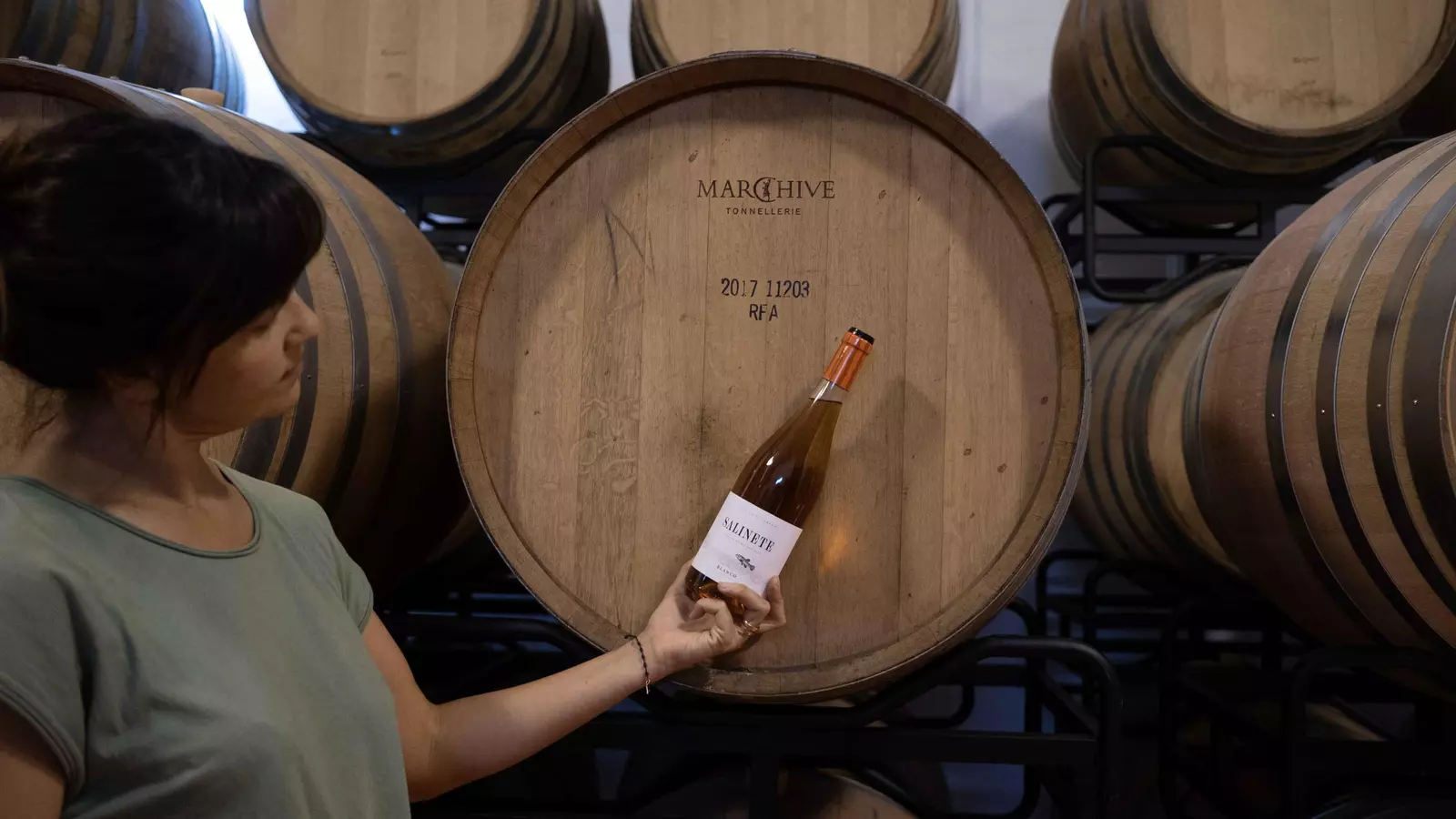
A species that has already received recognition in the form of wine, specifically, two types. The winery La Melonera in Ronda has decided to name its two latest creations in tribute to this species and to remind people of this native fish, although its population is already very scarce.
A recognition that, although it will not increase its population, will serve to raise awareness about its existence among all those who encounter any of the approximately 3,000 bottles that will be produced of an oxidative white wine and a rosé. "It's our way of helping to raise awareness about our native species, as we did with the recovery of the La Melonera grape," explained the winery's enologist, Ana de Castro.
The first to hit the market has been Salinete white, a very special wine made from vintages of Moscatel Morisco and Doradilla grapes that undergoes oxidative aging in barrels and comes to market after ten years. "We have been saving a bit of each year's Moscatel Morisco and Doradilla to see their evolution, and once the vintages passed, we decided to blend them all and put them in barrels with a bit of oxygen space to allow oxidative aging," De Castro explained. Notably, the name Salinete also refers to the salinity of the Doradilla grape, which is one of its characteristics.
/ Javier Flores"Here we don't have a flor veil, so we were able to make a small oxidative saca wine, but without the need to fortify it, it's like a small introduction to the wines of Jerez, it's a tribute wine to Andalusian wines, but it doesn't have those high alcoholic and acetic peaks because it hasn't undergone biological aging," she pointed out.
Regarding its production, the first spring saca was 3,000 bottles, although future sacas are expected to be smaller. An extraction that will be replenished when the new harvest arrives to restart the process in only 9 barrels of this very special wine.
Rosé against the current
Additionally, they are also ready to market a rosé that will be the first from the winery, although it will not reach the market until it is certified by the Regulatory Council, but it is expected to be available to consumers "shortly."
A rosé that also undergoes six months of aging in barrels with weekly batonnage. "It's a wine from the Rome variety and our idea is for it to gain more volume and body in the mouth to make it a bit meatier, hence the stirring of the lees," De Castro indicated.
A wine that also stands out in color from the current trends which tend towards much paler tones due to customer demand, especially from international clients. "We are very happy with the color; it has nothing to do with the current trends," she maintained.
In this sense, the idea from the winery with this range of Salinete wines is to break from the more standard line they had maintained until now for their reds and whites.

Latest news





Upcoming events
12
Nov
El Desembarco, la traición de Viriato at La Caja Blanca
12
Nov
HOMER El Mero Mero at Sala Trinchera Málaga
13
Nov
Marbella Startup Lab – Innovate & Collaborate
13
Nov
Candlelight: Coldplay & Imagine Dragons at Sala Fundación Unicaja María Cristina
13
Nov
Candlelight: Tribute to Ludovico Einaudi at Anantara Villa Padierna
Similar News

The 'Formula 1' team from Ronda qualifies for the international final of Stem Racing
Ronda
Arias launches a butter made from goat's milk cream produced in Ronda
Ronda
New project to rehabilitate the Casa del Rey Moro, one of the jewels of Ronda
Ronda
