New project to rehabilitate the Casa del Rey Moro, one of the jewels of Ronda
The works are estimated to last about two years and will involve an investment of nearly 3 million euros. Two wells from the Mine of the Casa del Rey Moro in Ronda have been discovered.
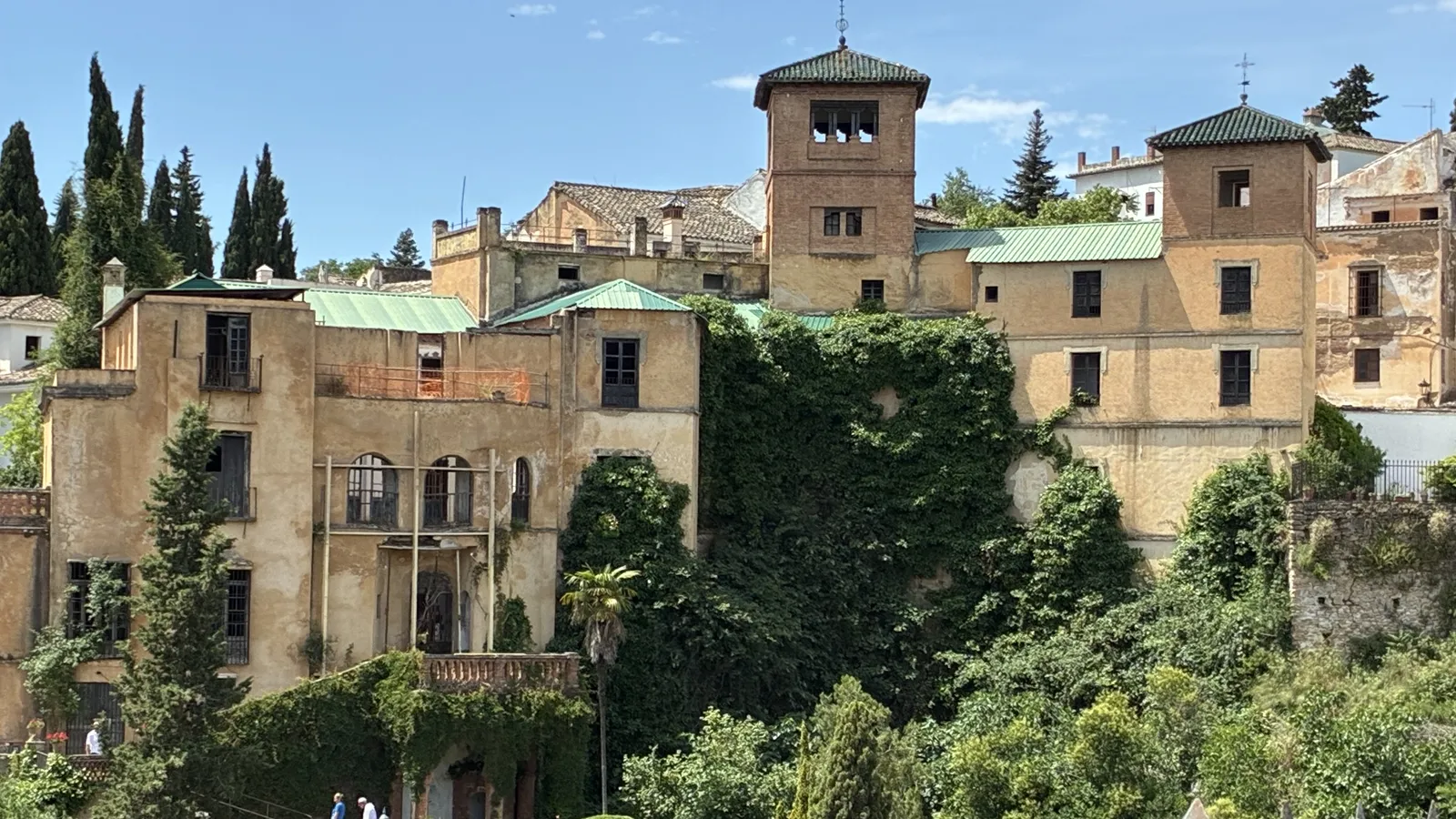

The new owners of the Casa del Rey Moro in Ronda have decided to give up their aspirations to convert the abandoned palace into a tourist accommodation after the City Council rejected the project to adapt it for tourist apartments. The new project, which has already been presented to the City Council for approval, involves a comprehensive rehabilitation of the building to integrate it into the visitable complex that includes the gardens designed by the renowned landscaper Jean Claude Nicolas Forestier and the popular Mine. This descends through the rock of the Tajo to the very course of the Guadalevín River, on which the controversial pier is located that caused the last confrontation between the property and the Ronda City Council. This led to the blocking of the opening of the Tajo Gorge Trail that crosses through it. Finally, Turismo de Ronda and the owners have reached an agreement for shared use until a judicial resolution on the matter is issued.
Regarding the building's rehabilitation, it will be a comprehensive action to restore the facilities as close as possible to their original state, as efforts will be made to preserve the hand-painted floors and ceilings that were saved from the fire that caused considerable damage inside.
The recovery of the building has been entrusted to architect Honorio Aguilar, specialized in the recovery of historical buildings. “We are very happy with how the project is turning out,” they explained.
An action that is expected to take about two years from obtaining the construction permit and starting the work, as it is a “complex project to carry out,” they pointed out.
One of the major challenges will be to restore the appearance of the windows, doors, and other elements, which will be done by specialist craftsmen to reproduce the originals.
An intervention that will also entail a significant financial investment, as it is estimated to cost about 3 million euros.
Once rehabilitated, a part will be turned into a museum to explain the history of Ronda and the role that the building played, as it had a significant role during the Christian reconquest of the city.
“We are going to rehabilitate it as a house although no one will live there, a part will be used as a museum to explain the history of Ronda and the building,” they pointed out.
Among the original elements that can be recovered is the roof, as the small original blue and green tiles were preserved by the previous owners.
Great role in the reconquest
The palace, in the Neo-Mudejar style, was commissioned by the Duchess of Parcent at the beginning of the 20th century. She also commissioned Forestier to design her garden, which is the first recognized work of the famous landscaper in Spain.
“Forestier designed a Mediterranean garden, combining the influence of the classic Hispano-Muslim garden with the geometric design of the French garden. He adapted his layout to the narrow sloping site on which it is located, overcoming it with the design of three terraces connected by staircases decorated with colored tiles, fountains connected by a water channel, and a careful combination of botanical species,” explains the official website of the Junta de Andalucía about this element, which was declared a National Monument in 1943, today a Site of Cultural Interest (BIC).
“The Water Mine is a complex military hydraulic engineering work built in the 14th century, constructed by exploiting a natural crack hidden in the wall of the Tajo,” they mention about this element. This element is 60 meters deep and has 205 steps, in addition to having different rooms along its path for soldiers or a water wheel for water extraction.
Precisely, this element was one of the great military secrets that helped withstand the long siege by the Castilian troops that took place in 1485. Finally, according to chronicles of the time, a Muslim traitor revealed the “great secret” and after the assault on the fortress that protected it, the main water supply was cut off, leading to the surrender of one of the most important cities of the Nasrid Kingdom.
Precisely, in 1911 it was the Duchess of Parcent who conditioned the descent of the river and set up a small pier to “sail the river and reach a small cave where she placed an image of the Virgin,” describes the official space description by the Junta de Andalucía.

Latest news

Upcoming events
17
Sep
La Pequeña Cuba Gastro-Cultural Festival in San Pedro Alcántara 2026
18
Sep
World Wellness Weekend Marbella 2026
18
Sep
Candlelight: Queen vs. ABBA in Málaga
18
Sep
Candlelight: Coldplay and Imagine Dragons in Málaga
18
Sep
3 de Corazones – Pancho Céspedes, Enrique Ramil and José Luis Jaén in Málaga
Similar News

The 'Formula 1' team from Ronda qualifies for the international final of Stem Racing
Ronda
Arias launches a butter made from goat's milk cream produced in Ronda
Ronda
Historical reenactments and folklore keep Ronda Romántica alive
Ronda