


Heroic wines with
A group of friends organized a crowdfunding campaign to launch the smallest winery in Banalauría, Spain.The Ronda winery Descalzos Viejos celebrates a quarter of a century.
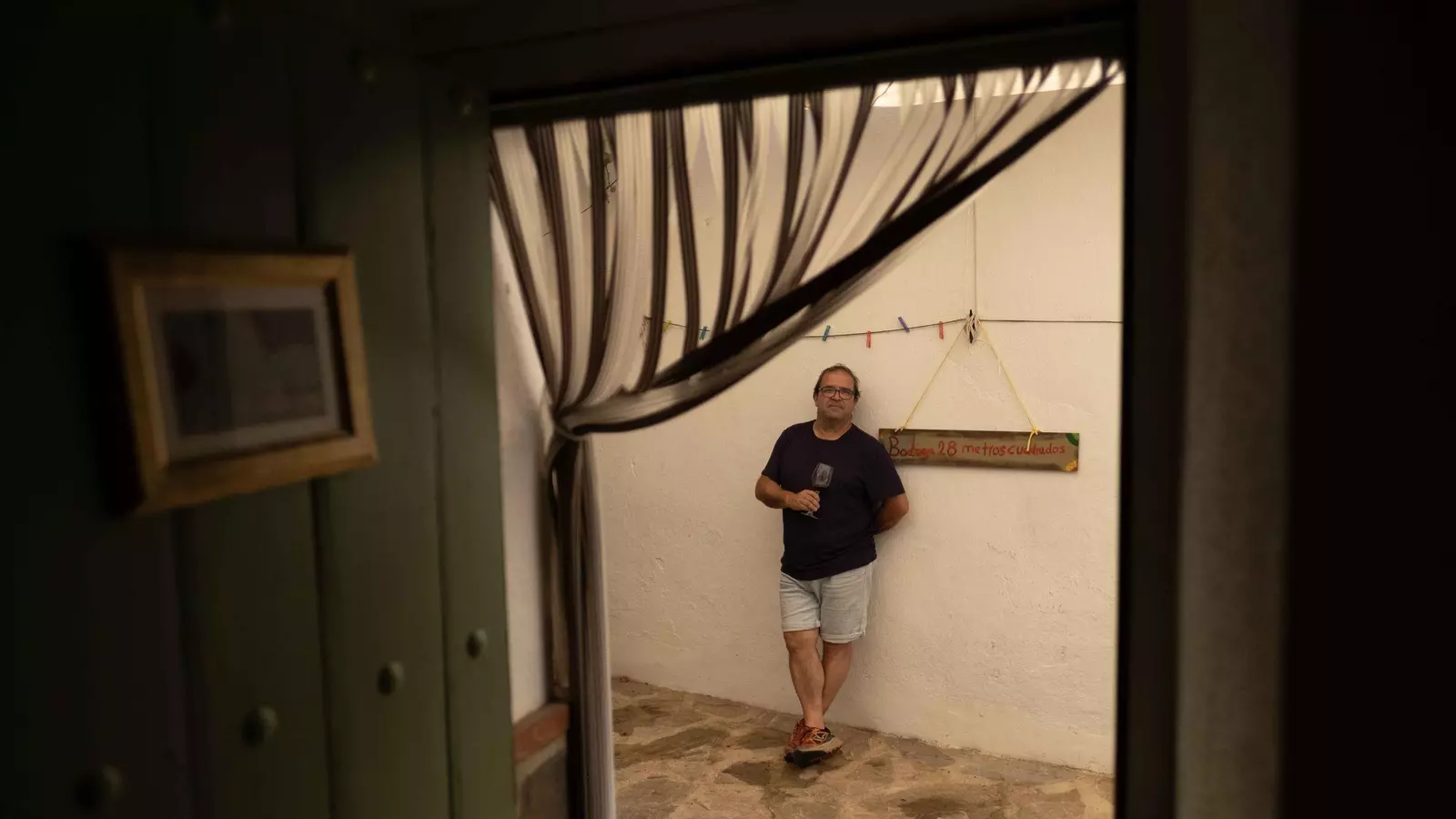

Ronda/After years at the helm of the restaurant La Molienda de Benalauría, one of the first references in gastrotourism in the Serranía, José Verdugo decided it was time to change his life to enjoy more time with his family. "I would meet my children in the hallway and they would ask who that man was," José explains graphically what led him to leave that project that had cost them so much to advance.
It was then, at the counter of a bar, as often happens, that the idea came up to convert an old stable from his wife's family into a new adventure. Initially, the idea was to replicate a small oil mill project they had learned about in their village, but problems with waste treatment made them give up. It was then that the idea of converting those 28 square meters of abandoned space, with a collapsed roof, into the smallest wine cellar in Spain and possibly in the world was born. "There is one in Almería of 30 square meters; we are still the smallest," José says with a laugh.
That idea was made possible thanks to a crowdfunding among 11 friends to make the project a reality. "Everyone contributed what they could to the project," Verdugo explained. A project that led them in 2019 to launch their first wine on the market under the name El Callejón, in reference to the small alley through which one accesses the facilities. Their first production involved collaboration with the Mures winery in Atajate as they did not finish their own works in time.
Currently, they have three wines on the market. / Javier Flores
Now, after years of work and four vintages produced, their wines bear the name of the winery itself and the name of the grape with which they are made, as they only produce single-varietal wines. A white, a rosé, and a red are their current offerings, although they have conducted two trials to release two other wines with a native grape variety.
"We want it to be a village wine, capable of conveying everything it contains, which is why we really like people to come and be able to tell them all the history that the wine they are drinking contains," Verdugo explained.
Interestingly, they do not own their own vineyards, so they rely on small plots in the municipality or nearby towns. They also use grapes from Manilva to make their well-known muscatel.
"In the future, we would also like to have our own vineyard plot," Verdugo pointed out, although all this without losing collaboration with local vintners who also make this project possible.
However, having only 28 square meters has its limitations, such as its maximum production level. "So far, we have never produced more than 3,500 bottles and we do not use barrels during the process," Verdugo indicated.
The facilities were an old unused stable. / Javier Flores
Moreover, harvesting the grapes and transporting them to the winery facilities is a challenge every year. "I always say that the real heroic harvest we have here is in 28 square meters," he claims. They have to store the grapes in a nearby refrigerated chamber and from there transport them to the winery door using a dumper or a C-15. "The entrance alley becomes our winery courtyard, and we set up and remove the machines as needed," Verdugo pointed out.
Gastronomic Experience
After consolidating the winery, José Verdugo has decided to give a new boost to it by complementing the visit to the facilities with the opportunity to learn about the history of the municipality and enjoy a meal at the doors of the winery.
"We have rented an adjacent house to have our own kitchen and to offer a complete experience that includes a visit to the municipality, museum, bakery, winery, and enjoying the wines with a good meal," he indicated. Here, there is no set menu and José prepares a different meal for each group based on market availability or whether he was able to visit San Fernando (Cádiz). "I am from Cádiz and also use a lot of seafood from there," he noted. Moreover, these are exclusive visits, as groups are not mixed.
In this way, the visitor gets a complete immersion in the rural world and the experience of tasting wines that their creators want to represent the lifestyle in the small towns of the Serranía de Ronda.

Latest news





Upcoming events
12
Nov
El Desembarco, la traición de Viriato at La Caja Blanca
12
Nov
HOMER El Mero Mero at Sala Trinchera Málaga
13
Nov
Marbella Startup Lab – Innovate & Collaborate
13
Nov
Candlelight: Coldplay & Imagine Dragons at Sala Fundación Unicaja María Cristina
13
Nov
Candlelight: Tribute to Ludovico Einaudi at Anantara Villa Padierna
Similar News
The 'Formula 1' team from Ronda qualifies for the international final of Stem Racing
Ronda
Arias launches a butter made from goat's milk cream produced in Ronda
Ronda
New project to rehabilitate the Casa del Rey Moro, one of the jewels of Ronda
Ronda
