International researchers search for new cave paintings in the Caves of Rincón de la Victoria
A team, using the same methods employed in Altamira, analyzes traces with a minimum age of 27,000 years.
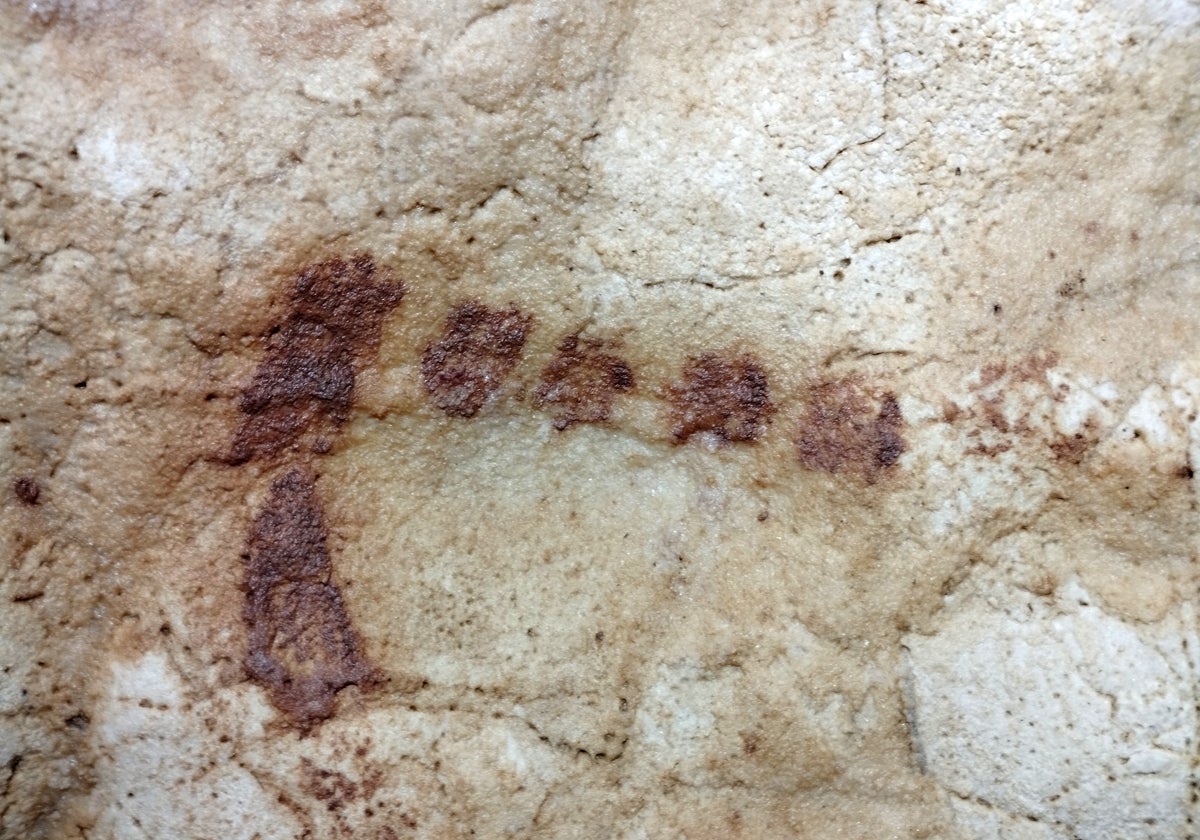

The work that began in November 2023, which enabled the identification of indications of rock art estimated to be between 27,000 and 43,000 years old in the complex of caves at Rincón de la Victoria, is entering a new phase. An international team of researchers from the First Art scientific project has conducted new sampling in the caves of Victoria, Higuerón, and Tesoro.
This scientific group includes geologist and archaeologist Shao Qinfeng (Nanjing Normal University, China); researcher Sara Garcés (Polytechnic Institute of Tomar, Portugal); and archaeologist Hipólito Collado, director of the project and technician at the Junta de Extremadura. They have been joined by local experts such as Luis-Efrén Fernández (Nerja Cave Research Institute), professor José Ramos (University of Cádiz), geologist Cristina Liñán, biologist Yolanda del Rosal, and researchers María del Mar Espejo and Pedro Cantalejo, who are responsible for the investigations in the caves of Ardales and Rincón de la Victoria.
"The samples were taken from red and black rock paintings, as well as engravings that show a patina of calcium carbonate, a product of their extreme antiquity," explained Cantalejo. This type of mineral layer can be dated using the Uranium/Thorium method, a technique that has already enabled the dating of very ancient chronologies in sites such as Altamira, La Pasiega (Cantabria), Maltravieso (Cáceres), and Ardales. With these new efforts, carried out on the 26th, 27th, and 28th of May, the aim is to establish new datings and scientifically validate the results obtained at the end of 2023.
"The interest in these initial datings has prompted this second scientific visit, whose main goal has been to increase the number of samples and revisit the oldest ones, to ensure the chronological situation of these paintings and engravings is fully guaranteed by the scientific community," pointed out the councilor of Caves, Antonio José Martín.
"The presence of this international team of scientists in our caves not only reinforces the historical and heritage value of Rincón de la Victoria but also places us on the international map of research into the origins of Human Art," reflected Mayor Francisco Salado.
"These new samplings are essential to consolidate the recognition of our municipality as a key enclave in European Prehistory," added the mayor. "We will continue to support all scientific and conservation initiatives that ensure the protection, study, and dissemination of this unique legacy, convinced that culture and science are engines of development in our municipality," Salado made clear.
Thanks to these efforts, the province of Málaga is established as a key epicenter in the study of the origins of Human Art. The richness and density of its rock art heritage in caves such as La Pileta, El Gato, Ardales, Nerja, or the caves of Rincón de la Victoria make the region an international benchmark, comparable to the great Paleolithic cathedrals of the Mediterranean.
Moreover, these discoveries highlight the relevance of the southern Iberian Peninsula as a climatic refuge during the harsh conditions of the last glaciation, which could explain both the presence of Neanderthal groups and the possible early incursions of Homo sapiens from North Africa.

Latest news





Upcoming events
12
Nov
El Desembarco, la traición de Viriato at La Caja Blanca
12
Nov
HOMER El Mero Mero at Sala Trinchera Málaga
13
Nov
Marbella Startup Lab – Innovate & Collaborate
13
Nov
Candlelight: Coldplay & Imagine Dragons at Sala Fundación Unicaja María Cristina
13
Nov
Candlelight: Tribute to Ludovico Einaudi at Anantara Villa Padierna
Similar News

Bruno Mars Ends a Decade Without a Solo Album with 'The Romantic'
Málaga