The Sinister Side of Peter Pan Revealed by Unpublished Notes from Its Creator
J. M. Barrie wrote several works that reveal the complexity of his character, and which are collected for the first time in the book 'Peter Pan: The Unpublished'.
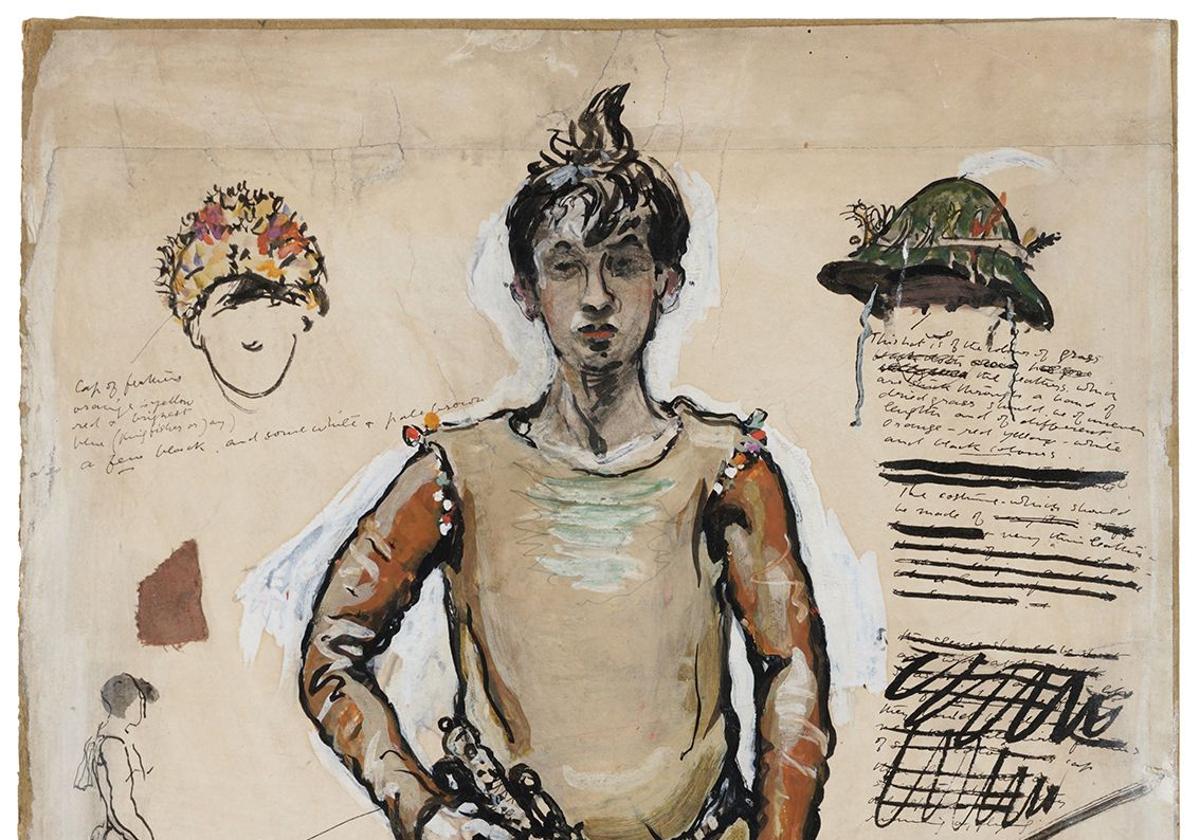

The first time that "elfish boy, dressed in forest clothes, picturesquely ragged" was seen happened in an English theater. "Through the central window at the back, Peter Pan can be seen mysteriously. Standing on the ledge, his hands feel the window as if searching for a way to open it," wrote his creator, J. M. Barrie in the script. This boy who flies and comes and goes from Neverland to earthly rooms, had a sinister side, as hinted by his author in some texts that remained unpublished in Spain. Until now, when a hundred years have been completed since the first Spanish edition of the book.
"Is Peter a sprite that incites children not to become adults?" Barrie (1860-1937) wondered in one of his notes. He describes him as "a sprite whom all mothers fear because he attracts children and takes them with him." Also, that "he says nothing that really means anything. He spins and jumps amid sad and serious scenes just because he must spin and jump; he must not think." And then "What if Peter has the ability to make everyone feel like children?"
In 'Peter Pan: The Unpublished' (Pepitas de Calabaza publishing), six writings by the author of that character who transcended time since it first appeared to the public in 1902 are gathered. In books or in movies, including sequels with some of his characters, like Wendy or Hook, the first image of the young flyer who did not want to grow up is the one that remained in the script reproduced in this edition, with the instructions for the ideal scene: "The lighting should be such that the boy casts no shadow. He has just been fitted with a wire that allows him to fly, but in the dim light, it is not visible. His movements are very quick, as if he were made of air."
This work was followed by other Peter Pan texts, signed between 1902 and 1928. Many were forgotten. Some were only in manuscript form and even one was found only in 1988, like the musings titled "Fairy Notes," with 466 surprising aphorisms about Peter. "First he teaches them to fly. Then he reveals that all who hear him play (flute) must follow him. A small child could be attracted while he flutters."
Following are the notes "On the Staging of a Fairy Play" (1904) and "Production Notes for Peter Pan" (1908); the story "The Blot on Peter Pan" and the speech "Captain Hook at Eton or The Solitary: A Strange Tale" (1927). Although its origin lies in a brother of the author who died young, as Barrie confessed, in the end, "fun is all that Peter pursues."

Latest news





Upcoming events
12
Nov
El Desembarco, la traición de Viriato at La Caja Blanca
12
Nov
HOMER El Mero Mero at Sala Trinchera Málaga
13
Nov
Marbella Startup Lab – Innovate & Collaborate
13
Nov
Candlelight: Coldplay & Imagine Dragons at Sala Fundación Unicaja María Cristina
13
Nov
Candlelight: Tribute to Ludovico Einaudi at Anantara Villa Padierna
Similar News

Bruno Mars Ends a Decade Without a Solo Album with 'The Romantic'
Málaga