Ceuta Day: the story of a city between two continents that deserves to be seen more than ever today
Every 2 September, Ceuta remembers an essential part of its history. Shaped for centuries by the Mediterranean, the Strait of Gibraltar and the meeting of cultures, this year the city approaches the day through reflection, identity and recognition of those who call it home.
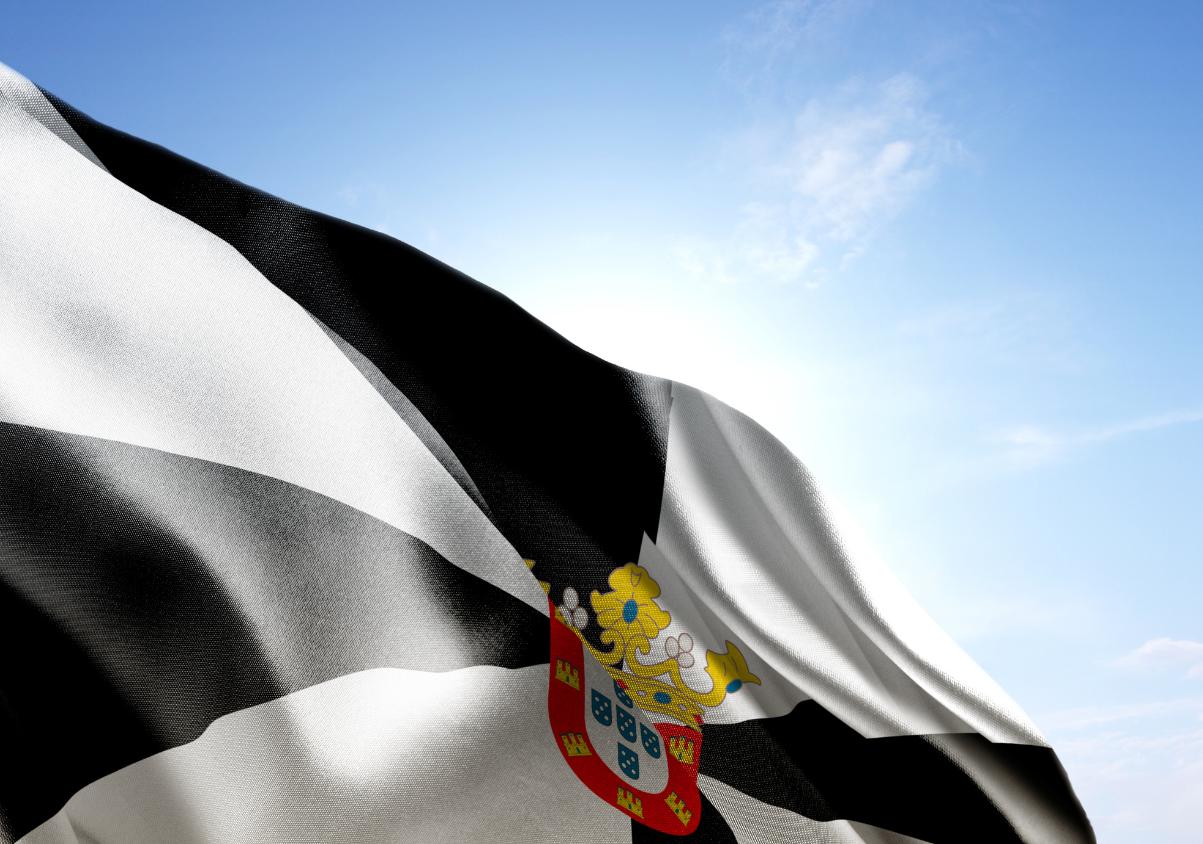

2 September is Ceuta Day. But the current circumstances make it difficult to speak about this date simply in festive terms.
Today can instead be a day to look towards Ceuta.
To discover the city beyond the headlines. To remember its history, understand why it occupies such an extraordinary position on the map and recognise a place whose identity has been shaped over centuries between Europe and Africa, the Mediterranean and the Atlantic.
Few Spanish cities can explain so much of their past simply through their geographical location.
Ceuta stands beside the Strait of Gibraltar, one of the most important maritime passages in the world. From there, Andalucía can be seen across the water, making it easy to understand why this small territory has attracted the interest of civilisations, merchants, sailors and different peoples for thousands of years.
The result of all that history is modern Ceuta: a Spanish city on the African continent with an identity unlike almost anywhere else.
Why is Ceuta Day held on 2 September?
The choice of 2 September has its origins in an event that took place in 1415.
On 21 August that year, the forces of King John I of Portugal had taken Ceuta. A few days later, the king was preparing to return to Portugal and a crucial question arose: who would remain in charge of the city?
The man chosen was Pedro de Meneses.
On 2 September 1415, he became governor, beginning a new period in the institutional organisation of Ceuta.
Centuries later, this event was chosen as the historical basis for the official day of the Autonomous City.
In 1997, the Assembly of Ceuta formally established 2 September as its institutional day, linking the date to the beginning of that new historical period and to the emergence of symbols and institutions that would continue to evolve over the following centuries.
Ceuta Day therefore does not simply commemorate one isolated event.
It provides an opportunity to discover a much longer and more complex history.
Ceuta's history began long before 1415
To reduce the history of Ceuta to its Portuguese period would mean overlooking thousands of years of human presence.
Around Benzú, evidence has been found of human occupation dating back more than 300,000 years, demonstrating just how ancient settlement in this area is.
Its location would later make Ceuta a strategic point for the major civilisations of the Mediterranean.
Phoenicians, Greeks, Carthaginians and Romans sailed through these waters, all recognising the importance of controlling territory close to the entrance and exit of the Mediterranean.
During the Roman period, the area was associated with the name Septem Fratres, traditionally linked to the hills surrounding the city.
Rome also left archaeological traces that still help reconstruct part of this chapter in Ceuta's past.
But the city continued to change.
Byzantines and other peoples would subsequently pass through an enclave that would eventually develop into an important city of the Islamic world.
Seven centuries connected to the Islamic world
Islam arrived in Ceuta even before its expansion across much of the Iberian Peninsula.
For approximately seven centuries, the city was linked to different Muslim powers and developed into a significant medina in the western Mediterranean.
Its port and geographical position encouraged exchanges between both shores.
Ceuta became a place of transit, commerce and contact between different territories.
That role as a meeting point would continue to define the city over the centuries that followed.
The civilisations that passed through Ceuta did not disappear completely whenever another arrived. They left behind architecture, words, customs, beliefs and different ways of understanding the territory.
That accumulated heritage helps to explain the diversity that characterises Ceuta today.
The Portuguese legacy that can still be seen in Ceuta
In 1415, one of the periods that left the most visible mark on the city's symbols began.
Ceuta remained linked to Portugal for more than two centuries.
Several elements dating from that period remain part of the city's institutional and urban identity today.
One of the clearest examples is its black-and-white flag, which is closely connected to Portuguese tradition.
Ceuta's coat of arms also retains a strong historical link with Portugal.
Another particularly distinctive symbol is the aleo, the staff associated with Pedro de Meneses.
According to tradition, when the question arose of who would remain to defend Ceuta, Meneses declared that the simple staff would be enough for him to carry out the task.
Over the centuries, the aleo became one of the city's most recognisable institutional symbols.
It can even be seen associated with the Virgin of Africa, the patron saint of Ceuta.
From Portugal to the Spanish Crown
Ceuta's history changed again during the 17th century.
In 1640, Portugal began the process of restoring its independence from the Hispanic Monarchy. Ceuta followed a different path and remained loyal to the Crown.
That situation was formally recognised in 1668 with the Treaty of Lisbon.
From that point onwards, Ceuta's historical development became linked to Spain.
But the transition did not erase everything that had come before.
The city retained Portuguese symbols while adding new layers to an identity that continued to evolve throughout the 18th, 19th and 20th centuries.
This accumulation of different historical periods is one of the reasons why Ceuta is so difficult to define in just a few words.
A city where four major cultures live side by side
Another essential element in understanding modern Ceuta is its cultural and religious diversity.
Christianity, Islam, Judaism and Hinduism all have a historical presence in the city.
Churches, mosques, synagogues and temples form part of an extraordinarily compact urban area.
Within just a few streets, cultural traditions can be found that elsewhere might be separated by hundreds or even thousands of kilometres.
This coexistence has been part of the identity Ceuta has projected for decades.
That does not mean that a diverse society is free from difficulties. No society is.
But it does demonstrate that generations of people from Ceuta, with different backgrounds, religions and traditions, have shared schools, businesses, neighbourhoods, public spaces and the same city.
And that may be one of the images that best represents Ceuta.
The Royal Walls, Monte Hacho and a city surrounded by history
There is also a Ceuta that deserves to be discovered simply by walking through it.
The Royal Walls are among its great monuments and offer an insight into the defensive importance the city held for centuries.
Monte Hacho provides another perspective.
From its viewpoints, visitors can see the Strait, the Spanish mainland and a geography that explains better than almost any textbook why Ceuta has held such strategic importance.
The city is also home to its Cathedral, the Basilica of Our Lady of Africa, Arab Baths, fortifications, archaeological sites and numerous buildings reflecting different periods of its history.
Even the sea forms part of this heritage.
Ceuta is almost completely surrounded by water, and its relationship with the Mediterranean has shaped everything from its gastronomy to its economy, communications and way of looking towards the wider world.
Getting to know Ceuta is also a way of standing beside it
Ceuta Day can provide an opportunity every year to talk about history.
But on 2 September 2026, it can also serve as a reminder of something simpler: a city is not only its institutions, its borders or the circumstances that attract public attention at a particular moment.
Above all, a city is its people.
It is those who open their businesses every morning, those who work in its schools, hospitals and companies, those who walk through its neighbourhoods and those who pass down the stories they inherited to the generations that follow.
For thousands of years, Ceuta has learned how to live in an extraordinarily complex location.
It has witnessed civilisations, changes of sovereignty, economic transformations and profound social change.
And despite all of that, it has managed to preserve an identity of its own.
That is why today it may be enough simply to remember, discover and recognise.
To remember a history that began long before our own time.
To discover a city that is far richer and more complex than the headlines often suggest.
And to recognise the generations of people from Ceuta who have built a unique city in one of the most extraordinary corners of the Mediterranean.
Because on 2 September, whatever the circumstances, Ceuta itself should be the true focus.
The official origins of Ceuta Day and the different stages of the city's history can be explored through the Autonomous City of Ceuta and the historical guide provided by the official Ceuta Tourism website.

Latest news


Upcoming events
17
Sep
La Pequeña Cuba Gastro-Cultural Festival in San Pedro Alcántara 2026
18
Sep
World Wellness Weekend Marbella 2026
18
Sep
Candlelight: Queen vs. ABBA in Málaga
18
Sep
Candlelight: Coldplay and Imagine Dragons in Málaga
18
Sep
3 de Corazones – Pancho Céspedes, Enrique Ramil and José Luis Jaén in Málaga
Similar News
Atajate, the tiny Málaga village where must wine and women’s memories fill the streets
Teatro del Soho in Málaga This July: El Brujo's World Premiere and a Symphonic Tribute to Gershwin
Santiago Zucchi, the Chef Arriving From Mallorca to Reinvent the Kitchen at the Costa del Sol's Most Iconic Beach Club