At the Wheel with Tintin

Françoise Sagan, the author of 'Bonjour Tristesse', adored speed, which, however, would not lead her to her grave, but an embolism did. Isadora Duncan, known for her long scarves and the fatal accident caused by one of her scarves getting tangled in the wheel of the convertible she was riding in, met a similar fate. Albert Camus was killed in a car accident, but his works survived, as did those of Tintin, another driving enthusiast.
Although a fictional character created by Georges Remi (1907-1983), better known as Hergé, his adventures, which have sold 250 million copies worldwide, have been translated into 120 languages. The Belgian cartoonist, his spiritual father, was a great lover of cars, including them in the books where the young blond-haired reporter, who travels the planet with his fox terrier Snowy, is the protagonist. Twenty-four albums of the saga span half a century, from 'Tintin in the Land of the Soviets' (1929) to 'Tintin and the Picaros' (1976), with four-wheeled vehicles appearing in nearly all of them.
The saga of one of the most famous comic characters of the 20th century, 'The Adventures of Tintin' (2011) directed by Steven Spielberg, has been adapted to film, television, and theater, and has also been the subject of major exhibitions. In recent years, some of the cars featured in his adventures have been released in miniature. The character has also inspired books, but until now, there had never been an exhibition exploring the presence of cars in Tintin's comics.
The proposal, which will delight millions of fans of the famous reporter, is now a reality in France, at the National Automobile Museum of Mulhouse-Schlumpf, where it can be enjoyed until November 11. "We have the largest car collection in the world, with more than 600 specimens and among them more than four hundred on display. Now, we also have this temporary exhibition dedicated to Tintin and cars," explains Guillaume Casser, the museum's director, presenting twelve full-size models, as well as dozens of miniatures.
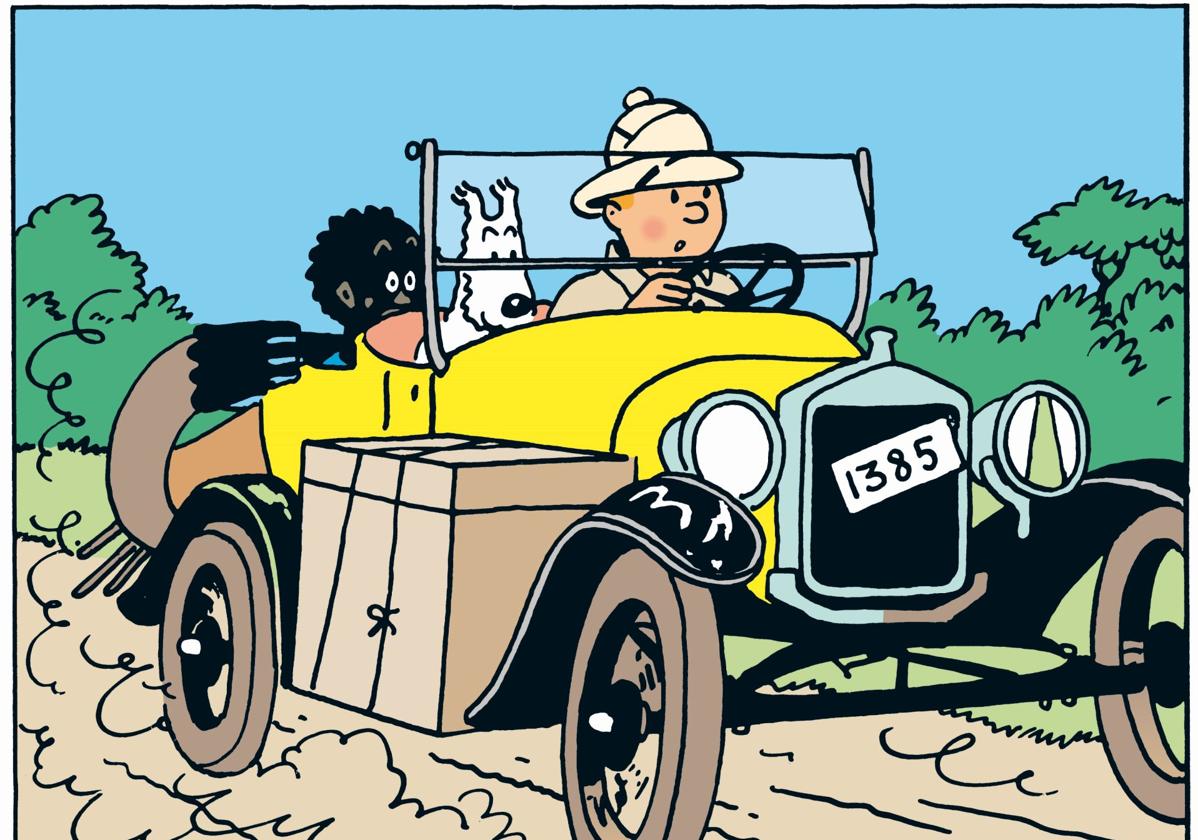
Starting with his first adventure, 'Tintin in the Land of the Soviets', cars play a prominent role in almost all of them. In fact, it is said that Hergé himself had several full-size models, which he included in the albums about the intrepid reporter. In the book dedicated to his journey through the Congo, we see him driving a Ford T; in 'Cigars of the Pharaoh', a Lincoln Torpedo Grand Sport; and in 'King Ottokar's Sceptre', an Opel Olympia. And so, up to a hundred.
Drawn with great detail, in some cases, they are essential elements in the development of the stories and their intrigue, where adventure, satire, and social criticism are some of the ingredients. In other words, cars will be prominent narrative elements that help the reader feel the story more realistically. Tintin at the wheel or as a passenger, chasing the enemy or fleeing from complicated situations... and sometimes even a victim of accidents, from which he always emerges alive. Sedans, convertibles, limousines... from Europe and the United States. "In his comics, more than a hundred models appear, many of them American," recalls Gasser.
Since yesterday, the Mulhouse museum has been showcasing the Citroën 2 CV from 'The Calculus Affair' featuring the bumbling detective twins Thomson and Thompson, the Ford T from 'Tintin in the Congo', and a gem, the Bugatti Type 35 from 'Tintin in America'. Regarding this last car brand, the most prestigious and valued by collectors, the French center boasts the largest collection in the world, consisting of more than 120 models, mostly vintage, from the late 1910s, which also unofficially makes it a Bugatti museum. "The crown jewel would be the Bugatti Royale Coupé Napoleon. Only six units were produced, and we have one of them, the one that belonged to the brand's founder; the most accomplished model," the director proudly explains.
And all, or mostly, thanks to the Swiss-born Schlumpf brothers, Giovanni and Federico, who made their fortune in the textile field and were great motor enthusiasts. In the late 1950s, they began their selective collection, acquiring 90% of the models displayed in the museum that bears their name, which covers more than 25,000 square meters, gathering a hundred brands. It is also one of the favorite places of personalities like Prince Albert of Monaco, who last year lent about twenty models from his private car collection to be exhibited there.
Miniature Models
Color, images, and objects play a huge role in the exhibition dedicated to Tintin, where in addition to full-size and miniature cars, documents, catalogs, advertising brochures, photographs, drawings... many from the Hergé Foundation, and of course albums, are gathered, appealing to both motor enthusiasts and fans of the young adventurer's saga. The settings also enhance the immersive experience, taking us to open seas, the fields of Marlinspike and its castle, as well as other places around the world that Tintin traveled.
The exhibition will be open to the public for six months, until November 11
At each stage, the cars related to the character are presented in their narrative context, enriched with documents from the Hergé Foundation archives: documentary sketches, coloring sheets, inks, sketches, magazines, catalogs, advertising brochures, photographs, models, and vehicle prototypes. Thus, three themes coexist in the exhibition: automotive heritage, art, and yes, literature, although for some, comics are the 'poor sister' of this last discipline.
Although the exhibition, which its promoters have worked on for two years, highlights the relationship between Tintin and the world of automobiles, there is a section dedicated to Hergé's studies, from the 1950s, and to the great artists who specialized in cars who collaborated with him in representing the models. "When I die, Tintin will die with me." This was the wish of Georges Remi, who has had a museum in the town of Louvain-la-Neuve for fifteen years. A product born in Belgium, like its chocolates and waffles, continues to delight us, becoming a heritage for all.

Latest news





Upcoming events
12
Nov
El Desembarco, la traición de Viriato at La Caja Blanca
12
Nov
HOMER El Mero Mero at Sala Trinchera Málaga
13
Nov
Marbella Startup Lab – Innovate & Collaborate
13
Nov
Candlelight: Coldplay & Imagine Dragons at Sala Fundación Unicaja María Cristina
13
Nov
Candlelight: Tribute to Ludovico Einaudi at Anantara Villa Padierna
Similar News
Bruno Mars Ends a Decade Without a Solo Album with 'The Romantic'
Málaga