Spanish archaeologists discover a relief of a nearly life-sized couple in Pompeii
Researchers from the University of Valencia have uncovered a monumental tomb in a necropolis located outside the walls of the ancient Roman city.
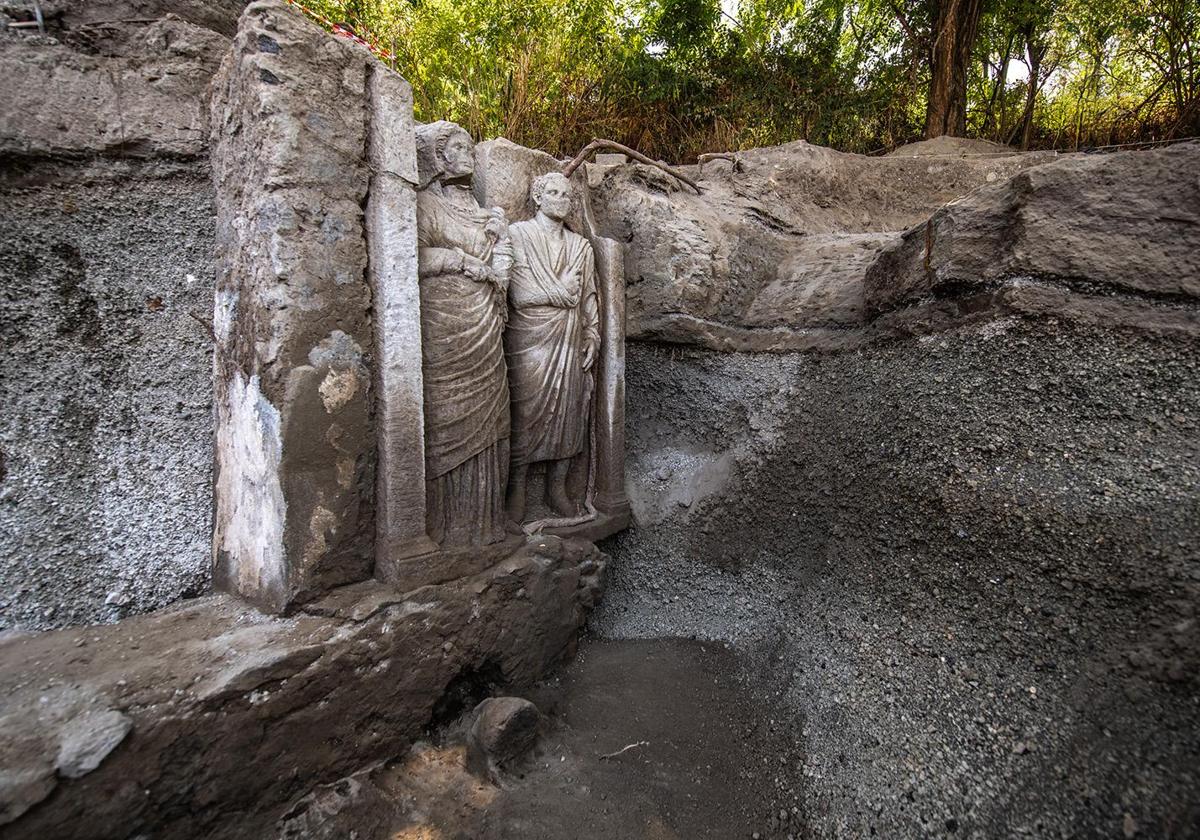

The excavations in Pompeii, the ancient Roman city located in southern Italy, continue to bring great satisfaction to archaeologists, including those from Spain. The city's life was frozen in time when Mount Vesuvius erupted in the year 79 AD. The latest discovery, made by researchers from the University of Valencia, is a relief of a man and a woman of almost life-size that is part of a monumental tomb in the Porta Sarno necropolis. The Archaeological Park of Pompeii reported this Tuesday on the find, explaining that the tomb consists of a large wall with several niches, topped by the relief with these two figures, who may represent a married couple. It is believed that the work dates from the late Republican period of Rome, spanning from the late 2nd century BC to the year 27 BC.
The discovery was made in an area that had already been excavated in the late 1990s during the construction of the railway line that circles Vesuvius. The necropolis was discovered then, and Spanish archaeologists resumed work there in July of last year, bringing to light the monumental tomb where the relief of the presumed spouses is located. The woman, however, might also represent one of the priestesses of Ceres, the goddess of agriculture, as suggested by the symbolism of some of the accessories with which she is depicted, such as the bundle of cereal spikes. The sculptures discovered by the archaeologists led by Valencian anthropologist Llorenç Alapont will now be displayed as part of the exhibition 'Being a Woman in Ancient Pompeii', which will open on April 16. Visitors will be able to see the restoration of the reliefs directly at the exhibition.
Gabriel Zuchtriegel, director of the Archaeological Park of Pompeii, celebrated how the excavation campaign carried out by the Spanish archaeologists, which takes place in an area outside the walls of the ancient city, constitutes "a precious opportunity to expand research and the enhancement" of that area. Zuchtriegel applauded the collaboration with the University of Valencia, recalling that it led to the discovery a few years ago of the tomb of Marcus Venerius Secundus and involves the collaboration of various professionals: archaeologists, architects, restorers, and anthropologists.

Latest news





Upcoming events
12
Nov
El Desembarco, la traición de Viriato at La Caja Blanca
12
Nov
HOMER El Mero Mero at Sala Trinchera Málaga
13
Nov
Marbella Startup Lab – Innovate & Collaborate
13
Nov
Candlelight: Coldplay & Imagine Dragons at Sala Fundación Unicaja María Cristina
13
Nov
Candlelight: Tribute to Ludovico Einaudi at Anantara Villa Padierna
Similar News

Bruno Mars Ends a Decade Without a Solo Album with 'The Romantic'
Málaga