


'The Arts of the Countryside', the new exhibition by Unicaja Foundation on rural life in the province of Málaga
Explore the cycle of the earth through more than 40 ethnographic pieces from the Museum of Popular Arts and Customs. Alcaucín bans the consumption of water from the reservoir after detecting possible heavy metals.
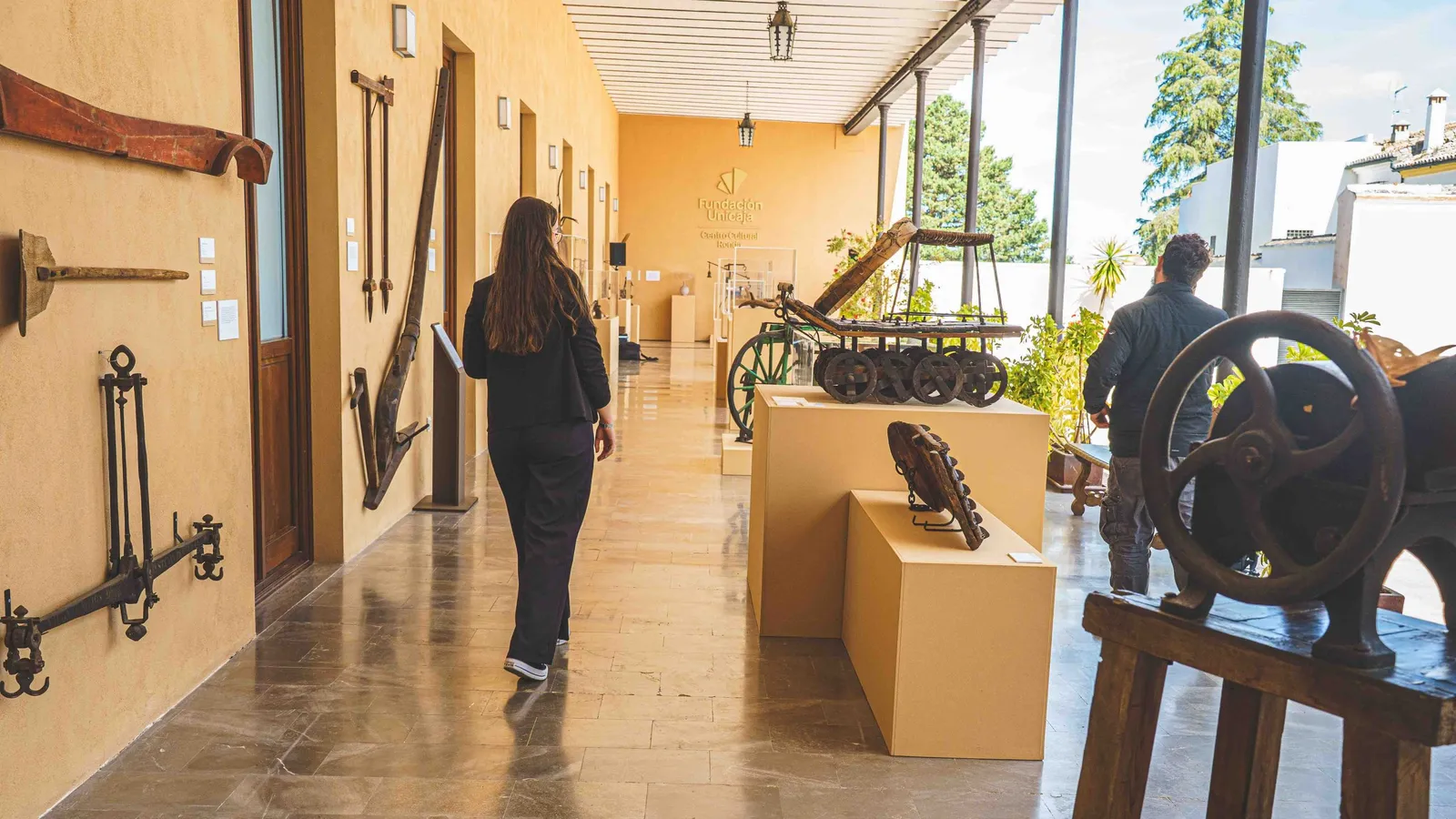

Fundación Unicaja inaugurates the exhibition ‘The Arts of the Field. The Earth Cycle; furrow, effort and memory’, which brings together more than 40 pieces from the collection of the Fundación Unicaja Museum of Popular Arts and Customs of Málaga to showcase the professions, tools, and customs that have historically marked the rural life of the province.
The head of Plastic Arts at Fundación Unicaja, Emilia Garrido, presented this exhibition on Tuesday, which can be visited until September 27 at the Centro Cultural Fundación Unicaja in Ronda, and proposes a reflection on the earth cycle through objects linked to traditional crops and agricultural work.
The exhibition includes a selection of pieces from the Fundación Unicaja Museum of Popular Arts and Customs of Málaga, a pioneering museum among the private museum institutions of the Málaga capital dedicated to preserving, studying, and disseminating ethnographic heritage.
Emilia Garrido, head of Plastic Arts at Fundación Unicaja, during the presentation this Tuesday. / Fundación UnicajaPlows, yokes, threshing boards, dornillos, water jugs, presses, scales, or espadrilles are displayed in this exhibition as material testimonies of a way of life based on effort, collaboration between humans, animals, and the landscape, and popular wisdom passed down from generation to generation. Notable pieces include an eighteenth-century carving of San Isidro Labrador and several examples of 19th-century Malaga pottery by authors like Salvador Gutiérrez de León, which highlight the dialogue between the popular and the artistic.
Other prominent works in this exhibition include a roller threshing board, preserving the memory of shared effort between man, animal, and earth; a cast iron scale engraved with the inscription ‘Viuda e hijos de Esteban Pérez y Cía’, a testament to a family artisan workshop; a water jug by the Malaga artisan Manuel Fernández Peña; a circular and braided esparto grass sieve that evokes the close relationship between work, territory, and tradition; and a hand-carved wooden dornillo from the 19th century linked to pastoral and rural culture.
With this exhibition, Fundación Unicaja reaffirms its commitment to the dissemination of the Andalusian cultural and ethnographic heritage, inviting the public to pause in this space where craft and memory intersect, and to recognize in these objects the narratives and values that have helped shape the identity of the territory.
The exhibition ‘The Arts of the Field. The Earth Cycle; furrow, effort and memory’ can be visited until September 27 with free admission at the Centro Cultural Fundación Unicaja de Ronda (C/Sor Ángela de la Cruz) from Monday to Saturday from 10:00 to 14:00 and from 16:00 to 19:00, and on Sundays and holidays from 10:00 to 14:00.

Latest news





Upcoming events
12
Nov
El Desembarco, la traición de Viriato at La Caja Blanca
12
Nov
HOMER El Mero Mero at Sala Trinchera Málaga
13
Nov
Marbella Startup Lab – Innovate & Collaborate
13
Nov
Candlelight: Coldplay & Imagine Dragons at Sala Fundación Unicaja María Cristina
13
Nov
Candlelight: Tribute to Ludovico Einaudi at Anantara Villa Padierna
Similar News

The 'Formula 1' team from Ronda qualifies for the international final of Stem Racing
Ronda
Arias launches a butter made from goat's milk cream produced in Ronda
Ronda
New project to rehabilitate the Casa del Rey Moro, one of the jewels of Ronda
Ronda
