


Morosanto Winery, new ownership and project relaunch
The renovation will involve an investment of 4 million euros and the creation of a new brand. The latest wine created in Ronda will be so exclusive that it can only be enjoyed at Bardal.
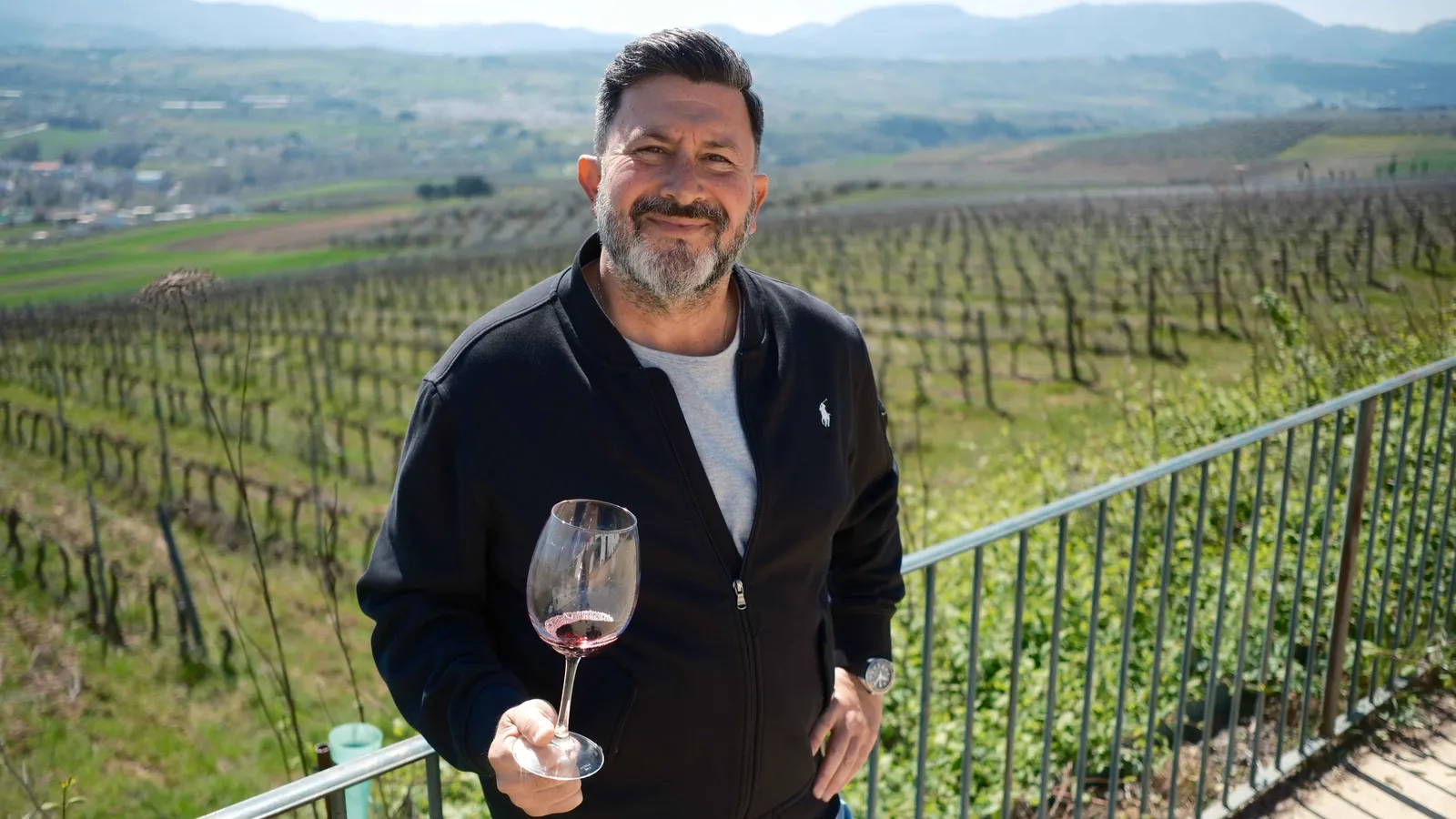

The Ronda-based winery Morosanto has been under new ownership for a few months, specifically, the entrepreneur from Malaga, Sergio Rosillo, has acquired all the shares of the company.
Rosillo, who has described the purchase as his “most personal” project, is very excited to develop this project that connects him to his roots, since his grandfather owned an agri-food company in Córdoba, and he adds value by doing it in Ronda, the city where his paternal family originated.
“Of everything I experienced with my grandfather, the world of wine was what I liked the most,” explained Rosillo, who acknowledges that he had the idea of reconnecting with his origins four or five years ago. “I remember entering Cobos wineries and being amazed by the smells and the barrels since I was very young,” he insisted.
In addition to maintaining the wine culture in his family as consumers, since 2019 his technology consulting business took him to Argentina and he began traveling through countries in the area such as Chile or Uruguay, to the point of being very close to buying a vineyard estate in Mendoza, although that idea did not come to fruition.
After intensifying that desire to enter the world of wine, which had only been hindered by his lack of experience in the sector, last summer he decided to form an advisory team to look for an estate after obtaining his family's support to do so. “Choosing Ronda is for more than just family ties, I believe it is a territory with enormous potential to develop a wine project,” Rosillo maintained.
“Can Ronda produce high-quality wines? I believe so, that's why the decision was to come here,” he stated. However, he does not rule out undertaking other projects in other areas of the province. “Everything that has to do with the wine tradition of the province of Malaga has been of great interest to me for many years,” he affirmed.
Finally, after analyzing different options in the Serranía, he decided to buy the Morosanto winery that had been on sale for some time. “What I liked the most was the area that has vineyards on terraces, I am convinced that a great white wine will come out,” he explained. Indeed, it is an area where varieties such as chardonnay, viognier, moscatel morisco, and some syrah are planted, although this last variety will be removed as part of the vineyard's reconversion plan that is already underway. “On the terraces, the varieties will be 100% white,” he noted, adding that they will also introduce doradilla. Although this area has just over two hectares of vineyards, in total the estate has 15 hectares and 16 authorized, so it could be expanded in the future.
“We want to make a commitment to introduce native things, although not from a radical point of view,” he noted. In this sense, he indicated that “with doradilla we will seek to make something under a veil of flor, a wine more from the land.”
Regarding red varieties, cabernet sauvignon, syrah, petit verdot, and tempranillo predominate, in addition to some lines of tintilla de Rota. It is also planned to incorporate Malbec and a traditional goblet-trained planting of romé.
In general, the white varieties will be the most reinforced, moving from the 10% they currently represent to 40% in the future.
Very Ambitious Project
Regarding the project in general, Rosillo has stated that “it is a very ambitious project, I like aiming far, although we will do it humbly and honestly, we are not coming to steamroll anyone, it is ambitious because I feel that the estate and the place have a lot of potential.”
The transformation project will consist of three phases, with the restructuring of the vineyard being the first, which is already underway. “We are already on it,” he affirmed.
This will soon be followed by improvements in the winery facilities for wine production, with wine tourism being a later phase. “In the winery, yes, a strong change is coming and we have already closed the budget for new machinery, new tanks, and fixing elements that are not working, we are going to bring it to the standards of a winery that wants to make quality wines,” he noted.
The second phase will involve undertaking the construction of a new building exclusively for wine tourism, thus separating the visitor area from the industrial production area. “Visitors will be able to see the facilities, but they will be separate areas,” the new owner indicated. “We are going to try to combine the traditional with a look to the future,” he noted, although the project is not yet finalized. “The philosophy of the project goes in this style, uniting avant-garde and tradition,” he emphasized.
The facilities will include a wine cellar, tasting area, and the apartments that are currently integrated within the main building of the winery.
Once this building is completed, the space that will be freed up will become part of the winery and improve the facilities for the staff.
This will be joined by landscaping work on the estate and the enhancement of the Roman ruins that exist within the plot. “We plan to carry out landscaping work linked to the experience that can complement the visit,” he specified.
New Brand
Regarding the wines, one of the first decisions has been to change the brand of the winery, whose new name will be announced soon, as the marketing team is currently working on it. “It will be a new chapter,” Rosillo affirmed.
On the other hand, he noted that “the first thing we are going to do is respect the vineyard, our philosophy is to improve the quality of the raw material so that from that point we can offer the market worthy, honest, real wines.”
In addition, they have also decided to focus more on white wines, as “I believe there is an opportunity to make different white wines, in addition to connecting with market trends.” Similarly, there is also a plan to increase the production of rosé wine.
Regarding the reds, it will feature a petit verdot, as he is convinced that it can be one of the wines that define the style of Ronda. “There are already several very good petit verdots, I am going to join in with a high-quality monovarietal petit verdot, making a wine that adds to the definition of the territory,” he noted.
Similarly, it will feature a monovarietal wine based on tintilla de Rota that will be the most experimental wine. “We are thinking of doing carbonic maceration and going directly to the tinaja, something like that,” Rosillo pointed out.
This will be joined by a reserve wine based on a selection of the best cabernet Sauvignon grapes from the vineyard, although it will also incorporate tempranillo or petit verdot, although they do not rule out doing it with Malbec once it is available.
These wines will be joined by others produced in small quantities and much more special. “Something experimental we will always have,” he emphasized.
These new wines are expected to start reaching the market from next year. Specifically, young red, white, rosé, petit verdot, and tintilla.
Regarding the total cost of the project, Rosillo explained that the initial investment was 1.5 million euros and they plan to invest another 2.5 million euros over a period of three years.

Latest news





Upcoming events
12
Nov
El Desembarco, la traición de Viriato at La Caja Blanca
12
Nov
HOMER El Mero Mero at Sala Trinchera Málaga
13
Nov
Marbella Startup Lab – Innovate & Collaborate
13
Nov
Candlelight: Coldplay & Imagine Dragons at Sala Fundación Unicaja María Cristina
13
Nov
Candlelight: Tribute to Ludovico Einaudi at Anantara Villa Padierna
Similar News
The 'Formula 1' team from Ronda qualifies for the international final of Stem Racing
Ronda
Arias launches a butter made from goat's milk cream produced in Ronda
Ronda
New project to rehabilitate the Casa del Rey Moro, one of the jewels of Ronda
Ronda
