The Nerja Cave discusses the importance of the sea in Prehistory
The Cavity Research Institute, along with the CSIC and the universities of Cádiz and Alcalá, address the latest scientific findings.
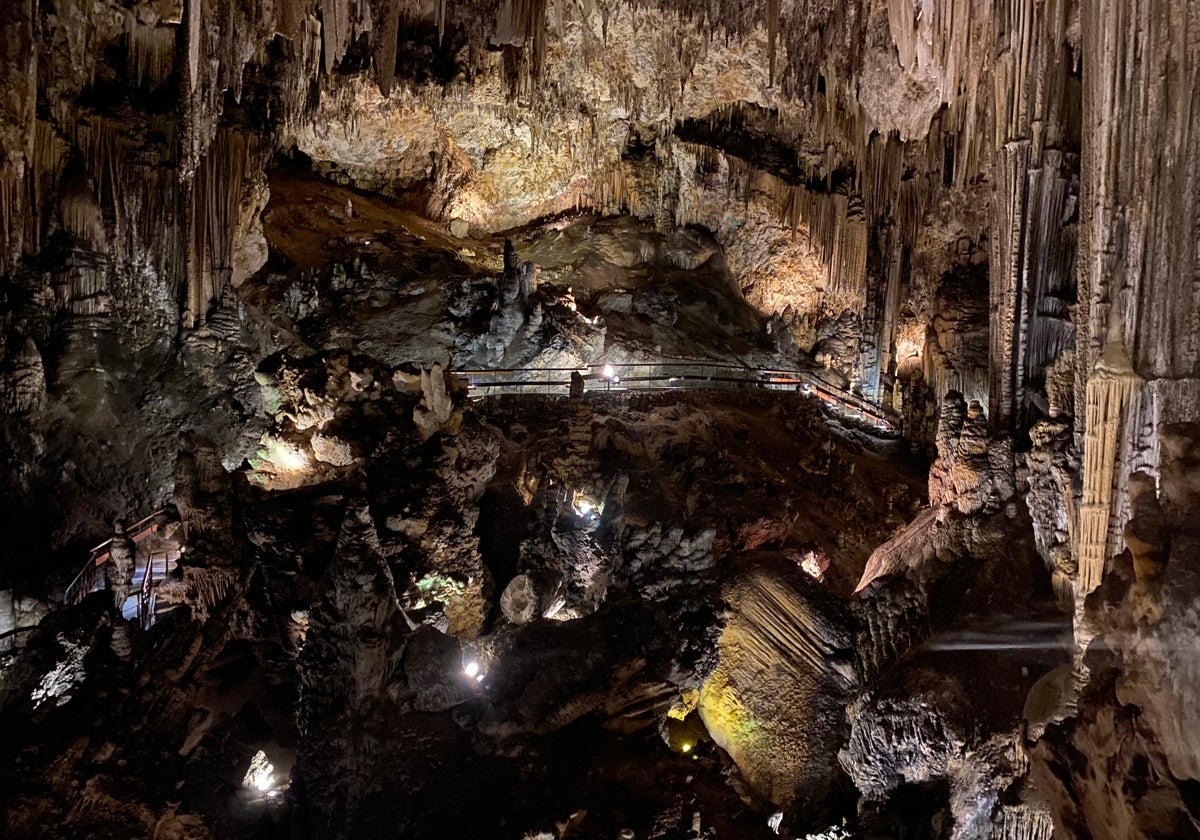

The Cueva de Nerja, the cathedral of Prehistory in southern Europe, continues to be the epicenter of scientific debate. The Research Institute ... Cueva de Nerja (IICN), along with the Spanish National Research Council (CSIC) and the universities of Cádiz (UCA) and Alcalá (UAH), has promoted a new scientific debate through a specialized seminar for the in-depth study of the importance of the sea in prehistoric communities.
The goal of the academic initiative is to make known and promote research projects on prehistoric sites related to the marine environment, "evaluating the exploitation of the vast resources provided by the sea as a great medium that facilitates the mobility of people, products, and ideas, as well as a space for relationships established between coastal and inland lands," the Nerja Cave Foundation pointed out in a statement.
25 speakers participated, belonging to 13 projects on the subject, with more than 50 attendees present
Under the title 'Looking at the Sea: Visions from Prehistory', this seminar was conducted 'online', featuring 25 speakers from 13 different projects on the subject and with the presence of more than 50 attendees.
The video conference format allowed for the sharing of knowledge among scientists from Spain, Portugal, and Italy, and also included the participation of students and others interested in the topic. Everyone was able to follow each of the presentations throughout a day dedicated to prehistoric science and its relation to the sea.
Relevant Participants
Researchers Luis-Efrén Fernández, Cristina Liñán, and Yolanda del Rosal, from the Nerja Cave Research Institute, hosted this meeting, which featured prominent scientific advisors such as Juan F. Gibaja, M. Cubas, and Gerard Remolíns, from the CSIC and UAH; or José Ramos and Eduardo Vijande, from the UCA.
Among the projects presented, highlights include the Prehistory of the Nerja Cave; the Strait of Gibraltar as a bridge during Prehistory; the caves of Cantal in Rincón de la Victoria; the arrival of the first Homo sapiens in Portugal; and Neolithic navigation in the village of La Marmotta (Italy).
The Bronze Age in the Guadalquivir and studies on the Mediterranean diet during Prehistory were two topics
Other topics addressed included the Mediterranean and Neolithic navigation from Pisa (Italy); the necropolis of Campo de Hockey in Cádiz; studies of malacofauna in Mediterranean sites; the Cueva del Toro in Benalmádena; the Mesolithic-Neolithic in Portugal; the Mesolithic-Neolithic in the Cantabrian; the Bronze Age in the Guadalquivir and studies on the Mediterranean diet during Prehistory.
"An event that has aroused great scientific and academic interest," summarized the Foundation. They also recognized the advantages of the 'online' format, as it allows for greater reception breadth, lower organizational cost, and significant scientific projection, "endorsed by the prestige of the Nerja Cave Research Institute."

Latest news





Upcoming events
12
Nov
El Desembarco, la traición de Viriato at La Caja Blanca
12
Nov
HOMER El Mero Mero at Sala Trinchera Málaga
13
Nov
Marbella Startup Lab – Innovate & Collaborate
13
Nov
Candlelight: Coldplay & Imagine Dragons at Sala Fundación Unicaja María Cristina
13
Nov
Candlelight: Tribute to Ludovico Einaudi at Anantara Villa Padierna
Similar News

Bruno Mars Ends a Decade Without a Solo Album with 'The Romantic'
Málaga