Keys to Understanding the Sale of a Velázquez: Does the Portrait of Sor Jerónima Leave Spain Forever?
The painting, owned by a private collection and created during the Seville years of the universal genius, is currently on display at the Maastricht art fair, brought by a London gallery that is reportedly negotiating its sale.
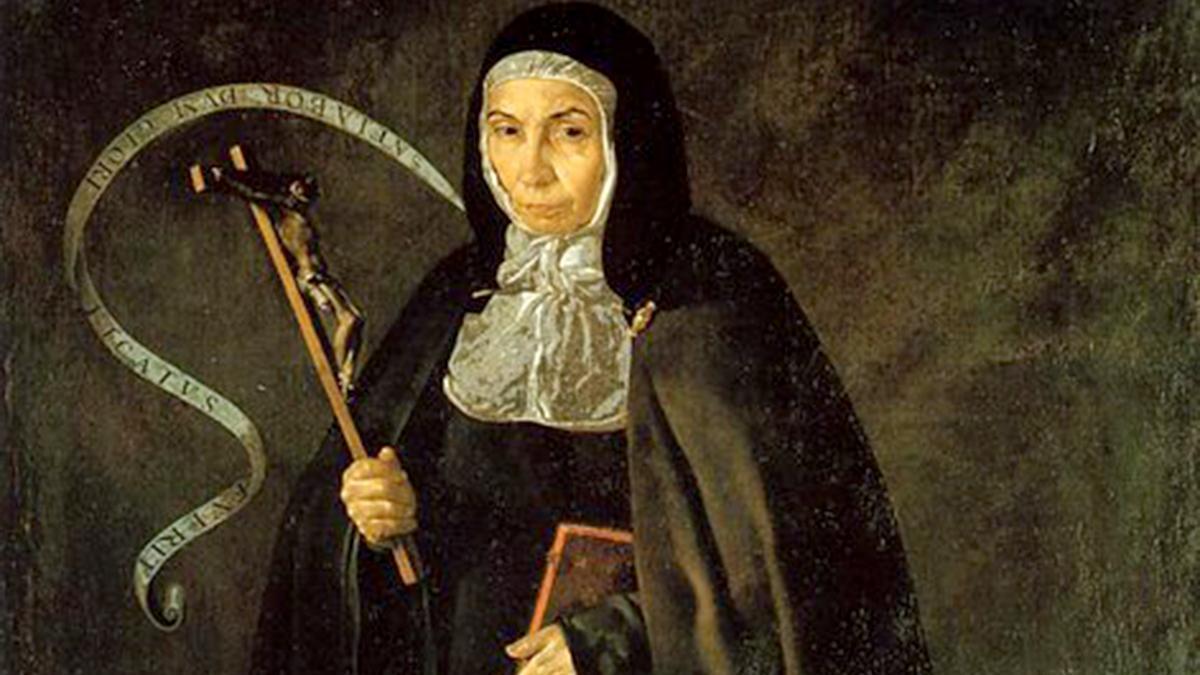

Can a Velázquez be sold? The question is at the heart of debates among historians, conservators, and art experts, but due to its significance, it should more broadly engage the rest of society. The focus is on the painting Sor Jerónima de la Fuente by Diego Velázquez, one of the three known portraits of this Franciscan nun painted by the Sevillian master, currently displayed at the TEFAF (The European Fine Art Fair) in Maastricht by the London gallery Stuart Lochhead Sculpture, which has seen its image projected globally with this case. According to the newspaper The Guardian, the painting is for sale.
Velázquez's works rarely come up for auction, but when they do, they fetch astronomical prices. In 2004, the portrait Juan de Pareja was sold at Christie’s for 4.7 million dollars (about 3.5 million euros at that time's exchange rate), although today its value would be much higher. In December 2023, Sotheby’s London estimated the portrait of Isabel de Borbón at 35 million dollars (about 32 million euros) for its auction in New York, although it was ultimately withdrawn. In London and Spain, calculations are being made regarding Sor Jerónima. The public display of this work, which has rarely been seen in public, allows above all for its appraisal by experts.
Key points to understand the sale (or not) of a 'Velázquez'
Owned by the family Fernández de Araoz Marañón since the 1940s, the portrait is part of the corpus of the genius of Las Meninas known to researchers. Javier Portús, head of Spanish Baroque Painting at the Prado Museum, included these portraits in the catalog of the remembered Velázquez y Sevilla from 1999, as pointed out in a message on X by Benito Navarrete, professor of Art History and one of the voices always alert to the mishaps against the artistic heritage and the negligence of the administrations.
Specifically, this Sor Jerónima, painted in 1620, is one of the two full-body portraits (the other is in the Prado) of the Franciscan Clarist nun who played a key role in the foundation of convents in the Philippines, a Spanish colony in the 17th century, and from an artistic point of view, it is an exceptional testimony of the Sevillian phase of the painter, an early and less represented stage in the Spanish public collections.
Legal framework in Spain
In Spain, the sale and export of artworks are regulated by the Spanish Historical Heritage Law of 1985, which establishes that artworks over 100 years old fall within the scope of protection of the Spanish historical heritage, regardless of whether they are in public or private hands. However, for an artwork to be subject to specific restrictive measures, such as the prohibition of export or the declaration as an Asset of Cultural Interest (BIC), it must meet certain requirements and undergo an administrative process.
That is, if the painting had been declared BIC by the Community of Madrid (where it is inventoried) or by the Ministry of Culture, its sale abroad would be strictly prohibited, and any transaction in the national market would be subject to the right of first refusal and withdrawal by the State. As far as is known, the painting is not a BIC, which leaves a gap in its specific protection.
According to information from the Ministry of Culture, only a temporary export permit was granted for the painting to be displayed at the Art Fair. This type of authorization implies that the work must return to Spain after the fair, but does not explicitly prohibit its sale while abroad. Here the controversy arises: the gallery asserts that the painting is for sale, while the Ministry of Culture has denied that it can be marketed. The key lies in the conditions of the export permit.
In a message on social networks, Navarrete has elaborated his role as president of the Commission of Movable Goods of the Ministry of Culture to request an explanation from the Ministry of Ernst Urtasun: "Again, no report was requested from the Museum of Fine Arts nor from this writer, it is exported with a single report from a single specialist. What is happening in the Board of Qualification and Valuation is at least concerning." This advisory body of the Ministry advises on the export and import of cultural goods and proposes their acquisition to enrich public collections. Its main function is to evaluate the value of the works and ensure their conservation in the country when necessary.
If the Prado already has a twin painting to the one being sold and were to exercise its right of withdrawal on the sale, its natural destination would be the Museum of Fine Arts of Seville, which does not have any painting by Diego Velázquez from his early Sevillian years (1617-1623), a period in which the painter, still young, developed his initial style influenced by naturalism and tenebrism in his hometown.
In 2024, the Ministry of Culture made more than 250 purchases to enrich the museums that are state-owned, for a total value of almost 15 million, but not a single one of those acquisitions went to collections in Andalusia, as denounced by the Ministry of Culture of the Andalusian Government.
If it were sold to a Spanish buyer or a foreigner residing in Spain, the work could change hands and return to the country without violating the temporary authorization. However, if a non-resident foreign buyer were to acquire it, a permanent export authorization would be necessary, something the Ministry could deny if it considers that the work has exceptional patrimonial value.
There is another safeguard that would ensure that this painting is not lost: although it is not a BIC, the painting is inventoried by the Community of Madrid, meaning the State is aware of its existence and could intervene if a permanent export permit were requested after a sale. The decision to authorize or not such export would depend on a technical report that assesses its importance to the Spanish heritage.
That is, in strictly legal terms, the painting can be sold in the market, both in Spain and abroad, as long as the conditions imposed by Spanish legislation are respected: if it is sold in Spain, the owners have full right to sell it to another individual or institution within the national territory; and if it is sold abroad during the art fair, while the export permit is in effect, the sale would be legal if the buyer guarantees the return of the painting to Spain. If this condition is not met, the transaction could be challenged by the Ministry of Culture, which has the authority to block the definitive exit of the country.
Lastly, if the gallery were to sell it to a collector or museum abroad with a destination outside of Spain, the Ministry would have to issue a new permit. And there, the pressure from citizens and from institutions and art centers would be key to multiplying the messages that these days have been shared by voices like Benito Navarrete or Pablo Hereza, conservator and expert in the work of Murillo.
Should Spain allow such a gem to be at the mercy of the global market, or is it time for the State to act to secure it in a public collection?

Latest news





Upcoming events
12
Nov
El Desembarco, la traición de Viriato at La Caja Blanca
12
Nov
HOMER El Mero Mero at Sala Trinchera Málaga
13
Nov
Marbella Startup Lab – Innovate & Collaborate
13
Nov
Candlelight: Coldplay & Imagine Dragons at Sala Fundación Unicaja María Cristina
13
Nov
Candlelight: Tribute to Ludovico Einaudi at Anantara Villa Padierna
Similar News

Bruno Mars Ends a Decade Without a Solo Album with 'The Romantic'
Málaga