Kangbashi is written from the end
We continue a journey through forgotten corners of the world with a city that was built by Chinese rulers in a desert.
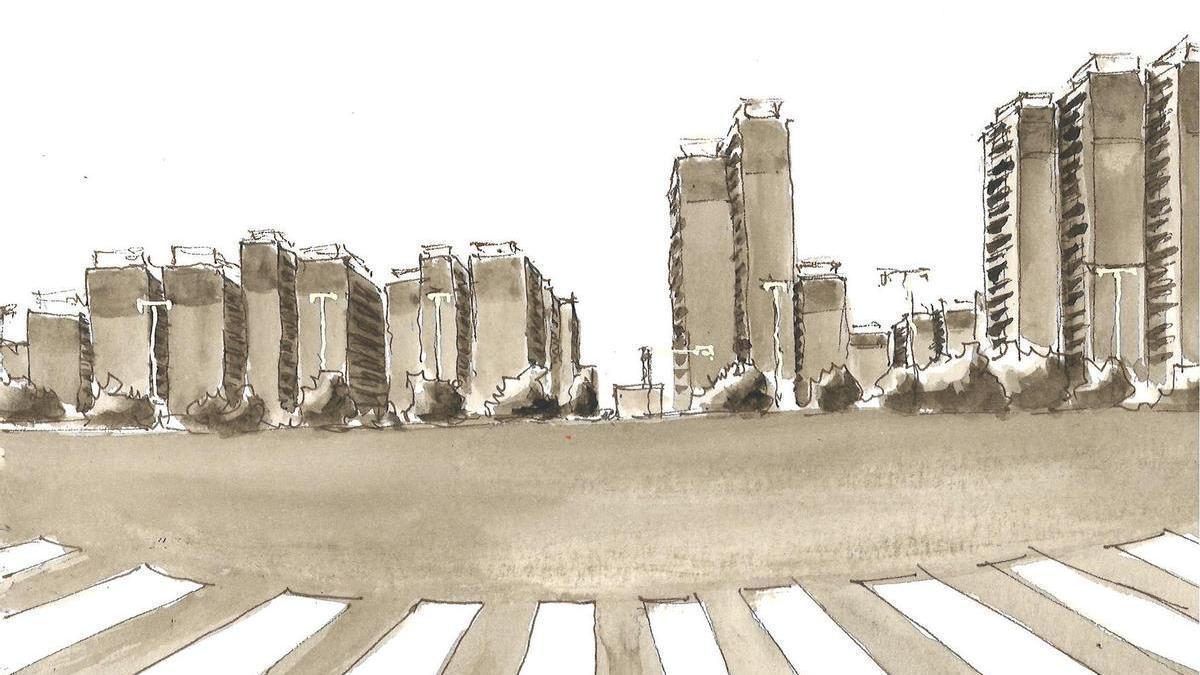

Kangbashi was a ghost town before it was inhabited. Here, everything happens in reverse. The avenues are numbered from back to front, movies start from the end, bookshelves are organized from right to left, clocks only measure the countdown. It’s even uncertain whether the bronze horses trotting through Genghis Khan Square are moving forwards or backwards.
Every city is born from the will of its first settlers. A rich basin, a fertile valley, a secure lookout. Evolution takes care of turning paths into roads, roads into streets, streets into avenues. In the calendar of months, the inhabitants multiply and colonize the land by building villages. Then neighborhoods; later, districts. It always happens this way. The people take the initiative and the landscape adapts to them.
In Kangbashi, however, the opposite occurs. The Chinese rulers imposed themselves on the landscape and sprung a city in the desert. They designed a grid of avenues and squares to host massive parades, large parks and gardens, museums to exhibit emptiness, stadiums where only the wind cheers, and elegant shopping centers without leisure or business.
The city was conceived in the year 2000 to accommodate more than a million people, thus providing for the workers of the booming coal industry in the area. An exciting project to inaugurate the 21st century. China aimed to modernize the Ordos territory overnight, part of the Inner Mongolia region. An area of vast semi-desert grasslands and pastures where shepherds raised sheep, camels, and horses. Human presence was limited to lean villages scattered within several days' ride.
The land of Genghis Khan, still longing for its leader, retains its medieval aura. For decades, climatic conditions, at the edge of survival, have hindered development limiting it to certain population centers. The inhabitants, mostly nomadic, are accustomed to building their habitat in communion with nature. Their wooden and felt huts, called gers, feature a wide circular structure covered with carpets and a stove in the center for cooking and heating the environment. A perfect symbolism representing tradition and family, the true pillars of their community.
Genghis Khan, the ancient guide reincarnated in the invincible technological progress, has reconquered his towns riding on the back of a Xiaomi or a Huawei and imposes the new cyber religion on his subjects. He exhorts them to a constant and submissive devotion to their social networks, with the digital promise of a westernized paradise where they can watch series until dawn and gossip about others’ lives.
The Chinese rulers built a vessel for life over that desert and named it Kangbashi. In 2003, they unfolded a striking spectacle to inaugurate the city before the amazed satellites that broadcasted the signal beyond the Great Wall. Fireworks flickered a rainbow over the surprising shell of the Great Theater of Ordos, the wavy structure of the museum resembling a rock eroded by the wind, the library looking like a huge bookshelf, and the imposing Genghis Khan Square riding towards progress on its steeds. When the minister cut the ribbon, the countdown began.
Kangbashi writes its history from the end. The last settlers will arrive to occupy the districts, making way for their predecessors, who will turn them into neighborhoods. The avenues will compress into streets, streets into paths, and these will disappear under the sand. The city will shrink to a village of scattered houses before turning back into a desert. And then, the bronze horses will regain their nature and trot again through the wild moors of Mongolia.

Latest news





Upcoming events
12
Nov
El Desembarco, la traición de Viriato at La Caja Blanca
12
Nov
HOMER El Mero Mero at Sala Trinchera Málaga
13
Nov
Marbella Startup Lab – Innovate & Collaborate
13
Nov
Candlelight: Coldplay & Imagine Dragons at Sala Fundación Unicaja María Cristina
13
Nov
Candlelight: Tribute to Ludovico Einaudi at Anantara Villa Padierna
Similar News

Bruno Mars Ends a Decade Without a Solo Album with 'The Romantic'
Málaga