


The Catholic Church would accept the change of date for Easter Week
''I would have no problem accepting the Easter date proposed by the Orthodox,'' stated the auxiliary bishop of Seville. The change of date for Holy Week in Malaga, a debate with many nuances.
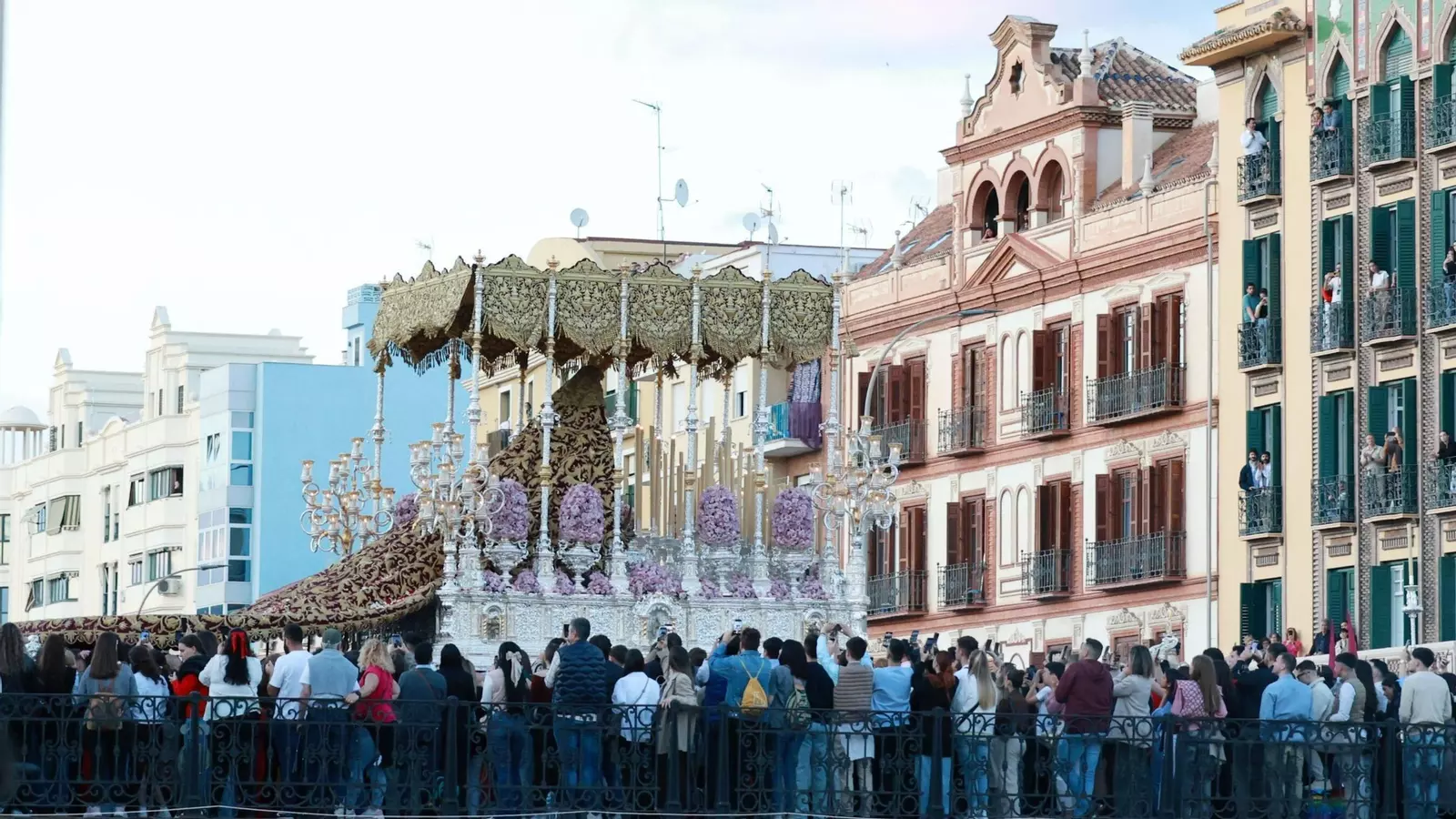

The Catholic Church has shown openness to changing the date of the Easter celebration and to accept the date proposed by the Orthodox Church, according to the president of the Episcopal Subcommittee for Interconfessional Relations and Interreligious Dialogue of the Episcopal Conference, Ramón Valdivia.
This was stated during a meeting with the media to present the ecumenical celebration on the occasion of the 1,700th anniversary of the Council of Nicaea, considered the first ecumenical council of the Catholic Church, which this Thursday will be held at the Almudena Cathedral within the framework of the 128th Plenary Assembly of the Spanish Episcopal Conference (CEE).
"The Catholic Church would have no problem in accepting the Easter date proposed by the Orthodox, although it would pose difficult questions. However, there is no sense of hostility towards this issue, far from it," stated the auxiliary bishop of Seville.
Valdivia explained that the Catholic Church follows the Gregorian calendar, while the Orthodox use the Julian calendar, hence the difference in dates, as each calculates the length of the year differently.
In the Catholic confession, the Resurrection Easter is celebrated on the first Sunday after the first full moon of spring, which means from March 21 to 28 days later the Easter date "is always variable."
The prelate emphasized that the differences with the Orthodox Church "are more about the calendar than theological," but he highlighted that "there is continuous dialogue on this topic."
According to the director of the secretariat of the Episcopal Subcommittee for Interconfessional Relations and Interreligious Dialogue of the CEE, Rafael Vázquez, the problem with changing the date also lies in getting all the Orthodox churches to agree on this date, for which they would need to hold a Council, something he sees as "very complicated" given the current situation.
"We are open to them giving us a date but only when everyone agrees, because if we do it with just one of the Orthodox churches, we continue with the same problem," he added.
Regarding the ecumenical prayer that will be held this Thursday at La Almudena, where different Christian confessions from our country will meet, Vázquez detailed that it will be structured around the Creed and the joint declaration agreed upon by all confessions, which will advocate for "one day no longer being plural but a single Church."
"Unity is not a matter of strategy, it responds to a request from the Lord. The situation of division in the Church is abnormal and detracts from the credibility of our message," Vázquez emphasized.
In this context, when asked about the decision of some Anglican Churches to ordain women as priests and bishops, or the appointment of an Archbishop of Canterbury, Vázquez opined that these are "issues that complicate unity."

Latest news





Upcoming events
12
Nov
El Desembarco, la traición de Viriato at La Caja Blanca
12
Nov
HOMER El Mero Mero at Sala Trinchera Málaga
13
Nov
Marbella Startup Lab – Innovate & Collaborate
13
Nov
Candlelight: Coldplay & Imagine Dragons at Sala Fundación Unicaja María Cristina
13
Nov
Candlelight: Tribute to Ludovico Einaudi at Anantara Villa Padierna
Similar News
Classrooms move to the sea: hundreds of schoolchildren take to the port of Caleta de Vélez by catamaran
Vélez-Málaga
Raule, a tribute to Manuel Carrasco and Óliver Gil, headline the San Juan Night in Torre del Mar.
Vélez-Málaga

Vélez-Málaga organizes a free female self-defense workshop against gender violence
Vélez-Málaga
