Josefina Arias: the Influencer Grandma from Marbella
The octogenarian feminist teacher publishes stories to help charitable organizations, promotes the work of forgotten artists, poets, writers, and scientists in talks and on social media.
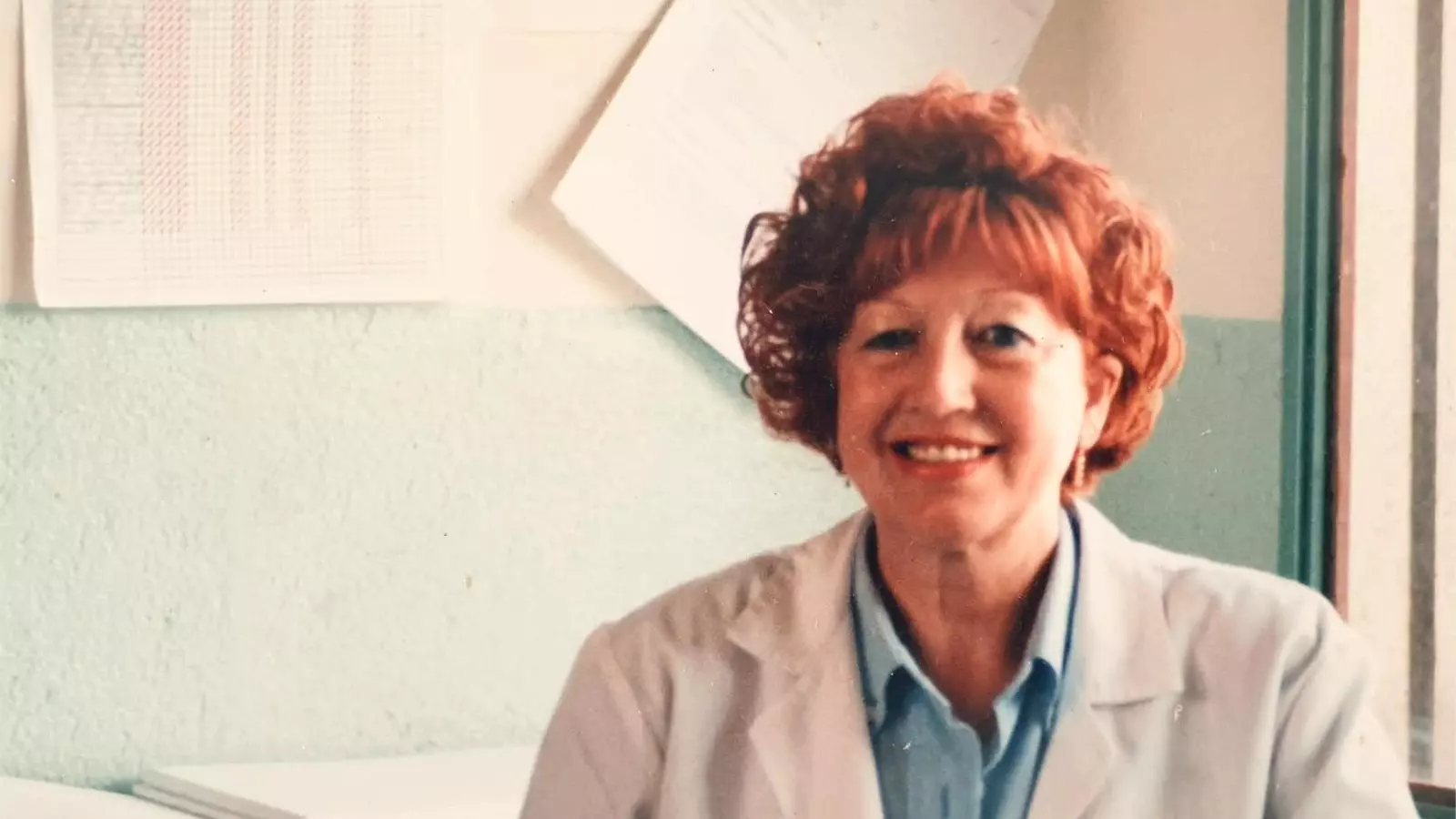

This was not the first time Josefina had resorted to invention in her exemplary campaign: she had previously championed cancer and Alzheimer's patients and abandoned animals from Triple A, recalls Francisco de Asís López Serrano, former municipal archivist, who presented Arias' stories eight years ago. The proceeds from this business, from this commendable initiative, would probably not even cover ten minutes of research, but, as Cyrano said to his friend: What about the gesture? The gesture is the subtlety that most often reveals who we are. That is the key to everything Josefina writes, the universal gesture of solidarity. Because there are those who take their courage, their ideas and their savings and put them at the service of the community, of people they do not know. They are people with faces, and with the same anxieties as everyone else, who care about the lives of others. Look at Josefina.
With María Victoria Atencia. / Miguelón She presents herself as a activist of the arts. For more than two decades, she has been dedicated to collaborating with charitable associations, reciting poems, and celebrating the anniversaries of each author, with talks dedicated to Spanish poets and writers. She has published a dozen children's stories and a book of short stories and poems, paid for out of her own pocket, so that the modest profits from their sale can go to charitable causes. This is the way she has found to collaborate with organisations such as Cáritas, Marbella Solidaria, the association for the fight against multiple sclerosis, Alzheimer's, cancer, the defence of abandoned animals and Las Hermanitas de los Pobres de Ronda. She has dedicated her stories and tales to them. She has more than 16 publications to her name.
–One of the first associations I joined was the Housewives' Association, where there were dressmaking classes, bingo, afternoon teas and trips. I gave them a talk on clairvoyance, which was very entertaining.
This retired teacher, who goes by @yayainfluencermarbella on Instagram, manages to fill the halls of municipal buildings, the local casino and various associations, where she shares the biographies of forgotten female poets and artists. Some of her followers assure her that they have never missed one of her lectures. Josefina also likes to sing coplas.
During a Pink March event. / Miguelón–My memory is very good. I study the topic I'm going to talk about beforehand. Now I spend three or four hours on it, whereas before I used to do it in an hour and a half. I never take notes. I give lectures on Antonio Machado, Miguel Hernández and Francisco Ayala, who is a role model, Mario Vargas Llosa and Saint Teresa of Ávila. Rafael de León has not been valued as a poet; very little is said about him, even though he was one of the greatest poets of the 20th century. In school, they don't know who he is because he is not taken into account. Now there are female writers who are making him known.
On her Facebook account, where she has hundreds of followers, she announces: "Today I'm not singing, I'm reciting. I have dared to take on Tatuaje, by Quintero, León and Quiroga. The words of this song are so powerful that just saying them out loud is enough to bring them back to life." And then he recites: He came on a ship with a foreign name./ I found him in the port one evening... The song that Lola Flores, who recited like no other, the Spanish Anna Magnani, never got to perform.
Jesús Pascual, author of the book Querer como las locas; pasiones maricas ocultas en la copla de Rafael de León (Loving like madwomen: hidden queer passions in the songs of Rafael de León) and director of the documentary ¡Dolores, guapa! (Dolores, beautiful!), has no doubt that it was De León who set post-war Spain to music. He considers him a poet of love songs, of desires on the brink of the abyss during the Franco era, songs of the masses, of moral punishment, of sorrows that are sung.
In a food collection campaign. / Miguelón–Rafael de León is part of the Generation of '27, remaining faithful to the lyrical Andalusian message of García Lorca. He was not an imitator; he was his follower. He wrote for the book Federico García Lorca: Cartas a sus amigos (Federico García Lorca: Letters to his friends) and, together with Quintero and Quiroga, formed part of the Andalusian song trio. They created it, dignified it, sublimated it, drawing on flamenco copla and the Andalusian lyrical tradition. He was the greatest author of coplas in the country's history, with more than eight thousand songs, as well as flamenco, pop and other genres, performed by artists ranging from Lola Flores to Manolo Escobar. He composed for Charles Aznavour, Salvatore Adamo, Raphael, and Nino Bravo, who won a gold disc at the Benidorm Festival for Te quiero, te quiero.
I always help women; I don't want men to have supremacy over women. I am a feminist, I support women, I have given talks on Clara Campoamor, Victoria Kent and Maruja Mallo, that woman who had to change her name, just like Josefina de la Torre; I learn from all of them.
Maruja Mallo, the painter who adopted the pseudonym Ana María Gómez González, was one of the leading figures of the Generation of '27, which included Rafael Alberti, Salvador Dalí, Federico García Lorca, María Zambrano, Luis Buñuel and Rosa Chacel. She was the one who presented women from a modern perspective. One day, in Madrid in the 1920s, Federico García Lorca, Salvador Dalí, Margarita Manso and Maruja Mallo walked through the Puerta del Sol taking off their hats. It was a transgressive act, intended to break the norm and, metaphorically, to liberate ideas and concerns.
Alzheimer's Family Association. / MiguelónMaruja Mallo would recall that they came up with the idea of taking off their hats to clear their minds. For this act, they were pelted with stones and insulted. Jorge Luis Borges echoed this in an article: ‘Intellectuals are opposed to the custom of wearing hats.’
Josefina de la Torre also belonged to this group of women, which included María Zambrano, Rosa Chacel, Margarita Manso and Maruja Mallo, all of whom were misunderstood by society. De la Torre, the Gran Canarian writer, wrote a series of romance novels under the pseudonym Laura de Comminges. Coming from the educated and liberal bourgeoisie of the Canary Islands, in addition to composing, she played the piano, guitar and violin. She was a singer and actress, and carried out other activities related to cinema, a wonderful voice for dubbing on RNE.
Zenobia Camprubí, the wife of Juan Ramón Jiménez and translator of Rabindranath Tagore, suffered the consequences of her husband's depressive neurosis. She was one of the pioneers of feminism in Spain and a member of the Lyceum women's club with Victoria Kent, a women's association that operated in Madrid in the 1920s and 1930s. Carmen de Burgos was Spain's first female war correspondent. She began with the events of the Barranco del Lobo disaster in the Rif (Morocco) in 1909, where she travelled to report on it in her columns in El Heraldo de Málaga. Living alongside the soldiers during that conflict, in the vicinity of Melilla, led her to defend conscientious objection. On her return from a trip to the Nordic countries, the outbreak of the First World War caught her in Germany, and she sent her reports from there. She then published La mujer moderna y sus derechos (Modern Women and Their Rights), a synthesis of the feminist thinking she defended throughout her life.
I met María Victoria Atencia in Málaga, at a stand at the book fair. I had already read El Oro de los Tigres (The Gold of the Tigers), and she recommended more of her biography to me. I then saw her in Marbella when she came to visit a secondary school. She was recently awarded the National Prize for Spanish Literature.
At a table at the Cancer Association. / MiguelónMaría Zambrano, who is not only the name of a train station, but also a philosopher and writer known for her love of cats. Her grave in the cemetery of Vélez Málaga is always surrounded by a colony of cats. Many people visited the cemetery to see her grave because of its special symbolism, because of the love she showed for these animals.
Ana María Matute was a woman subjugated by her husband, a gambling addict who sold her jewellery and coats. He forced her to write a story every day.
Josefina, with family in Seville and Córdoba, spent much of her life in the Canary Islands and Madrid.
Many of the tiles on the benches and murals representing the provinces in Plaza España in Seville were made by my grandfather. Manuel Arias Rodríguez was one of the great ceramists at the La Cartuja factory, who left their mark on the monumental work of architect Aníbal Rodríguez. My father followed in the tradition and was a ceramist and potter, a leading figure in his field.
Since 1963, she has been a teacher of nursery, primary and adult courses, a tutor for teacher training students and in charge of the practical training of students from the University Teacher Training Schools of the Complutense University of Madrid, where she also studied speech therapy.
On Instagram, I post lectures on literature and scientists, and I study them. I am currently preparing a book of five or six short stories for Cáritas. I try to go unnoticed and be with ordinary people on the street.

Latest news


Upcoming events
17
Sep
La Pequeña Cuba Gastro-Cultural Festival in San Pedro Alcántara 2026
18
Sep
World Wellness Weekend Marbella 2026
18
Sep
Candlelight: Queen vs. ABBA in Málaga
18
Sep
Candlelight: Coldplay and Imagine Dragons in Málaga
18
Sep
3 de Corazones – Pancho Céspedes, Enrique Ramil and José Luis Jaén in Málaga
Similar News
Paco Guerrero: From Taking Care of Pigs to Serving in the Main Luxury Hotels
Marbella
Caroline Schell: Painter and Sculptor in an Actors' Clan in Marbella
Marbella
Pepe Imaz, Djokovic's Emotional Coach
Marbella