Caroline Schell: Painter and Sculptor in an Actors' Clan in Marbella
Her Aunt María won the Best Actress award at the Cannes Film Festival and her Uncle Maximilian won the Oscar for Best Actor. Her grandparents fled to Switzerland when Hitler annexed Austria.Pepito de Mariana: the addiction rehabilitation monitor in Marbella.
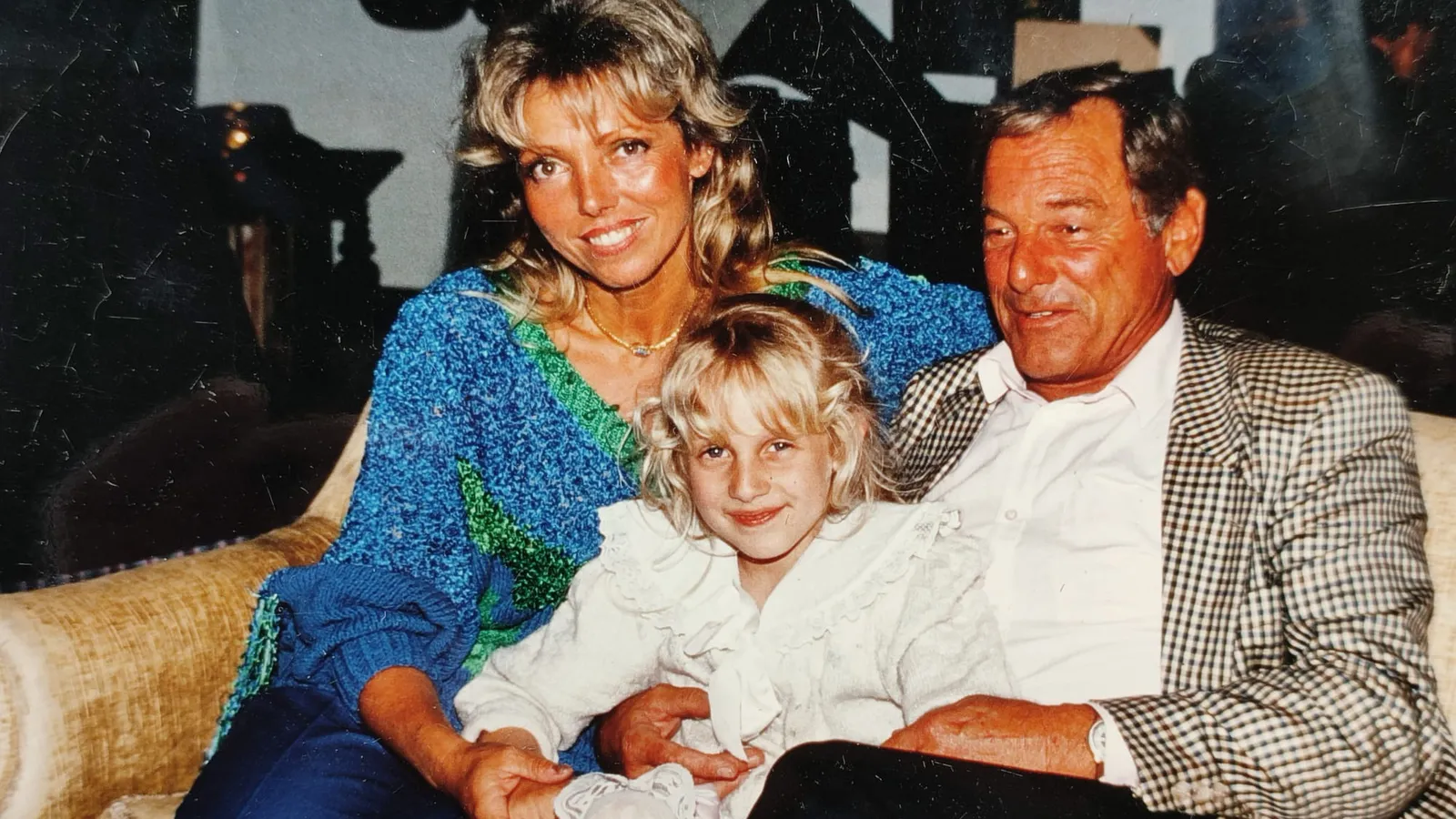

"In Marbella I have the light to work; in Switzerland and Austria, the place to exhibit and sell; and in Italy, the people's interest in art," says Swiss painter and sculptor Caroline Schell, a descendant of the Schell Clan, a family of actors. Her grandparents, Hermann Ferdinand Schell and Margarethe Noé von Nordberg, fled Vienna in 1938 when the Anschluss occurred, the annexation of Austria by Nazi Germany under Adolf Hitler. Her grandmother, who was an Austrian actress, ran an acting school in her country, while her grandfather, of Swiss origin, was a poet, writer, and playwright.
"My grandfather told the family: let's go to Switzerland, in Zurich they had the only theater open in those times of war. My grandmother, my father Carl, and my three uncles: Maria, Maximilian, and Immy, as children, made theater their work. Later, they made acting their profession. Of the family, Maria was the most known [In 1954, she won the award for Best Actress at the Cannes Film Festival with the movie The Last Bridge by Helmut Käutner] until Maximilian won the Oscar for Best Actor [in 1961 he portrayed the defense attorney in Judgment at Nuremberg in the movie Judgment at Nuremberg] and was godfather to Angelina Jolie.
January 15 marked the centenary of the birth of Maria Schell. My uncle Maximilian made a documentary about his sister's career and their relationship. And another about Marlene Dietrich, when she lived in Paris, for which he received some awards and an Oscar nomination.
"That family world seemed normal to me, I saw theater and exhibitions. My parents went to cultural activities instead of the beer festival, for me that was normal. When I was little, I liked to draw, to paint, I didn't realize it was art. I didn't do theater, nor did I act, like my family, but in the end I think both things are the same. My father would observe a person and imitate them in his performance; I do the same, I observe a person and then I paint them, I imitate them, to capture their gaze, their expression, and put myself in their place. I knew from childhood, I wanted to live as a painter and sculptor, and a lifetime is not long enough to do more things.
My father tried to persuade me: "if you go to art school, then you can study to be a doctor." I told him: I want to do this; if they hadn't let me I was ready to leave. I insisted a lot, at fifteen I started at the Art Institute of Lugano. To go to study I got up at four-thirty in the morning, there was not good communication between Locarno and Lugano (Switzerland) then. I traveled five hours between going and returning, I was not late once during the four years of study. The characters I drew, I later took them out of the painting, to plaster or clay. Later I continued at the Academy of Fine Arts in Florence (Italy), there I worked with marble and other techniques, such as bronze, to learn a bit of everything. I feel as much a sculptor as a painter, when I work in one of them, I feel I'm missing the other.
My first profession was as a street artist. At sixteen, I started doing portraits on the street, then I studied and studied, you never stop learning. I work but I always study and I never stop seeing exhibitions. Until January 3rd, I exhibited eighteen works, under the name "People", at the Esther de la Villa Fuchs Gallery, in Vienna, I sold and the rest of the works moved to two other galleries.
In Vienna, I met my teachers: Carlo Wimmer, who had been a student of Gustinus Ambrosi, the only sculptor who made figures of three Popes. He was a great Austrian artist, who was deaf, became a sculptor and needed an assistant, Wimmer. Ernst Fuchs [the father of fantastic realism from the Vienna school] and his son, Daniel Friedemann Fuchs, were also my teachers, both made sculptures, like Wimmer. I was Ernst Fuchs's assistant in designing the frescoes of the Saint Egidio chapel in Klagenfurt (Austria).
I made the sculpture of the Holy Death that Miguel, a painting artist, commissioned me, he had paid the first part, and he died while I was making it. His son asked me to continue the commission. Before, I did a lot of commissioned work, but it took away time to do my own work, now I do less, and it gives me much more freedom. I like the portrait, which is done in three days, or the busts. I made a portrait of the writer Lissy Klinger-Lohr and also of my mother [Stella Monney, star of the musical Hair, where she played Sheila], who was an actress and singer. I made a bust of my father. Daniel Friedemann Fuchs, when Ernst, his father, died, asked me to make the death mask, but I couldn't, it coincided with my father's birthday. He was already old, he died at 92, and I was going to give him his bust. He was an actor, director, adventurer, and an expert on palms, he had more than a hundred.
At twenty, I did body painting, [body painting as a form of art] in Italy, I worked at an agency for brands like Möet & Chandon, Valentino Rossi, Playboy, or Freixenet. Valentino Rossi celebrated an exhibition in Florence, he has his own clothing brand, in a large stand there was a part of glass and two mirrors and another part the clothes. I had to find young, beautiful people who knew how to paint, I found them at the academy. The models were painted with the clothes from the collection, it was a bit of a show, people were painted inside and outside the stand. With Möet & Chandon, we did it many times, some girls offered champagne glasses and I did portraits of the people who attended. For Playboy, we did the body painting, with boys and girls dancing in the disco. The girls' part was easy, with the magazine's logo, the bunny, a swimsuit was drawn; for the men, the muscles and biceps were marked or drawn; the magazine's logo on the upper part of the arm and the bow tie.
Years ago, I did a body painting event in Estepona and one of the works was auctioned in Vienna. There used to be more of these events, now it's rarer, in the discos there are fewer possibilities, people move less. Here it would be suitable for it, but in summer I prefer not to take orders and dedicate myself to my work, to prepare exhibitions and sell them.
You can make a living from painting. I have always done figurative painting, abstract only in the backgrounds. Artificial Intelligence (AI) affects painting, as it does with everything; what the best mathematician in the world does, AI already does. Artists have the advantage of knowing how to work with their hands, they can make a table or something else. As an artist, I know how to live with little, and there is always an idea, a creativity to invent something. It affects everything and I don't like it, but I see less of a problem for the artist.
Today there are more people interested in figurative painting, before, everything was abstract, the rest was kitsch, young people like figurative art. Before, you had the idea of painting a woman and you looked at many photos, studies. Now you ask AI: make me a model like this. And then you paint over it and sell it. Sometimes it is not noticeable. For me, it is not a work of the painter, AI has done it, the composition and all. Many people do it. Then you see that the hand is not right. It is better to take a model and pay them, or if not, take yourself as a model, or look at the great artists, because there are many studies. The issue is the use of AI. There are people, without possibilities, who are in a ghetto and cannot go to the Louvre, however, through the phone, they can learn, they have access to culture.
When I do exhibitions I encourage people to exchange phone numbers, because there are fewer and fewer good people, and one hand washes the other. When I go to Austria or Italy I never stay in a hotel, but in the house of friends, with the people we went to school together, and here they have my house. I do exchanges. Often I don't take money, but I exchange works for things, like trips, I have even managed to rent houses for portraits of a grandson or another relative.
It is easier to sell a painting than a sculpture, there are galleries that do not want sculptures. Sculpture is more complicated, from the transport, which is more delicate. I did only one exhibition of sculptures, most were marble pieces. Although in recent years I did more sculptures than painting, like three bears that were commissions. I made a large sculpture and sold it, I didn't have time to exhibit it.
In Italy, people are super interested in art, in Switzerland a little less, they are more interested in banks and in Vienna there is much more passion for music. That's why, on social media, I often write in Italian, because there are many more people interested there. When I brought a sculpture in Italy, we entered with a large truck through a narrow street, we unloaded the sculpture and a lady told me: "you also want to enter my room. This is mine." The neighbors complained because with the truck we had blocked the street. At one moment everyone was insulting us, and in the end everyone came to help us when they saw that if they didn't help us the situation wouldn't improve. Later they wanted to see the sculpture, they liked it and ended up laughing. In Italy, I exhibited in important museums and fairs. One of painting and another of marble sculptures, in the museums of Cortina d'Ampezzo and Castiglion Fiorentino in Arezzo, and also at the Art Fair in Padua.
There is no perfect country. In Switzerland we have the right to choose and I wonder why such an ignorant thing has been decided. Sometimes stupid things are agreed upon, there is no perfect country. I like Spain, I like Italy, Austria too, but it is very cold, I like it in summer, but I prefer Switzerland, where I was born, there I have my mother, and I go to see her. I am Swiss but Italians think I am Italian, they treat me as one of them, here they see me as a foreigner but they treat me well. Here it is very international, there are not only Spaniards. In Paris, I worked in various art workshops for companies and decorated several spaces, I saw people stressed, in a bad mood all the time. In France, people are nervous and not as positive as in Italy. They have a lot of culture, but people are much more difficult; with Spanish or Italian, communication is much easier.
Latest news


Upcoming events
17
Sep
La Pequeña Cuba Gastro-Cultural Festival in San Pedro Alcántara 2026
18
Sep
World Wellness Weekend Marbella 2026
18
Sep
Candlelight: Queen vs. ABBA in Málaga
18
Sep
Candlelight: Coldplay and Imagine Dragons in Málaga
18
Sep
3 de Corazones – Pancho Céspedes, Enrique Ramil and José Luis Jaén in Málaga
Similar News
Paco Guerrero: From Taking Care of Pigs to Serving in the Main Luxury Hotels
Marbella
Pepe Imaz, Djokovic's Emotional Coach
Marbella
Josefina Arias: the Influencer Grandma from Marbella
Marbella