


Caring, an Essential and Invisible Task
More than half of caregivers juggle caregiving, parenting, and work, according to the First Study of the Cinfa Care Observatory. The testimony of Julia Haro helps to give voice to this situation.

More than half (56.6%) of Andalusian caregivers belong to the 'sandwich generation', a concept used to describe those who care for their elders while raising their children. Eight out of ten (79.5%) juggle this role with their employment. These are two of the main findings of the First Study by the Cinfa Care Observatory. An Overview of Family Care in Spanish Society, conducted with more than 3,200 caregivers and endorsed by the Spanish Society of Geriatrics and Gerontology (SEGG).
The study portrays in Andalusia a 48-year-old woman, the primary caregiver in 63.8% of cases, who mainly cares for her father or mother (67.8%), and often for those over 81 years old (43.5%).
In Andalusia, 64% care for family members with some degree of dependency39.2% live with the person they care for, and 64% attend to relatives with some degree of dependency. The commitment is sustained: 49% have been caring for more than two years (average 3 years), with weekly (55.7%) or daily (44.3%) care, totaling 21.5 hours per week. And with sacrifices: three out of four (77.5%) cut back on leisure time (70%), time for themselves (61.3%), and time with other family and friends (38.1%).
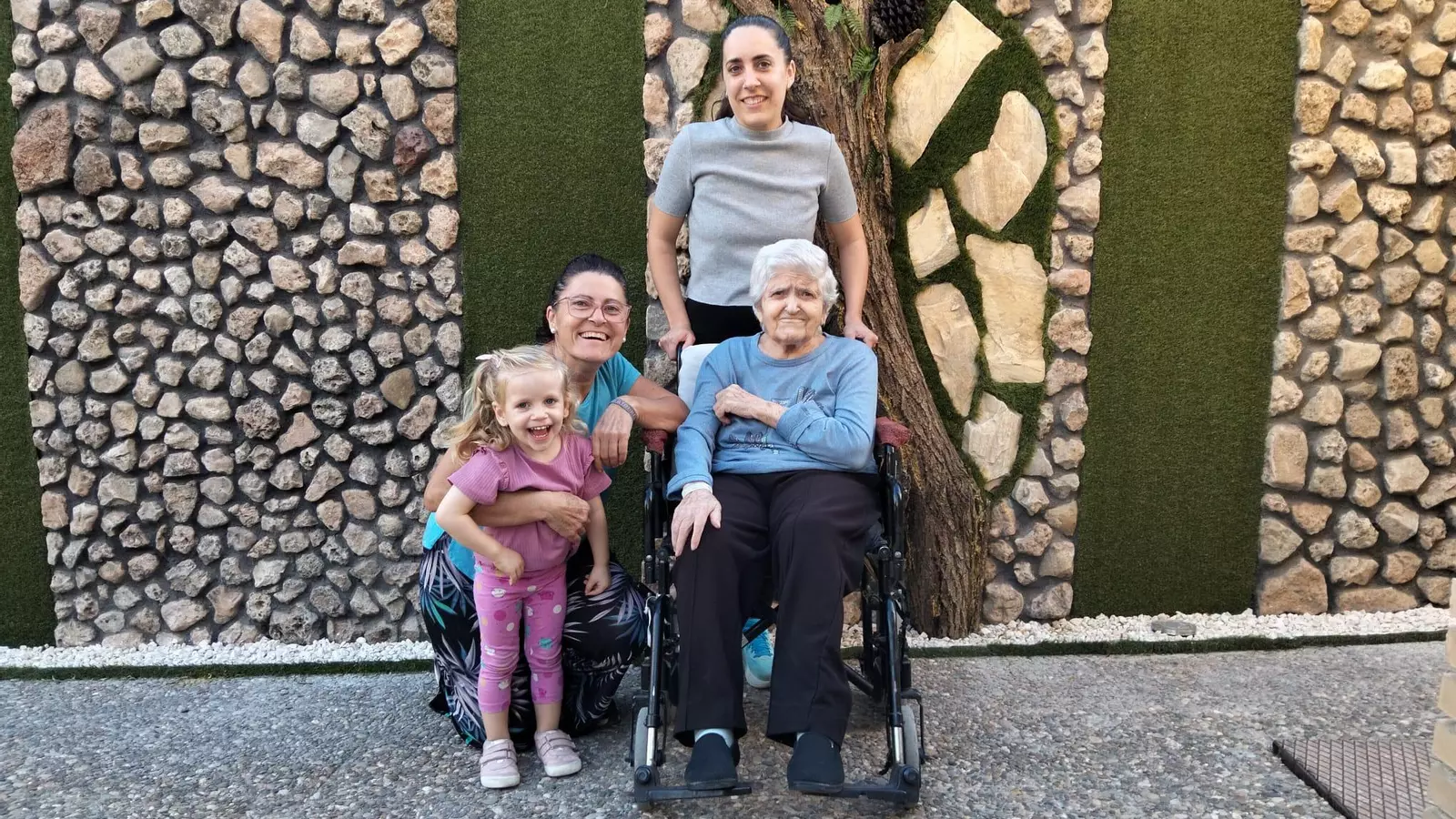
Behind the percentages is the story of Julia Haro (55 years old), an Andalusian farmer who has been caring for two decades. The primary caregiver for her mother (92 years old) with advanced Alzheimer's —who lives with her and her husband— her personal mantra is: “If my mother is well, I am happy.” Her journey began at 35, when a stroke suffered by her father placed her on the front line. Shortly after, her mother began showing symptoms of Alzheimer's, and for a while, she cared for both while raising her two children and balancing everything with her job.
Even with partial support from her sisters, Julia feels that she “has to carry the load.” The clinical complexity influences her decision to not delegate: “I can't bear the thought of paying someone or placing her in a facility, especially with this additional problem my mother has,” she says, referring to her mother being in a wheelchair and “having severe intestinal problems that require changing her 5 or 6 times a day.”
Six out of ten caregivers in Andalusia see both positive and negative aspects in their role. Among the positives, the peace of mind of knowing that their relative is well cared for (58%) and the satisfaction of caring for a loved one (51.8%); among the difficulties, the fatigue or physical and emotional exhaustion (62%), the feeling of being always on call (49.2%), and the worry about whether they are doing enough (42.7%). The reasons for taking on the caregiving role include emotional, social, personal, or family obligations, and economic factors.
For Julia, “what I miss the most are the friendships to go traveling or to the beach”For Julia, “what I miss the most are friendships. You can no longer make plans to travel, go to the beach, enjoy Easter or the fair.” The caregiving covers full weekends, and from Monday to Friday, from 17:00 to 08:00. To sustain herself, her mother attends the Afasur Genil Day Center for Seniors from Monday to Friday, and she herself receives psychological support there. “I need to keep my mind busy,” she states, and dedicates her little free time to “manual hobbies.”
The report identifies the main drivers of care as advanced age (33.6%), neurodegenerative illness (16.6%), and loneliness (14.6%). The most common tasks performed by surveyed caregivers include providing emotional support (52.5%), attending medical appointments (51.1%), household chores (45.3%), accompanying to appointments (43.4%), and organizing medical care (39.9%). For 87.8%, the care is shared (especially with siblings, 52.6%), although 12.2% care alone. Julia shares walks with her sisters, but the heaviest burden falls on her, by explicit choice and due to her mother's clinical situation.
The main concern is the uncertainty about who will care for their relative if at some point they cannot (36.3%). They also wonder if they are caring properly (32.8%) and worry about it affecting their own family life (31.4%). For Julia, the priorities are clear: “keeping my mother's colds at bay and managing her weak intestines.”
The Observatory, in the words of its president, Dr. Alicia López de Ocáriz, was created to understand the situation of caregivers, delve into their physical, mental, and emotional well-being, and determine if they feel recognized and supported. “All this, with an inclusive approach and from empathy, because each way of caring is valid and all must be respected,” she emphasizes.
“The First Study by the Cinfa Care Observatory allows us to understand the reality of caregiving families in our country, because caring for the caregiver also means looking after our elderly,” states Francisco José Tarazona, president of the Spanish Society of Geriatrics and Gerontology (SEGG).

Latest news





Upcoming events
12
Nov
El Desembarco, la traición de Viriato at La Caja Blanca
12
Nov
HOMER El Mero Mero at Sala Trinchera Málaga
13
Nov
Marbella Startup Lab – Innovate & Collaborate
13
Nov
Candlelight: Coldplay & Imagine Dragons at Sala Fundación Unicaja María Cristina
13
Nov
Candlelight: Tribute to Ludovico Einaudi at Anantara Villa Padierna
Similar News

Marbella Launches ‘Summer Youth’ Programme with 2,500 Free Places
Marbella

Premium Tourism Drives Marbella’s Hotel Profitability to Record Levels as Overnight Stays Exceed 291,000
Marbella

‘Machos Alfa’ seeks extras in Marbella for filming of its sixth and final season
Marbella
