


Agustín Casado, the Painter Born in Picasso's House
The telegraph operator from the early tourist years of Marbella captured images of Jimmy Carter, Tina Turner, and Stevie Wonder. A draftsman, rhapsodist, and town crier in verses, Pedro Aguilar, the king of antibiotics' chamber carpenter.
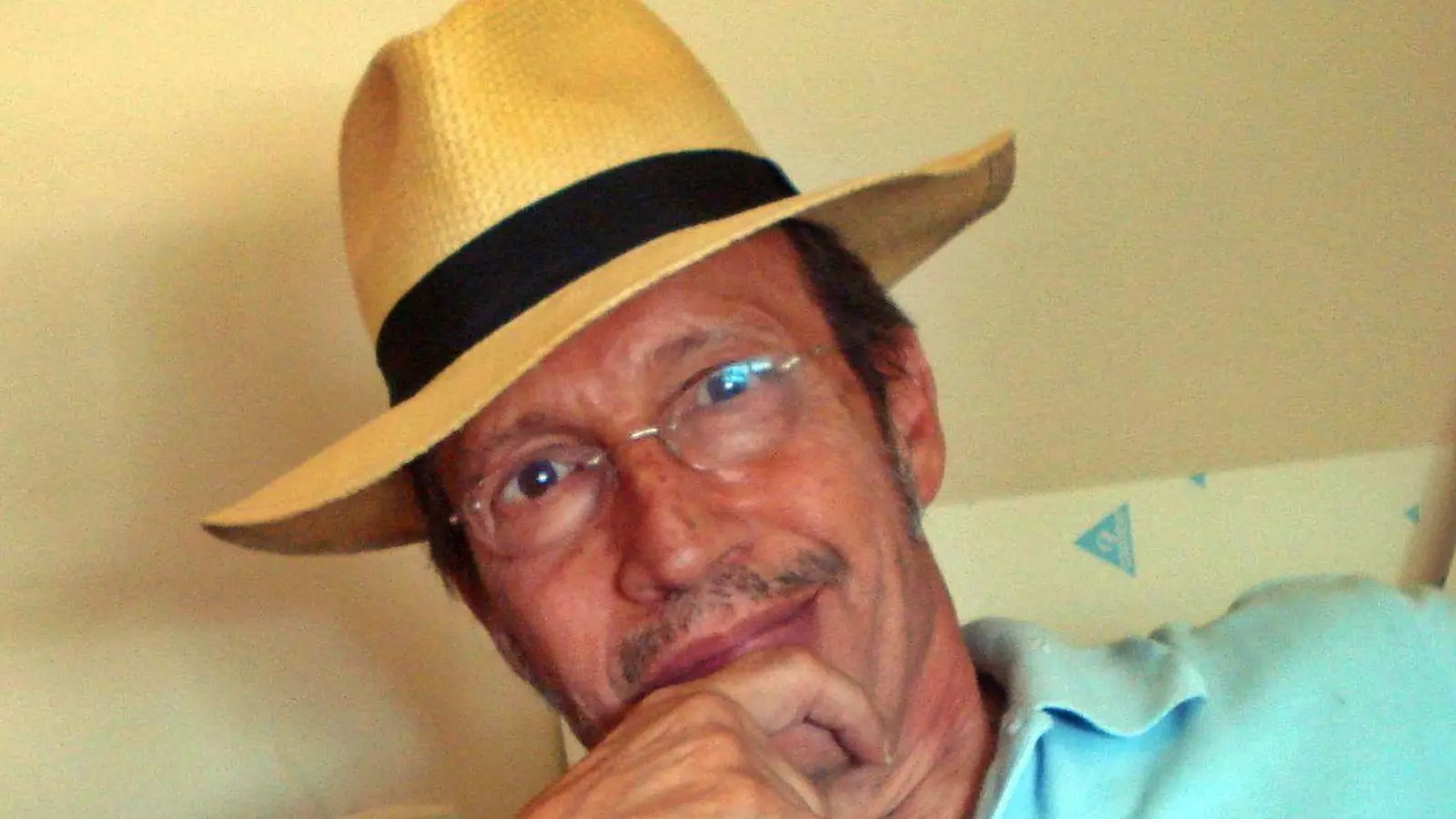

When, at the end of the 1960s, Marbella joined the mass tourism boom, Agustín Casado began his job as a telegraph operator at the local post office. Telegrams and radiograms were transmitted in Morse code, a system that sent and received signals using a code of electrical impulses. For decades, telegraphy was the only long-distance writing service, the fastest and somewhat complex, for keeping people in communication.
I remember a telegram that read: “Bring me a razor and clean underwear,” written by a prisoner in jail to his wife. For a while, I kept an anthology of telegrams that caught my attention, until they got lost during a move. There was one that said: “I'll arrive eight hours after Iberia.” On one occasion, a lady leaned over the counter and said, “I want a telegram,” and placed the cardboard box she wanted to send on the counter. “So it arrives quickly,” she added. Another time, a man handed me a letter. I glanced at it and said, “This can't be sent; it's written in Arabic.” “It doesn't matter, you copy it; the recipient will understand,” he insisted.
The romantic profession of telegraph operator was killed off by the cell phone, just like that of lighthouse keeper or stationmaster at the La Mancha railway stop. The telex and the fax put an end to the telegram.
The texts of the messages were censored if the phrase contained swear words, if they went against morality or the Movement (Franco's single party).
We were there to receive the text of the telegram that the customer wanted to send, although on many occasions we had to help them write the message. I even found myself writing weather reports in Morse code that were sent to Malaga. I would go out into the street, look at the sky, and write: cloudy. This continued until telegraphic communication gave way to the teletype. At the age of 50, I retired from the addictive profession of telegraph operator, but I have continued to practice Morse code ever since.
“Pablo Picasso was born here,” read an old plaque, on which Agustín, as a child, scribbled “and me” with a marker. He did it as many times as his claim was erased. And in the house in Plaza de la Merced, where the Malaga-born painter was born, almost seventy years later, Casado did the same.
Entrance to Pablo Picasso's house, by Agustín Casado. / PERSONAL ARCHIVE I drew the great-great-granddaughters of the pigeons painted by Picasso. I had an advertising agency, a job I combined with working as a telegraph operator and publishing comics in the magazine Imagen de Marbella, by Horacio Heichelbaum; El Batracio Amarillo; Diario 16; and Andalucía Actualidad. My drawings may be reminiscent of those by Albert Uderzo of Astérix or Francisco Ibáñez. As Jacinto Benavente said: “Blessed are my imitators, for mine shall be their faults.” Someone who can be surpassed by his imitator aspires to have the author recognized in his work.
To those who ask me, “When did you start drawing?”, I reply, “When did you stop?” The first thing a human being does is draw, from the Cave of Altamira, in all cultures. Then most people stop doing it, and I and a few others remain; so I have been drawing for seventy years. I did it with comics, because I read comics, I am a cartoonist, although I also do oil paintings and other paintings. In 1996, I won the First Prize at the National Graphic Humor Exhibition in Madrid, which later disappeared due to differences between the Ministry of Culture, the Readers' Circle, and Fine Arts, of which I am very proud. When I say that since retiring I have worked more than before, “For someone who was a civil servant, that's not difficult,” a friend replies.
Every artist has their narcissism. If something in life goes well for you, others appreciate it and remind you that you can draw. That's no great achievement, but then you stand on tiptoe and devote yourself to drawing. The king emeritus has a couple of my drawings. I did one when he came to Malaga and hit his head getting into the car, and the other was commissioned by a patron, as was the one of the princesses. I do it from photographs. I have painted bullfighters such as José Tomás, El Juli, and José María Manzanares, as well as José Sacristán and Juan Echanove. I have painted for the jet set and for important people. I have done drawings for Jimmy Carter, Tina Turner, Stevie Wonder, and Roger Moore. In painting, I seek refuge, a hug, and if you are considered and receive a commission, all the better.
Caricature of Juan Carlos I. / PERSONAL ARCHIVE I have made more than a hundred posters in Spain and abroad and have held exhibitions in various cities. Here, in 2016, I presented the exhibition Caricriaturas, a collection of three hundred caricatures of residents of Marbella. Some didn't like how they turned out and haven't spoken to me since, while others asked me why I hadn't included them.
The best ones are portraits with witnesses. If I do a group of ten, a board of directors or a government team, one is able to identify the other nine, but does not recognize oneself. One has one's own perception, but how others see you is different, just as when you hear your recorded voice for the first time and do not recognize yourself.
When I arrived in Marbella, I didn't know anyone. I went to the seafront, sat down to watch the sea, and asked myself, “What are you doing in this place?” Forty years later, in the same place, where the marina terraces are now, I gave the opening speech for the Feria de San Bernabé in front of three thousand people. All the proclamations I have given have been in verse, including this one, the one for the 2014 Book Fair, the one for the 2018 Marbella Carnival, and the one for Espeto Day. Always in verse, I recite without notes, 45 minutes without reading a single page. I'm shy, and not having to read gives me the chance to look the audience in the eye, and that has worked very well. I've dedicated myself to adjusting verses, putting verses together.
One August, I participated in the Fuenteovejuna Classical Theater Festival (Córdoba) in hellish heat. And there they asked me to praise the town, which I didn't know. Then I discovered the name of the murderer: Who killed the Commander? It wasn't Fuenteovejuna, not one, not even one, it was heatstroke.
On a national radio program, I commented on the news for three minutes in verse and octosyllables. On one occasion, I explained that the white smoke of the Vatican conclave was decided in a gastronomic duel. The Italian cardinal invited his colleagues to eat pizza, while the Argentine papabile surprised them with a barbecue.
"With his innate insight,/ Scola, archbishop of Milan,/ came up with a cheap trick/ and with Parmesan cheese,/ Neapolitan prosciutto,/ and a well-cut pasta/ he offered them an Italian/ snack that the vote tries/ to win immediately/ from the others by the hand./ It all turned out to be in vain,/backfired/ to put it bluntly.“
”A voice from Mar del Plata/ pulled him away from the fire/ “Hey, you idiot, get lost;/ it's time to eat, not drink mate!/ What are you preparing?”/ And in no time at all, Francisco Primero cut up half a calf and grilled its flank and ribs, half steaks and whole steaks, chorizo and blood sausage. Before becoming a friar cook, this cunning trick was enough for him. It turned out to be a simple thing to flatter the tripe eaters, to make them fall to their knees before that marvel, to be Pedro's heir.
With Mario Vargas Llosa. / PERSONAL ARCHIVE The cartoonist, painter, writer, and poet also recited verses from the classics at the University of Letters in Hamburg (Germany) and at the Cervantes Institute in that city.
A few days earlier, Almudena Grandes had been there, and the entrance fee was seven euros, but mine was free. She was followed attentively by the audience, but the problem came after the event, during lunch, when a German man wanted her to explain what she meant by the phrase: “Ahí me las den todas” (Give me all of them). The rhymes are meticulously measured, chiseled, in a rigorous manner.
I wanted to play Tintoretto, but in an abracadabra, the color became a word and turned into a sonnet. In the book Versos pintados, pintura rimada (Painted Verses, Rhyming Paintings), I have recreated images from the years of the tram through the neighborhoods of La Victoria, Huelin, and El Palo; the La Malagueta bullring, or the hustle and bustle of San Agustín Street. Two years ago, I combined poetry and caricatures. I compiled 120 sonnets by different authors from Spanish literature throughout the ages and dedicated a caricature to each of the poets. The idea came from playing with the words sonnet and hence the title: Los mejores sone(s)tos en español (The best sonnets in Spanish). It includes all the sonneteers from seven centuries and is an anthology of classic authors such as Antonio Machado, Lope de Vega, Miguel de Cervantes, Calderón de la Barca, Luis de Góngora, Antonio Gala, and García Lorca, along with singer-songwriters Joaquín Sabina and Joan Manuel Serrat, and Gloria Fuertes. Luis Garcia Montero commissioned me to write a book for the Cervantes Institute library.
Casado closed the work with one of his own sonnets: Cura, which concludes: “He never says it, because it tortures him/ despite the hair shirt around his waist/ his manly rod that is already hard.”
In 20th-century American fiction, from Ernest Hemingway to Truman Capote, they wrote on the back of whiskey. A drink improves things; oh, if only there were drug testing. On one occasion, in a corner of the theater, Álvaro Pombo asked me for a light, and I accompanied him to smoke a cigarette. My doctor had forbidden me to smoke, so for me it was a clandestine cigarette. A photographer took a picture of us, and I was very happy to show it to my wife when it appeared in the press, without realizing that a cigarette was hanging from my hand. A cardiologist told me: “Tobacco is a killer, but cigarettes are a friend.”
Painting of La Fonda by Agustín Casado. / PERSONAL ARCHIVECasado, who continues to participate as a rhapsodist in readings and poetry recitals, drew the popular president of the Community of Madrid. “Exquisite hands,” Isabel Díaz Ayuso called him because of the portrait he dedicated to her.
He also hung a mural at the local PSOE headquarters. He recreated the painting “Il quarto stato” by Italian painter Giuseppe Pellizza da Volpedo on a two-by-one-meter piece of methacrylate to fulfill the commission. He chose the work that immortalizes a group of workers marching in protest in a square. Pelliza, who painted this picture in 1901, wanted to represent the peasants as a metaphor for a river that advances, ready to overcome any obstacle. The painting was revived in 1976, when film director Bernardo Bertolucci rescued it and used it as the background for the credits in his film, Novecento. Casado drew, in his version, Sierra Blanca as a backdrop and included the faces of the four socialist mayors, the founder of the party, the first female councilor of Marbella, Marina Torres, and the Pasoc councilor, Andrés Cuevas.
Recreation of Il Quarto Stato. / PERSONAL ARCHIVE The painter, who described this place as a colonial niche descended from Tangier (Morocco), which enchanted Ana de Pombo, Pepe Carleton, Jean Negulesco, and Peter Viertel, contrasts the much-praised haute cuisine with his Ode to Fried Fire: "A plate with four corners;/ a steaming mist/ of liquefied nitrogen./ In the center, a terrine,/ two lacquered peas/ and a little gelatin./ And so that nothing is missing,/ just a bite of tortilla./ Unstructured./ They stick a weed in it/ and sign their work/ with a couple of drips:/ one fuchsia, you've got balls,/ and another bright green./Well, very good,/very nice.../ “It's called nouvelle cuisine.”/Well, very good,/ well, screw it."

Latest news





Upcoming events
12
Nov
El Desembarco, la traición de Viriato at La Caja Blanca
12
Nov
HOMER El Mero Mero at Sala Trinchera Málaga
13
Nov
Marbella Startup Lab – Innovate & Collaborate
13
Nov
Candlelight: Coldplay & Imagine Dragons at Sala Fundación Unicaja María Cristina
13
Nov
Candlelight: Tribute to Ludovico Einaudi at Anantara Villa Padierna
Similar News

Marbella Launches ‘Summer Youth’ Programme with 2,500 Free Places
Marbella

Premium Tourism Drives Marbella’s Hotel Profitability to Record Levels as Overnight Stays Exceed 291,000
Marbella

‘Machos Alfa’ seeks extras in Marbella for filming of its sixth and final season
Marbella
