


Luis Fonseca, the guitarist from Marbella who shared the stage with Paco de Lucía and was 'kidnapped' in Beirut
He went from performing in a tablao to becoming a professor at the Conservatory; he participated in a music video with Bryan Adams, accompanied Camarón, Lola Flores, Pansequito, or Chiquetete.
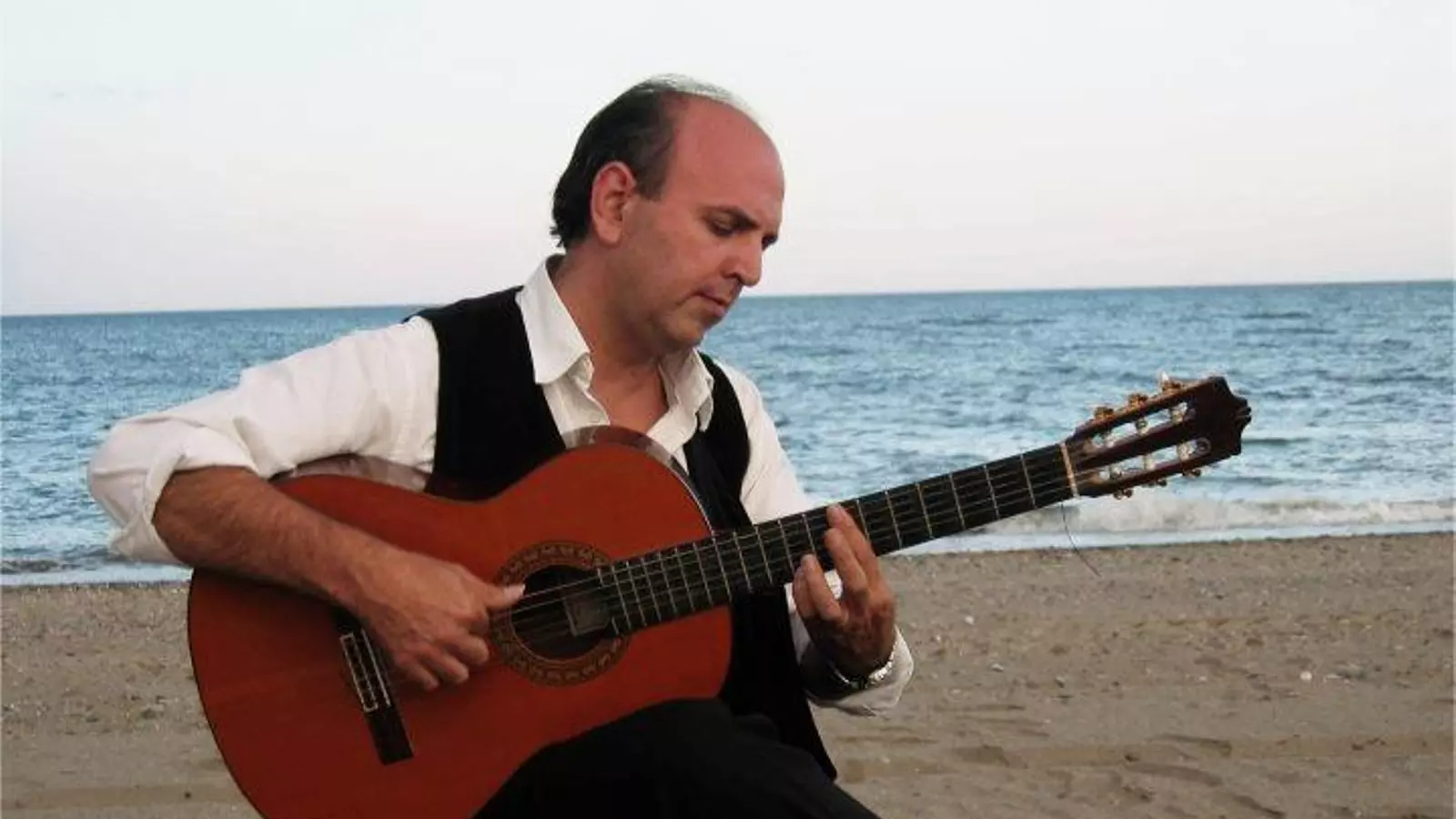

Paco de Lucía took a cork, burned it and rubbed it on his head. He did this to prevent the lights from the shoot from highlighting his receding hairline.
"I was with Paco the whole time, the 24 hours it took to shoot the video for Have You Ever Really Loved a Woman? Also there were the dancer Solera de Jerez; the clapper Antonio Heredia, El Yaya de Málaga, and everyone from Ana María's tablao in Marbella," recalls guitarist Luis Fonseca.
Paco de Lucía added flamenco nuances to the ballad that Bryan Adams composed with Michael Kamen and Robert John Mutt Lang. Adams sang the song in the film Don Juan DeMarco, produced by Francis Ford Coppola and starring Johnny Depp, Marlon Brando and Faye Dunaway. The song reached number one on the US charts for five weeks and was nominated for an Oscar for Best Original Song.
Paco gave me the burnt cork and said, ‘Stay here, pass it to me and I'll pass it on to you.’ In the tavern, we all wore masks, but he didn't want to wear one. Adams sang wearing a black domino mask and a white suit. He was heading to a bar where all the customers wore similar masks. I came out playing the guitar and gave it to Bryan Adams. He was a very down-to-earth guy. The video was filmed in an old house in the Colonia de El Ángel neighbourhood of Marbella in 1995. (Three years ago, a remake of the video was filmed in Vigo, which has surpassed one billion views on YouTube).
In La Atunara, in La Línea de la Concepción (Cádiz), there was a lot of flamenco; it was a neighbourhood that had been badly affected by heroin. In the block where I lived, you could hear flamenco and copla from the moment I woke up. Flamenco was in the streets, among my friends, everywhere.
With Paco de Lucía. / Personal archive
As a child, I opened the case where my brother kept his guitar with a knife. I think flamenco helped me do it. When I held that woman-shaped piece of wood in my arms, flamenco and I made a pact never to part.
When I was ten, my brother enrolled me in a guitar school. I had to take two buses to get to Don Andrés Muñoz Navarro's classes. He taught in La Línea and worked as a barber in Gibraltar; he couldn't make a living from the guitar. The teachers earned their living as barbers, practitioners or lime burners. Their system was as rudimentary as it was effective. With the sheet music, copied with tracing paper, he taught me to play classical guitar.
My family did not belong to any flamenco dynasty. My father, a self-taught writer who worked as a baker in Gibraltar, did not like flamenco. He wrote; his poems appeared in any drawer in the house, sometimes written on a Sevillana electricity envelope. He wrote plays and published in Litoral magazine. He took me to a flamenco guitar school that was in an old horse stable, where more than twenty children gathered. My father introduced me to maestro Juan Mesa after my performance at the retirement home, where I played El emigrante, was featured in the La Línea newspaper.
After learning the main flamenco styles, at the age of eleven, together with some friends who sang, we formed a popular flamenco group, Los de la barca. We competed in Gente Joven, a TVE programme. We got through the preliminary round; although we didn't make it to the final, for me it was an adventure.
Accompanying Camarón. / Personal archive
The day I had the opportunity to see Paco de Lucía, my legs were shaking. I couldn't contain my excitement at meeting someone I had only seen in photos in the windows of the record shop in La Línea. He was at the height of his career and he was my idol. At the end of the concert at the Festivales de España, which took place in Marbella, my brother-in-law, the journalist Jose Luis Yagüe, took me to his dressing room. I must have been about twelve years old. He encouraged me to continue with the guitar and advised me, above all, to play for myself and to always be the first to enjoy the music, without any complexes. We became very good friends. The last time I saw Paco was shortly before his death. We had dinner together after he gave a concert in Marbella. He seemed a little tired, and I was surprised when he asked me, 'How did I look?
In the late 1970s, Marbella was experiencing a tourist boom. At the age of fourteen, I found myself performing at Ana María's tablao with the dancers Ana Parrilla de Jerez, Carmen Soler, a member of Farruco's family, El Pijote, Camarón's brother, and a whole bunch of people who, to me, were walking encyclopaedias. Camarón, who often went to the tablao to see his brother, was performing at the Pagoda Gitana when his guitarist was unable to perform at the last minute.
Let the boy come out,’ he said to me. At 16, I played with Camarón for the first time that night.
Princess Margaret of England, Alain Delon, the members of the group Ricchi e Poveri, Camilo José Cela, Antonio Banderas and Melanie Griffith all visited Ana María's tablao. On one occasion, I started with a guitar solo, the audience was still coming in and there was a lot of noise. Sean Connery, who was in the room, stood up and told everyone to be quiet. Basketball player Fernando Martín was at the tablao the night before he died in a traffic accident. That night, Ana María climbed onto a stool to dance with him.
There was an Arab customer, Salem, who was a regular. He knew the entire repertoire of the tablao and would suddenly shout: ‘Ole, my girl!’. He used to leave us tips. Once we were performing at the Toni Dalli restaurant; there were seven or eight of us. The Arabs started taking out wads of cash, removing the bands they had brought from the banks, and throwing them into the air. They gave us 300,000 pesetas each.
With Mel Williams, she recorded in Brussels. / Personal archive
A group of Argentinians who came to the show and saw the tablao full hired us to perform for three months in Punta del Este (Uruguay). Ana María, who was very funny and friendly, couldn't connect with that audience. Every country's culture is different; the jokes and humour here weren't understood there. The flamenco dancing worked, but we came back early.
One New Year's Eve fell on a weekend and we had to work at the tablao. Someone suggested that, because it was a holiday, we should be paid more. Other years we had done it without saying anything, but this time we stood our ground. I was the youngest and it fell to me to make the request. Ana María was surprised, but she eventually agreed to our request and promised to give us a bonus, a small gift. We were all satisfied, and when we finished the New Year's Eve performance, she gave us our weekly pay, without further ado.
‘What about the gift?’ complained one of my colleagues.
‘Oh, I forgot,’ said Ana María. She left, only to return with a bag from Cortefiel and hand out a pair of socks to each of us.
Much later, I realised that you had to be a very brave woman to work in a man's world, especially in flamenco, which is very macho. Once there was a revolt, she said to us: ‘If you want, you can all leave, because people will come anyway with just a tambourine and a bass drum.’ And she was right, because people went to the tablao to see her.
Lola Flores came to perform in Marbella and needed a guitarist, so she asked Ana María to let me accompany her that night instead of performing at the tablao. It was the first time I had performed with Lola, a very protective woman who treated me with great affection and called me a taxi when I left.
One night, Manolita Cano and her husband Pepe came to pick me up in a Mercedes Benz they had brought from Germany. The owner of the Fiesta flamenco tablao offered me double what I was earning at Ana María's to go and work with them. The stage in the hall was impressive, and it was there that I encountered the most serious flamenco.
There I lived and learned the magic of flamenco, which combines rhythm, singing and dancing. There is no formula for guitar and singing. When the three elements come together—playing, singing and dancing—a spontaneous dialogue is created on an incredible and powerful rhythmic base. I have accompanied Camarón, Pansequito, Chiquetete and Juan Villar on vocals; La Solera de Jerez, Ana Parrilla, Manolita Cano and Carmen Soler on dance; and Diego and Manuel Montoya, Enrique Cortés, José de Campillos, Antonio Morilla, Rafael de Utrera and Diego del Gastor on guitar. When Manolita played La bamba with castanets, she would come out wearing a red hat and a tight white dress. She would throw herself on the floor, and I would follow her with my guitar, ending up with my fingers bleeding.
With Ana María in Punta del Este. / Personal archive
At that time, I met Enrique Melchor, Bambino and Soleá de Jerez. I was lucky enough to meet Beni de Cádiz, Picoco and Chiquito de la Calzada.
Chiquito had bought a Renault 5 and didn't want anyone to smoke in the car because he didn't have an ashtray in the back seats. One night he said to us, “Let's go to the bingo hall”. Instead of playing a card, he took a glass ashtray from the hall and put it in the car. Once we took a trip to a winery in Montilla (Córdoba), and on the way he stuck his head out the window and teased the truck drivers. When we arrived, the winery was closed. He got out, took off his shoes and started banging on the door with his heels, shouting, ‘Open up, you cowards!’ Until a neighbour came out and told us that it had been closed for years. We had gone to the wrong winery.
Some Lebanese businessmen suggested that Manolita travel with the flamenco troupe from the tablao to Beirut. Lebanon was at war, and they anticipated that there would be a truce at Christmas, which would allow the show to be held in Joünié, a coastal tourist town where there were people with money.
As we were arriving in Beirut, Manolita wanted us to walk down the stairs of the plane singing Que viva España. It was night-time, we were tired; when you travel by plane, the guitar strings loosen and I had to tune them. We were about to get off when there was a loud bang; they were dropping bombs from the mountains. The steps were surrounded by soldiers with machine guns, who pushed us from one side to the other. They gave us some flats to stay in, we were able to visit the hall where the show was to take place and we tried out the sound equipment. It was the only time I played. There was no respite. We spent twenty days locked up in the flats, we didn't perform on any night. Manolita, after talking to the impresarios, came out crying, with her husband on her arm. She told us that one of the promoters of the trip had told her that he would not let us leave until he got his money back. We were being held hostage. Pepe contacted the Spanish embassy and two vans with tinted windows took us out of there, hidden, through the kitchen. On the way to the airport, we encountered a demonstration that held us up for an hour until we reached the plane, which we travelled on alone. Pepe and Manolita had a very hard time.
Los de la Barca, in Puerto Banús. / Personal archive
At one point, I had to choose between my family and the nightlife. I alternated between the tablao and classes at the Popular University, but the salary was not enough to give up the nightlife. To teach at the Town Hall, I needed a degree. For four or five years, I left the tablao in the mornings and, without sleeping, went to study in Málaga, where I obtained my degree in classical guitar teaching. I have been teaching at the Marbella Conservatory of Music for 22 years.
I performed with Felipe Campuzano for over a year in all the capitals of Andalusia with the show Raza. I have conducted the choirs of the Rocío de Marbella and Sierra Blanca brotherhoods. I participate in the Talía poetry group, with recitals of Lorca, Miguel Hernández and theatre. I haven't forgotten flamenco. I met people who had suffered greatly, who carried stories of hardship and misery, who sang with pain. Flamenco was born out of the despair and frustration of the needy. When I leave the classroom and turn off the light, I have the feeling that flamenco is still there, sitting in the dark, watching me with nostalgia.

Latest news





Upcoming events
12
Nov
El Desembarco, la traición de Viriato at La Caja Blanca
12
Nov
HOMER El Mero Mero at Sala Trinchera Málaga
13
Nov
Marbella Startup Lab – Innovate & Collaborate
13
Nov
Candlelight: Coldplay & Imagine Dragons at Sala Fundación Unicaja María Cristina
13
Nov
Candlelight: Tribute to Ludovico Einaudi at Anantara Villa Padierna
Similar News
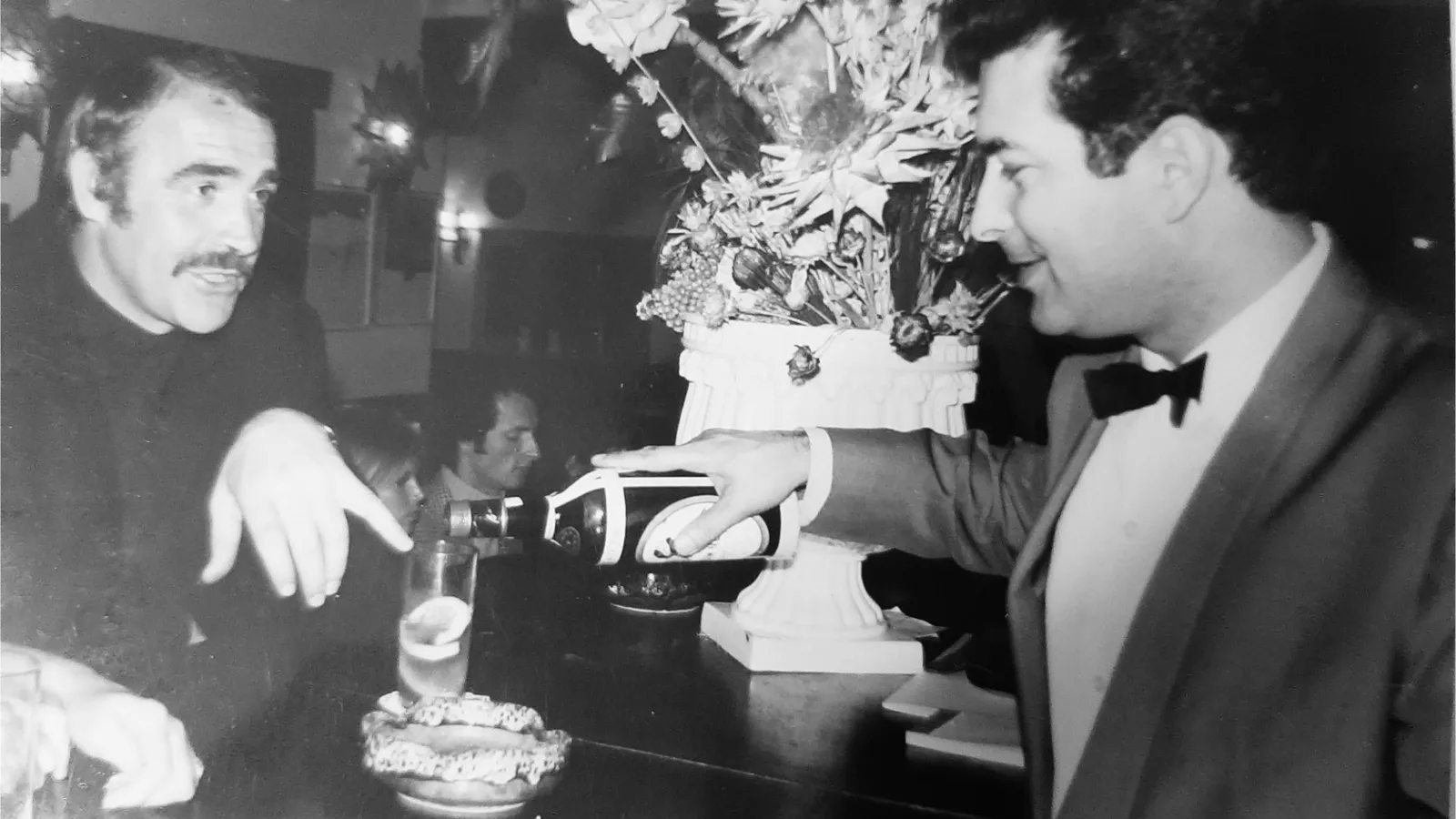
Paco Guerrero: From Taking Care of Pigs to Serving in the Main Luxury Hotels
Marbella
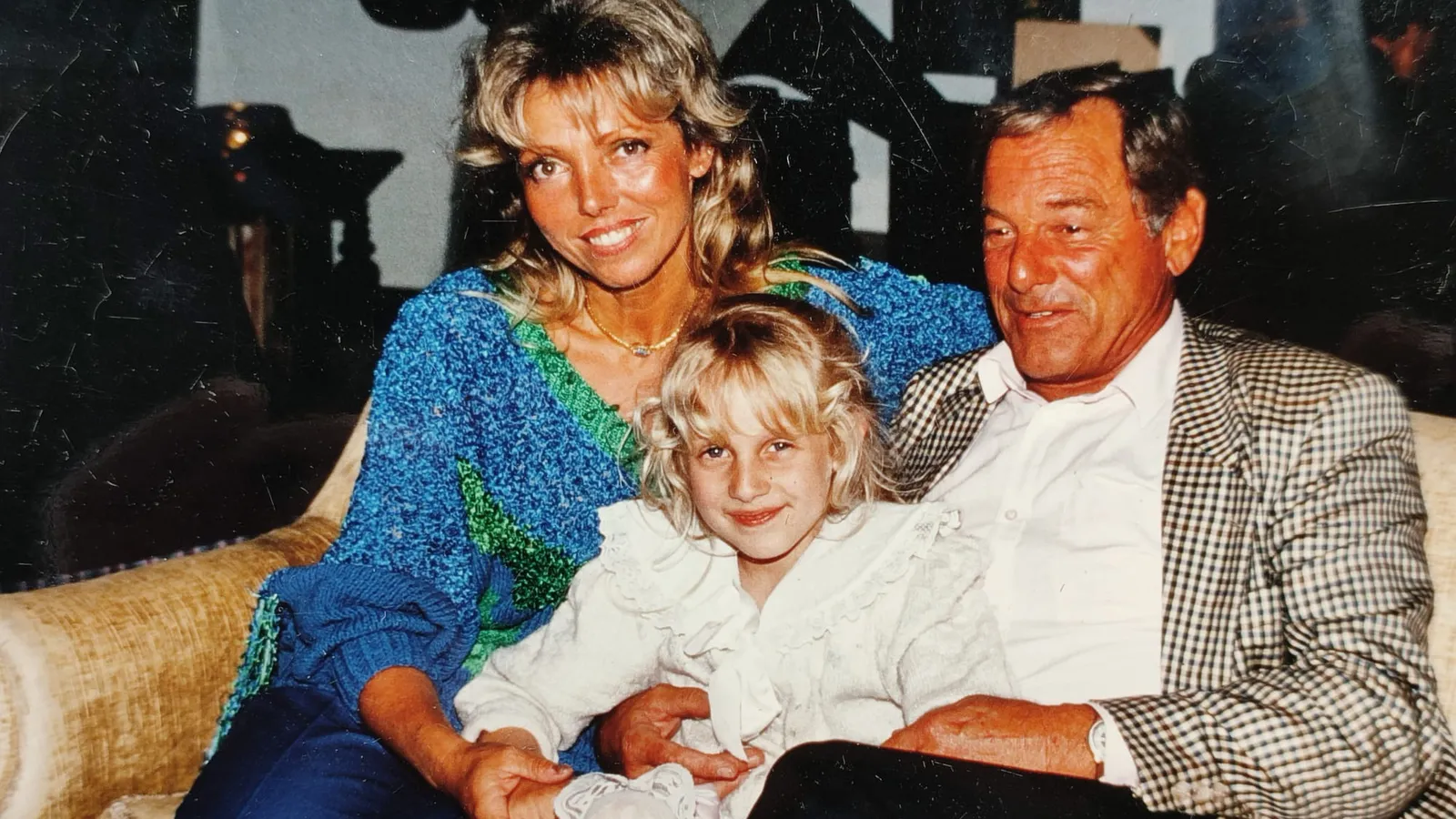
Caroline Schell: Painter and Sculptor in an Actors' Clan in Marbella
Marbella
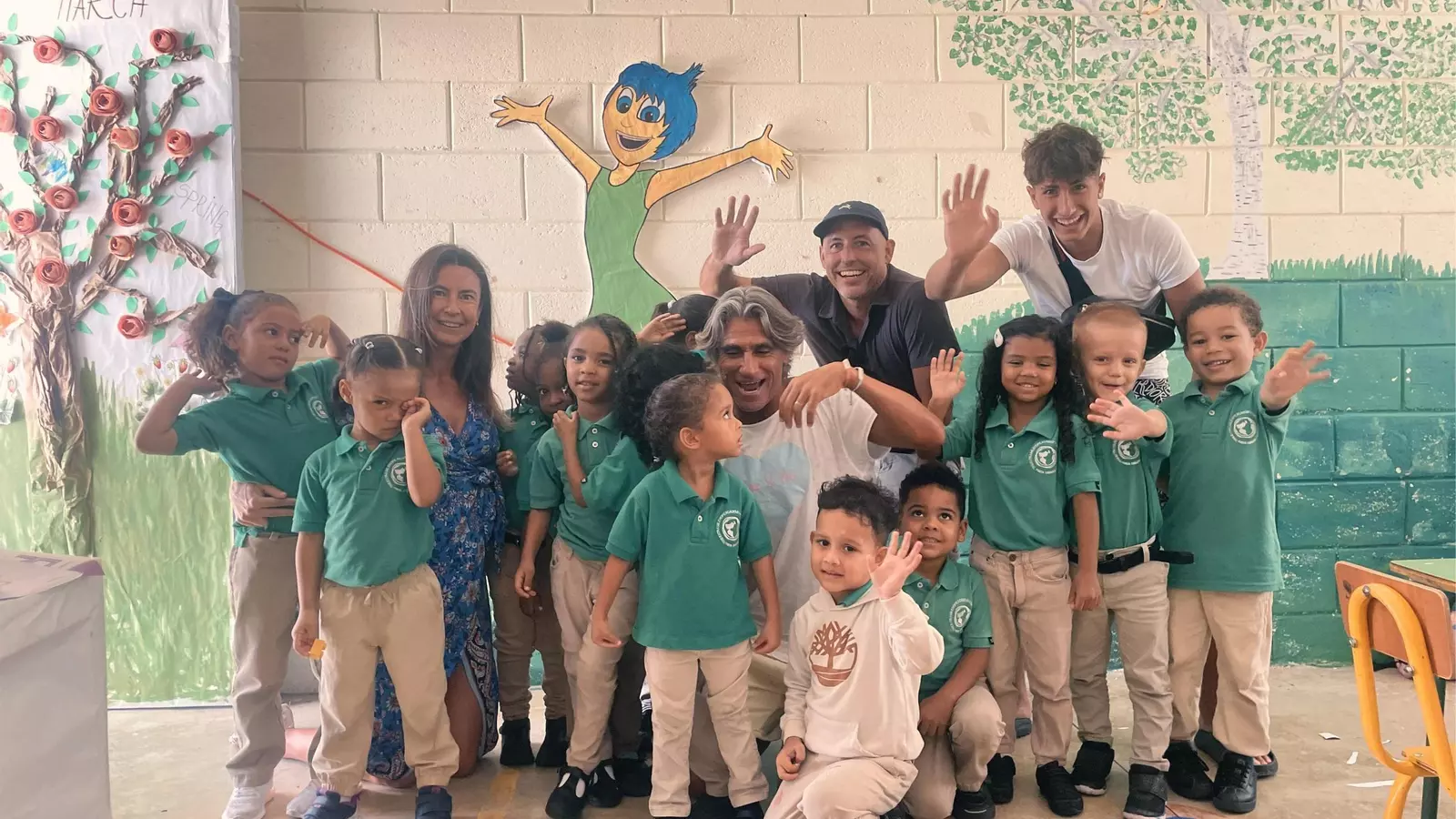
Pepe Imaz, Djokovic's Emotional Coach
Marbella
