


This group of diseases already affects 300,000 people in Spain. The progress made, inequities, and the need for psychological support mark the present and future of their management.
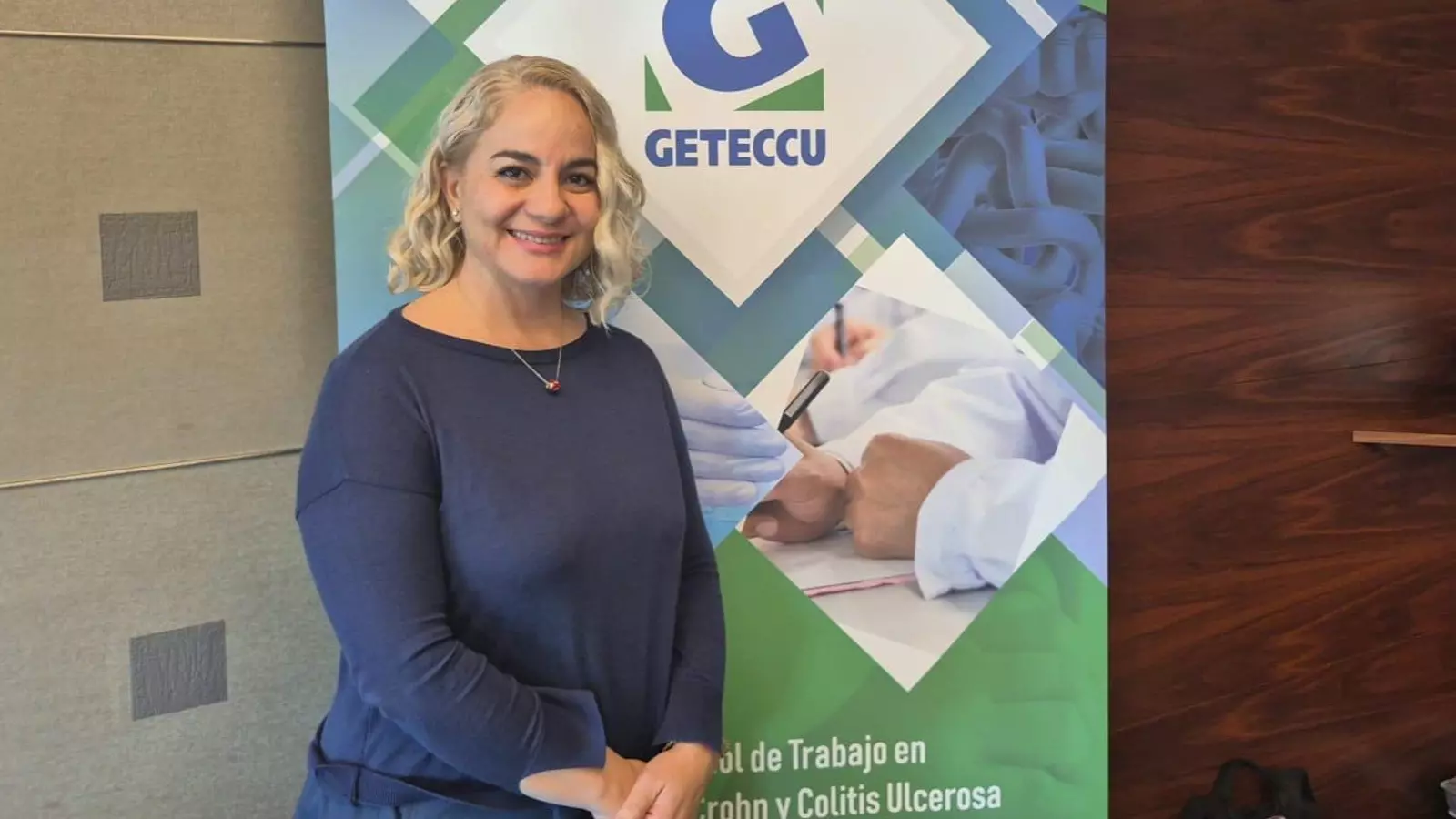

Inflammatory Bowel Disease (IBD), which includes Crohn's disease, ulcerative colitis, and indeterminate forms, affects about 300,000 people in Spain. Estimates suggest that by 2030, it could affect 1% of the population. It is a chronic condition with significant health, social, and emotional impacts. "It is a disease that is endured in silence, and social stigma is a daily reality. Patients are constantly worried about finding a restroom, keeping their stomach from making noises, or hiding their abdominal pain," explains Dr. Yamile Zabana Abdo, a specialist at the Digestive System Service and coordinator of the IBD Unit at Hospital Universitario MútuaTerrassa and president of the Spanish Working Group on Crohn's Disease and Ulcerative Colitis (Geteccu).
One of the main challenges remains healthcare equity. "It's not the same to receive treatment in a rural area as in an urban one, or in one autonomous community versus another," Zabana points out. Geteccu promotes the accreditation of centers of excellence with external audits. "It's not about them being my friends or that I like them: they must be rigorously audited with objective indicators to ensure that an IBD patient will receive the same treatment in a regional hospital as in the Clínic de Barcelona or the Ramón y Cajal in Madrid."
The socioeconomic impact of IBD is another dimension of the disease. "We're not just talking about the direct costs of medication or surgery, but also about the indirect costs: people who stop going to work or university, or who cannot attend school," the specialist explains. The need for multidisciplinary teams is crucial: "It's not enough to have a gastroenterologist; we need specialized nursing, nutritionists, surgeons, coloproctologists, dermatologists, or rheumatologists. Without these resources, accredited units cannot exist."
Diagnostic delays continue to be a problem. In Spain, the average time is one month for ulcerative colitis and five months for Crohn's, although in some cases it can take up to two years. "Often the suspicion doesn't start with the gastroenterologist, but in primary care. That's why we created the first global document on collaboration between care levels," Zabana notes. One of the demands is universal access to fecal calprotectin, a marker of inflammation in stool. "It would be fantastic if all primary care doctors could request this test and, above all, knew how to interpret it. It would advance the waiting list for colonoscopies and speed up the early diagnosis of IBD."
Unmet Needs
Most units lack psychologists to provide support
Psychological care in IBD is another noted deficiency. "As of now, most units do not have this resource. Patient associations compensate for this by offering support. But we're not talking about psychiatry, but about psychological support to cope with anxiety, depression, or loss of function. This continues to be a significant challenge."
The future is moving towards precision medicine in IBD. "Until now, we've tried to tailor treatment, but what we want is precision, like in oncology: the right treatment for the right patient," she explains.
"Biomarkers allow us to choose the best treatment for each type of patient"The challenge is to prevent patients from having to undergo a 'via crucis' trying different IBD drugs. "We know that some patients need drug C or D directly, but protocols require starting with A and escalating. With biomarkers, we can avoid this."
Collaboration with patients is another paradigm shift. "Doctors speak one language and patients another. Now we are learning to define together what control of inflammatory bowel disease really means. For me it was clear, but it's important to understand it from their perspective as well."
At Geteccu, "we want to focus on the less visible: the patient who isn't doing so badly, the unclassified colitis, or the experience of IBD in women throughout life. Discussing fertility, pregnancy, menopause, and aging from the patient's perspective," Zabana details.

Latest news





Upcoming events
12
Nov
El Desembarco, la traición de Viriato at La Caja Blanca
12
Nov
HOMER El Mero Mero at Sala Trinchera Málaga
13
Nov
Marbella Startup Lab – Innovate & Collaborate
13
Nov
Candlelight: Coldplay & Imagine Dragons at Sala Fundación Unicaja María Cristina
13
Nov
Candlelight: Tribute to Ludovico Einaudi at Anantara Villa Padierna
Similar News

Marbella Launches ‘Summer Youth’ Programme with 2,500 Free Places
Marbella

Premium Tourism Drives Marbella’s Hotel Profitability to Record Levels as Overnight Stays Exceed 291,000
Marbella

‘Machos Alfa’ seeks extras in Marbella for filming of its sixth and final season
Marbella
