


Antonio Calvo, from Manager of a Burger Chain to Animal Rescuer in Marbella
He was a pioneer of ecotourism in Andalusia and fights to preserve the reserve he established on public land to protect wildlife. Sonia Téllez, the mountaineering professor from Marbella and Nordic walking champion.
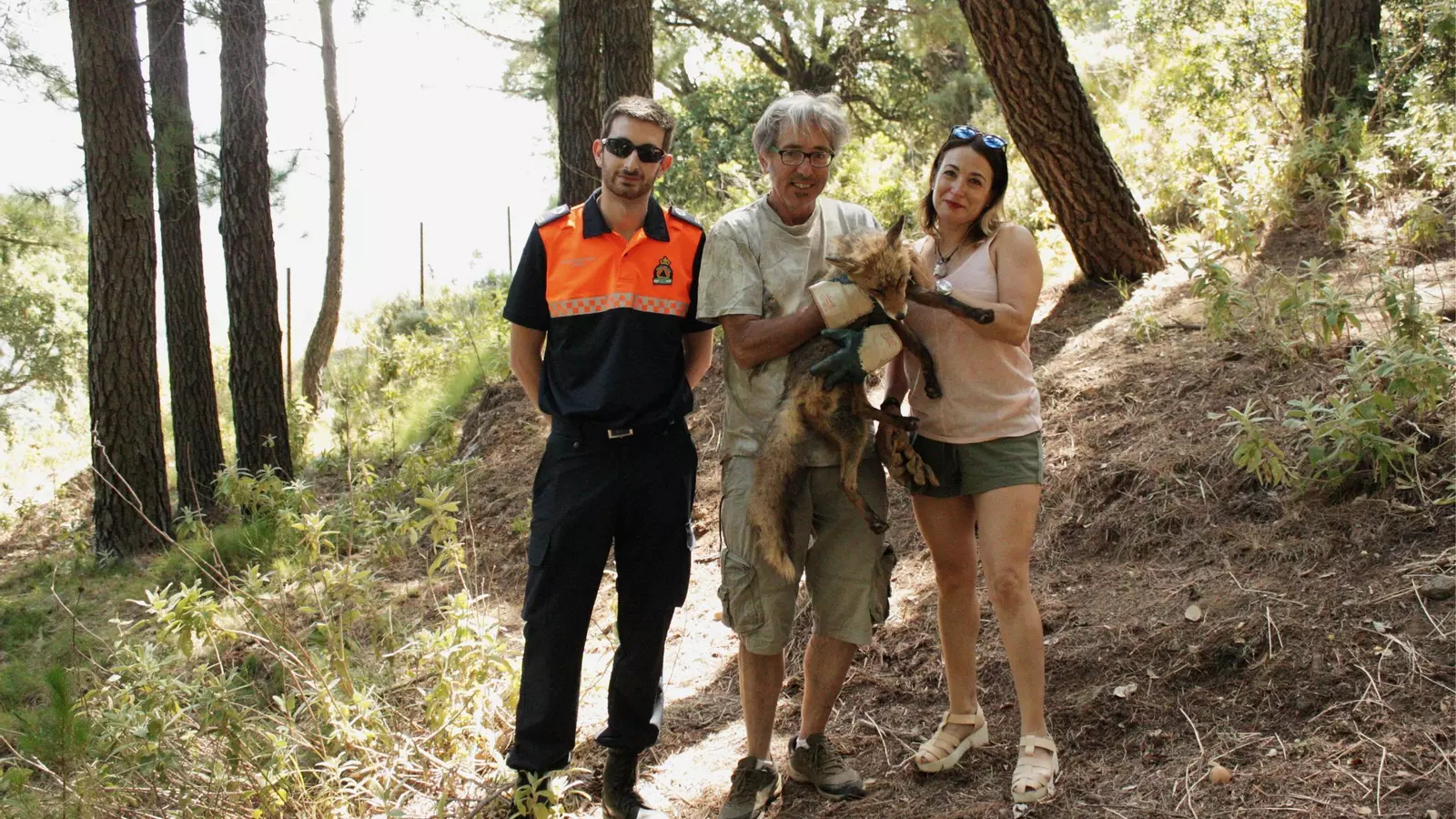

–My parents had a farm in the Green River Valley with orchards, animals, and dreams. They suffered its expropriation as the loss of a paradise.
The lands where Antonio Calvo's family lived in Istán were affected by the construction of the Concepción Reservoir at the end of the sixties. The Costa del Sol was preparing for the imminent tourism boom, and it was decided to build the dam there to supply potable water to the municipalities in the area.
–We moved to live in Marbella, at Plaza Puente Málaga. My parents' connection to the place we had left was so strong that we returned on weekends to see the countryside and watch the animals. Here I began attending a ceramics academy, where I excelled at drawing and modeling animals.
Half a century later, the son of the Calvo family struggles not to lose his paradise. That which he built on an 82-hectare hill in Ojén, which miraculously escaped the great fire that in 2012 destroyed 8,225 hectares of six municipalities. He knew the mountains well, which Belgian botanist Ivo Antonissen roamed in search of orchids, discovering 40 species. Antonio Calvo set out to transform the public mountain into a sanctuary for wild animals. With more perseverance than resources, he managed to convert the old hunting ground into an animal reserve. The Andalusian Regional Government, which had granted him the concession in 2016, decided to revoke it eight years later. They opened two proceedings against him, one sanctioning and the other for closure, which led to the end of the ecotourism activity and the consequent flow of visitors, which allowed the maintenance of over a hundred animals and the support of a staff and the facilities themselves.
With biologist Ivo Antonissen. / Personal archive–In the proceedings, we were fined 151,000 euros, which after a judicial appeal was reduced to 65,200 euros, for the capture and possession of wild animals without origin documentation. It seemed as if we were animal traffickers, when in reality we were sheltering injured, orphaned, or roadkill animals brought to us by citizens after being rejected at the recovery centers in Andalusia. They didn't accept these animals, wild boars, mouflons, mountain goats, or foxes, considering them game species (suitable for hunting), so people turned to us. We cared for these animals, rehabilitated them, and released them in this protected space, in the ecological reserve, where they were set free.
We were accused of lacking expert personnel, though we had biologists, environmentalists, veterinarians, forestry workers, and nature guides. We were pressured to become a zoo, with fences to separate visitors from the animals, when it was an ecological reserve, where we kept the specimens free, to make the place a true environmental classroom to promote respect for animals and nature.
On a day of reforestation of Pinsapo. / Personal archiveIn the closure proceedings, they denounced the installation of water tanks, which were approved and used to provide water to the animals during the drought, as well as the construction of a retaining wall without a municipal license, when it was a gardening project, where we planted thyme, rosemary, and oleanders in the area of an old dump, to prevent pieces of glass, iron, and glass that surfaced from injuring the animals' snouts and paws.
Until last summer, even with the threats of eviction and the reserve inactive, without income or staff, Antonio managed to feed the animals.
–El Corte Inglés provided us daily with 350 kilograms of food, an incredible quality and variety of fruits and vegetables to feed the animals. We thanked for these donations through social media, and the Andalusian Regional Government received a communication to stop providing us with more food. The Regional Government closed the reserve and took over maintaining the animals with 50 kilograms of dry food, wheat, and alfalfa, three times a week. Since the eviction, I have no access to the reserve; I see the animals from outside and bring them some bread, vegetables, and fruits that some establishments give me. We had up to 150 animals; I don't know how many are left now, I miss two mouflons and three deer that I called by their names.
With tourists in the Sierra.A ruling by the High Court of Justice of Andalusia last November annulled the entrance to the reserve, which had already been evicted by the Andalusian Regional Government five months before, and allowed access to the veterinary hut that no longer existed after an eviction.
–The reserve remains an attractive, viable project, useful, and beneficial for Ojén. We had the first visiting shift until 1:30 PM so that visitors could go down to eat in the town, and in the afternoon we started at three PM and after finishing, they would go eat something. The local restaurateurs were very thankful for this. We proved that animal welfare is beneficial for nature and that it creates jobs.

Latest news





Upcoming events
12
Nov
El Desembarco, la traición de Viriato at La Caja Blanca
12
Nov
HOMER El Mero Mero at Sala Trinchera Málaga
13
Nov
Marbella Startup Lab – Innovate & Collaborate
13
Nov
Candlelight: Coldplay & Imagine Dragons at Sala Fundación Unicaja María Cristina
13
Nov
Candlelight: Tribute to Ludovico Einaudi at Anantara Villa Padierna
Similar News
Paco Guerrero: From Taking Care of Pigs to Serving in the Main Luxury Hotels
Marbella
Caroline Schell: Painter and Sculptor in an Actors' Clan in Marbella
Marbella
Pepe Imaz, Djokovic's Emotional Coach
Marbella
