


Miguelón, Notary of Everyday Life in Marbella
For over 40 years, he has captured images of parties, concerts, and processions, and documented the music scene of the eighties. Pedro Mena, the Marbella firefighter who didn't appear in the calendars.


Miguel Rodríguez, also known as Miguelón, carries a lighter, duct tape, some sugar packets, scissors, and a small knife in his personal emergency kit. He always carries these tools with him and uses them in situations like assisting someone experiencing a glucose drop during a procession or mending shoes that are falling apart. For over forty years, he has strived to be a direct witness to local daily life. He has become the leading graphic documentarian of Marbella, having photographed more than half of the town's population at concerts, weddings, masses, or festivals.
—I have witnessed the growth of Marbella's working-class, the birth of the Divina Pastora neighborhood, the construction of the municipal football stadium, and the marina. I come from a hardworking family; my parents moved from Coín in the seventies. With little, they managed a shoestore, thanks to the solidarity of many people who helped them. I attended school up to eighth grade of EGB and worked in my parents' store until I served in the Navy in San Fernando (Cádiz). There I learned order and discipline, and when I returned, I trained in courses at the Universidad Popular (UP). I participated in theater, cinema, and literature workshops. I witnessed an interesting cultural movement and saw poets like Luis García Montero and Ana Rossetti open doors to freedom. We had fanzines from Málaga in the eighties with an acceptable level of freedom for that time, where there was also drugs and AIDS, although not much is said about it.
Third from the left in the play LisistrataI have participated somewhat in theater, acted in some plays by the Álvarez Quintero brothers, although I was not aiming to be an actor, I also made three or four short films at the UP. Then the need arose for a photographer to document what was happening in the theater, and that's when I started, in the late eighties, learning photography. In the nineties I bought a Nikkon camera, which was well-regarded by some and not by others. I enjoyed everything and absorbed it like a sponge, taking photos of concerts, poetry recitals, and exhibitions.
—I had an interest in Marbella's culture, I collaborated in fanzines like Imágenes Alteradas published in Málaga. At the Ojén flamenco festival, I took photos of Camarón, I remember selling two copies to some friends. A few years later Camarón returned and signed those photos for me, which for me has historical value. Everything I do is organized in folders. It was during that time that Marbella entered the concert circuit that took place in Madrid, Barcelona, or Bilbao. I began taking photos at concerts by Tina Turner, Prince, Michael Jackson. I admired what photographers like Ouka Lele or Miguel Tello were doing in the Madrid scene.
Marbella, influenced by the British new wave, had its own scene with Marbepop. This peculiar musical movement of the eighties led to the creation of sixty bands, covering different styles, from rock, pop, punk, heavy, and funky music. The commercial complex of the Puerto Deportivo, a facility reclaimed from the sea in the late seventies, housed the first venues that later transformed the area into a bar zone, where urban tribes were divided by their tastes, mods, rockers, technos, or heavies. In Arturo's, Yorbo, El Túnel, or El Amarillo, people sang, danced, and drank. Similar to what happened in Madrid, the local movement emerged in bars where concerts by bands like Maldito Recuerdo, Johny me enteré, Cortejo Fúnebre, Cuerpo Diplomático, Estado Crítico, Yunque, or Alma, among others, were improvised. The emergence of this musical phenomenon, with the biographies of the bands, was documented in the book Marbepop. Graphic History of Music in Marbella (1987-1991), with photographs by Miguelón.
Camarón at the Ojén festival. / Miguelón"It was the explosion of Marbella's youth trying to break away from the prejudices of the dictatorship. The bars in the port fostered the germ of the first Marbepop groups, It was a happy, somewhat crazy time, which Miguelón knew how to document, becoming the best graphic chronicler of those years. His decades of work are undervalued, someone who has been inventorying the day-to-day of this city and its changes deserves recognition from Marbella. Not recognizing his generous contribution would be more typical of a city without soul," says local historian Francisco Moreno.
—I worked at the BBC, doing weddings, baptisms, and communions for friends and even a Gypsy wedding that lasted more than a day. Although generally, I have not done photos on commission, but rather to tell and record what was happening.
In the nineties, with the arrival of Jesús Gil to the mayoralty, there was a drastic change. He arrived when Marbella was experiencing a time where merchants in the old town formed patrols at night to protect their shops from theft. He took advantage of many who clung to a burning nail to change that situation. Gil has been a master of manipulation long before what Donald Trump is now doing.
One day I was at the municipal radio station in Mijas, where the poem by Miguel Hernández, Mandado que mando a don Gil de las calzas, was being read, which says: To Gil, gili, gilipo, gilipolla/ bell without metal and without clapper,/I send a million times to hell,/since so much episcopal pus supports him. Then they called from the Marbella City Hall to the radio station to ask who was that Hernández who was disrespecting the mayor
Alongside Peter Viertel.After Gil's arrival, a new edition of the Marbepop festival was held in September 1991. It was very poorly organized, without municipal help, in a tent. This happened a month after the incidents at the marina, where Gil was received with spitting, after he insulted and threatened to close the bars of the port and the force of the youth kept it open. I remember that Saturday at the marina, when I only had film left in the camera to take two photos.
In those years, I photographed the Estepona fantasy film festival, concerts in Málaga, in Ojén, parties, fairs, Holy Week processions. Later, many turned to me for those concert photos, of exhibitions or book presentations. Wherever there was an activity, there I was.
He remembers screenwriter Peter Viertel, a good neighbor in Marbella, when he recounted how Clint Eastwood insisted on changing the ending of the movie White Hunter Black Heart, based on his book.
—Viertel disagreed with it and ended the discussion with: Go to hell, no more talk!. When he was laid in the chapel of the new cemetery in Marbella, I was surprised to see two marines standing guard next to his coffin. It was a spectacular ceremony that closed with a bugle call, the melody played when a soldier dies. And it is that he had served during World War II in the United States Marine Corps.
Since the 2000s, I have all the photographs digitized, it's a social documentation. I look with admiration at what the City Hall of Coín is doing, where all this is valued. They have everything digitized, while here historical memory is lost. I say there should be managers instead of administrators. We want to have the best possible Marbella, where the social aspect matters, it's not about putting obstacles in anyone's way, but about giving importance to community memory. I am labeled as red, left-wing when I get along with both sides. I am from the third Spain, I just try to tell the truth and reality. On Facebook, where I have been since 2007, I have posted more than 100,000 photos. Some insult me, while others come out in support. Whoever is bothered should file a complaint and go to trial.
Prince's performance in Marbella. / MiguelónOn one occasion, at the Estepona bullring, singer Enrique Morente was performing with guitarist Pepe El Habichuela. After the performance, I went to the dressing room to greet them, and El Habichuela had a broken shoe. With some glue, I was able to fix it, I had grown up in a shoestore. Another time at a poetry recital in Nueva Andalucía, a poetess's sandal strap broke, and I repaired it with duct tape, which is good for everything.
We are in a Marbella of two speeds, the touristy, glamorous one, the image that politicians like, and the other, the one that complains that things are not done, the one that claims to think collectively. With photography, I act as an intermediary, I denounce, through Facebook, to whom it may concern. I serve as a spokesperson so that those who need to act do so. A spokesperson, who proposes a better Marbella, the most beautiful possible and I am not exaggerating, says the photographer who proclaims cultural activities or informs about the health or death of local characters.
Now I am on a cultural news program on municipal television, where one day I am Miguelito Carnaval; another Miguelito Holy Week; or Miguelito Surrealist; a mix of Paco Clavel and Tip y Coll. For some, I am a persona non grata.
U.S. Marines at Peter Viertel's coffin. / MIGUELÓNI have completed three sections of the Camino de Santiago with the aim of achieving a goal. It brought me patience in doing something I was unfamiliar with, a more humanist than religious experience, which is very beneficial to the traveler even if they are not a believer.
I try not to look back, I go forward. I support new people, who are starting, who do things well, with projects in various arts, videos, writing, poetry. Young people from Marbella who need opportunities, from an organizational work with more management and participation in cultural activity.
These days he boasts of having been the only one to have taken the photos of the last fire, which occurred at the municipal football stadium, which he discovered from his house, on a hot, sleepless night.
For José María Sánchez Robles, editor of Gods without Kingdom, the book that collects many of the photographer's best poems, which he himself selected: "Miguelón, ends up being an elusive being, that no one knows well. It is known that his soul finds refuge and rest in the kingdom of poetry, and there one must search, in the poems that have appeared to him over the years, during bouts of intense fervor."

Latest news





Upcoming events
12
Nov
El Desembarco, la traición de Viriato at La Caja Blanca
12
Nov
HOMER El Mero Mero at Sala Trinchera Málaga
13
Nov
Marbella Startup Lab – Innovate & Collaborate
13
Nov
Candlelight: Coldplay & Imagine Dragons at Sala Fundación Unicaja María Cristina
13
Nov
Candlelight: Tribute to Ludovico Einaudi at Anantara Villa Padierna
Similar News
Marbella Launches ‘Summer Youth’ Programme with 2,500 Free Places
Marbella
Premium Tourism Drives Marbella’s Hotel Profitability to Record Levels as Overnight Stays Exceed 291,000
Marbella
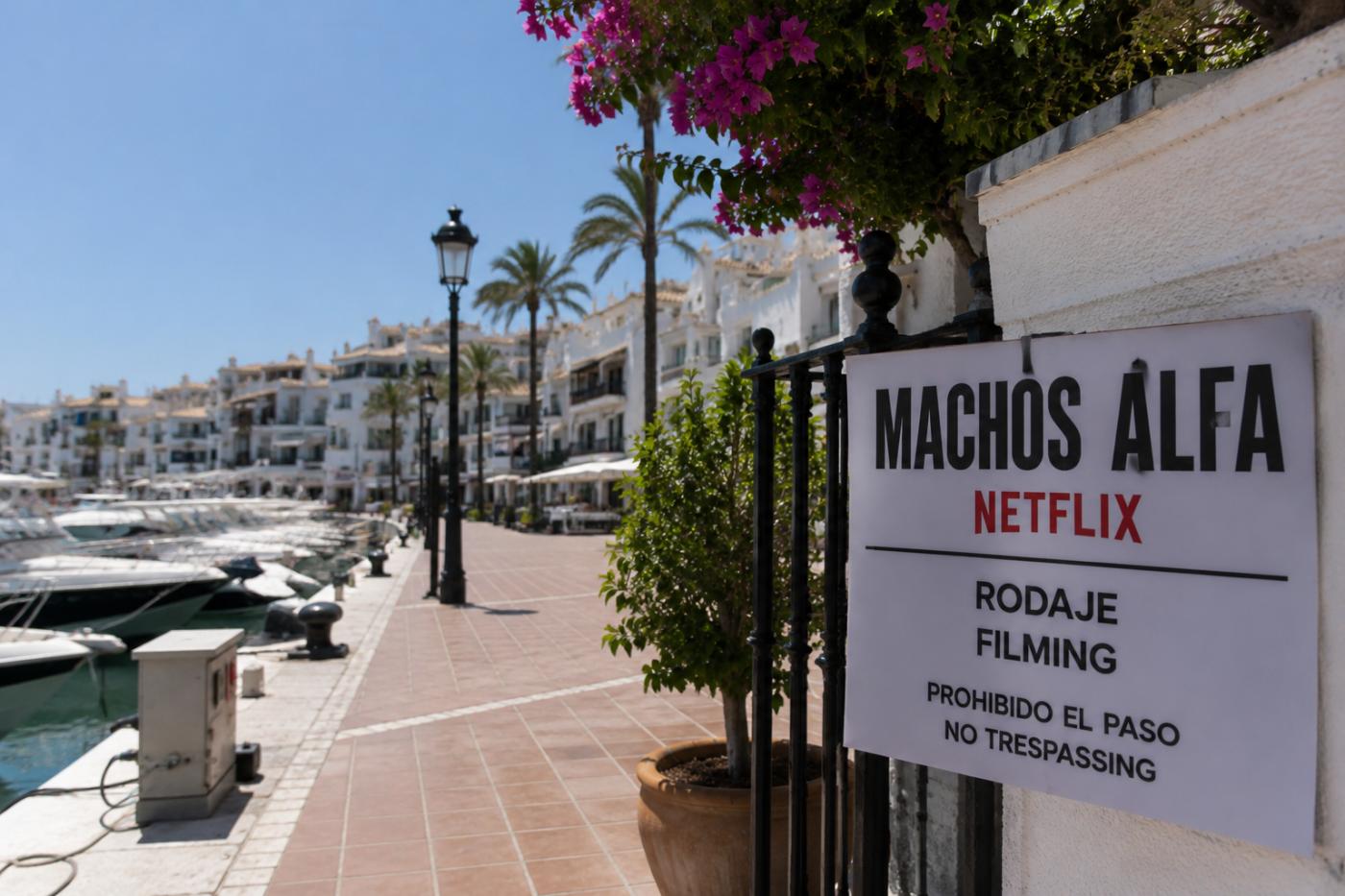
‘Machos Alfa’ seeks extras in Marbella for filming of its sixth and final season
Marbella
