


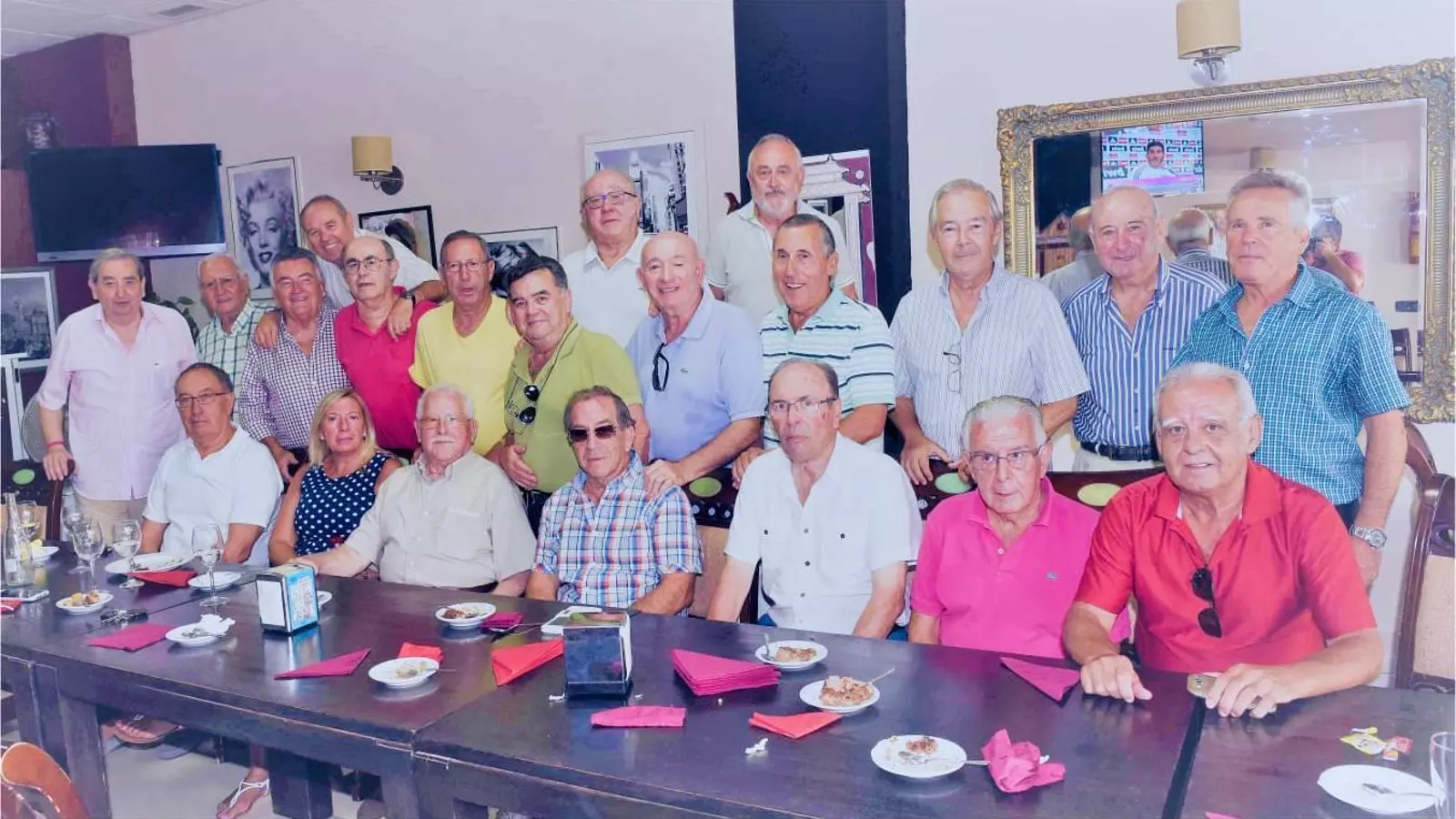
Banús lives in the memory of former employees who built the port.
A group of about twenty former workers maintains the bonds of camaraderie and pride for having been part of Marbella's largest tourism project.Pedro Molina, the painter from Marbella who immortalized his dog.

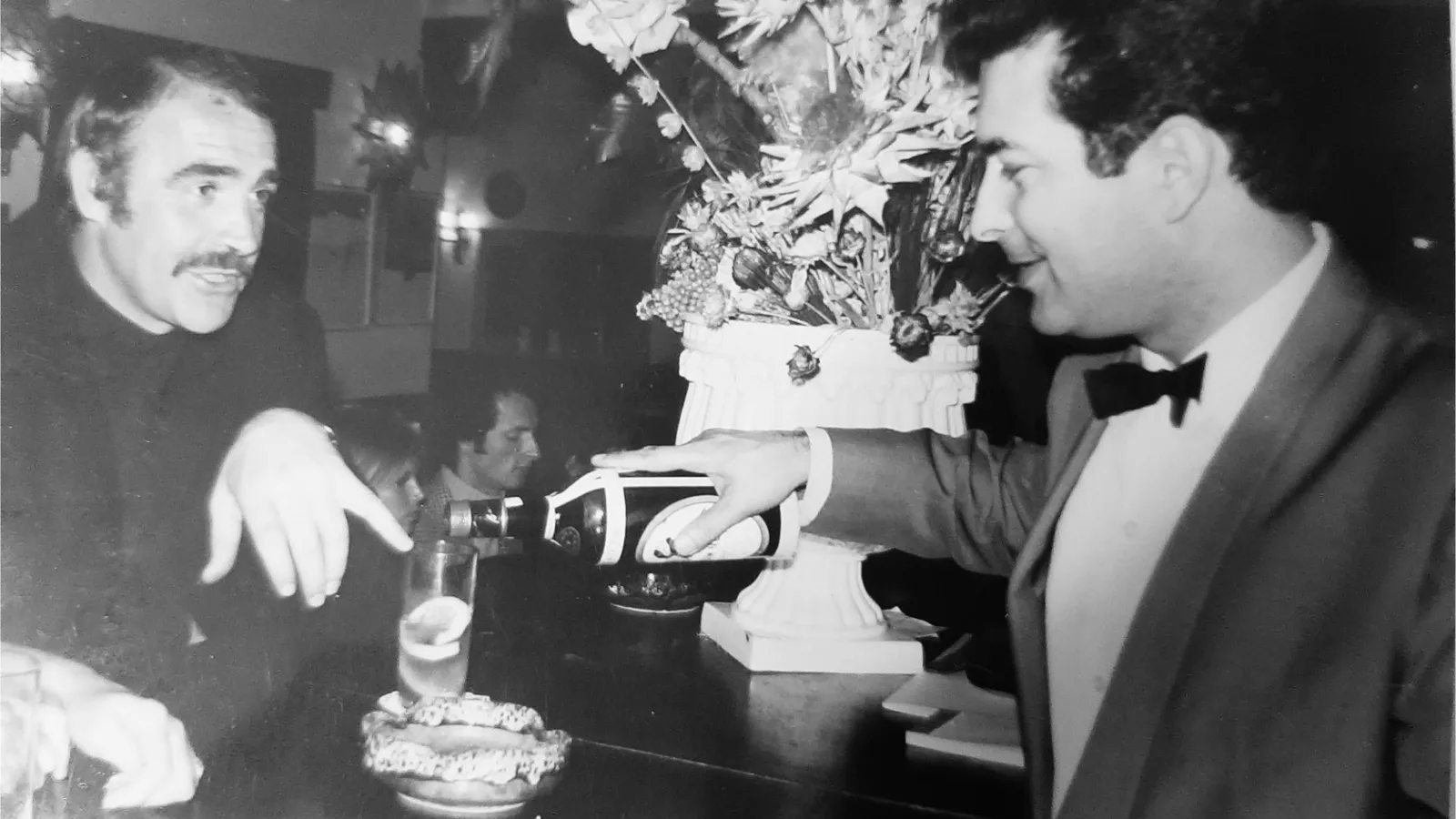
‘Is this yours too?’ asked Francisco Franco when the waiter went to serve his host a glass of JB.
The label on the whisky bottle matched his initials: José Banús. It was no joke. Anyone who had bought a thousand hectares of land to create a large tourist theme park could well distil his own whisky. Banús planned to develop his city of entertainment on a strip of land in Marbella that stretched from the mountains down to the coast, between the Verde and Guadaiza rivers. The area was five times the size of the principality of Monaco, the leisure centre he had looked to and set out to emulate. The builder, a good friend of Franco, had set out in the early 1960s to build the largest tourist city.
The banquet took place at the old El Ángel estate, where waiters served caviar and salmon canapés.
‘Caviar,’ Franco decided.
Also present at the meeting was the mayor of Madrid, Carlos Arias Navarro. Pilar Calvo, who came from a wealthy family, had studied singing in Italy and was the wife of the builder, did not want to go downstairs; above all, she was a monarchist. Banús excused himself on grounds of indisposition. From the window of her room, Pilar watched the scene unfold. She was staying in a suite at the hotel.
Carmen Polo, Franco's wife, was alarmed to discover a half-built tower in the Aloha area, next to the golf courses.
‘How ugly. How can that be fixed?’ she asked.
‘By putting a cannon there,’ her husband replied ironically.
The ambitious project included the construction of hotels, golf courses, a casino, a bullring and a marina, which, although not the main part of the project, would become its emblem. The dictator predicted to Banús that his tourist city project would take off like a rocket.
General view of Puerto Banús. / Municipal Archive The group of workers, which was formed more than fifty-five years ago in Marbella to launch the largest tourist project on the Costa del Sol, has been meeting once a week for the last fourteen years to reminisce about their time working on the Puerto Banús construction site.
‘It's a brotherhood, united by the pride and effort of having been part of this great project,’ sums up Marcos Sáinz, a disciple of Noldi Schreck, the architect of Puerto Banús, who has participated in these meetings.
In 1962, work began on the first social housing to accommodate workers from different places in the La Campana area. In the summer of 1970, the marina was inaugurated.
The Casino de Puerto Banús was one of the first three to open in Spain when gambling was legalised after Franco's death. It was built in five months, working in three shifts, morning, afternoon and night, and was inaugurated in 1978 in the Torre del Duque. This was also the site of the Mau Mau nightclub owned by the bon vivant and Argentine businessman José Lata Liste, the inventor of the nightclub as a lounge, with low tables and sofas, who arrived in Marbella before the port was built.
‘It was a time of refinement. Even though it was a small town on the coast, wonderful people from all over the world came here,’ he recalled months before his death in his hometown of Buenos Aires.
José Banús and Pilar Calvo. / Fundación Banús José Banús' parent company had subsidiaries to manage the marina, administration, construction, water supply and hotels.
‘It was the only company in Andalusia that paid its workers 14 monthly salaries, including a bonus,’ says Paco Díaz, who worked as a ship's surveyor and is the heart and soul of the group, responsible for reminding his colleagues of the next meeting every week.
With all the land to be developed, the employees dreamed of being able to work there until they retired. Banús, a self-made man, was born in 1906 in La Masó, Tarragona. He left school and his small village at the age of fourteen to sell gravel in Madrid and enter the world of construction, where he knew how to forge excellent relations with Franco's government.
Martín worked for 14 years at reception and as security staff. He is remembered as a good striker for the Casino de Nueva Andalucía football team. He used to jump over the counter as a daily exercise to keep fit.
"One day Don José caught me.
“I never do that,” was all I could say.
“Youth,” he replied and left.
The group still has great appreciation for José Banús. They remember him as a paternalistic man who was very close to his employees and sought their opinions.
Grace Kelly, José Banús and Aga Khan. / MarpyBanús was obsessed with making his work known to the world by staging major shows, concerts, operas and world golf championships.
‘He brought Liza Minelli here, exclusively for Europe,’ recalls the hotel director of Banús' project, Manolo Cardeña, who was in contact with the stars during the organisation of the galas.
He had seen her before, she was staying at the Marbella Club, she would come and dance alone at the Nacho's nightclub in the port, and she spoke perfect Spanish. When she came, she mobilised all the companies in the port to set up the stage and the costumes. She had beige carpet laid and, like a true star, she wanted a marble bathroom. For the catering, she asked for bourbon (an American whiskey aged in new American oak barrels) which was not available here and had to be ordered from an Iberia pilot. All the plants from the garden centre were made available to her and the swimming pool at the Torre del Duque was covered with wood.
‘I don't like this, I prefer red wine and fried fish,’ she said when she saw the catering.
For the presentation of the week-long opera festival, which included Aida, a cocktail party was held at the Torre del Duque. It was served by students from the catering school run by Leonardo Llorente. One of the boys with a tray kept asking about Doña Pilar's cousin.
‘There's no cousin of Doña Pilar here,’ I told him.
‘She asked me to make sure her cousin had everything she needed.’
‘She had asked me to take good care of the prima donna, Montserrat Caballé.’
The tenor Pedro Lavirgen also performed at the Puerto Banús launch.
"For La Traviata, we bought some second-hand furniture, including a bed. When Caballé was rehearsing Violetta's death from tuberculosis, the bed couldn't support her weight and a leg broke. We had to prop it up with empty Coca-Cola boxes for the gala.
–At the Hotel del Golf, Banús introduced Franco to his entire team, and as the hotel manager, I was the lowest of the low. Several golf carts were purchased for the occasion. Franco preferred to walk rather than get into a car. He walked across the course with everyone behind him and his escort. He was accompanied by his Moorish guard, who could draw the machine gun they carried on their backs in a millisecond and get into firing position. The entire golf course was surrounded by Civil Guard officers. The security services checked the hotel staff list beforehand.
The builder always had a table reserved at the Torre del Duque restaurant.
One day, his driver came and said, 'On behalf of Don José, please clear his table, he won't be coming today.
Shortly afterwards, Josefina, Banús's daughter from outside his marriage, arrived with her mother and some friends. I seated them at Don José's table.
A little later, the driver returned to tell me that he needed the table because Doña Pilar was coming. I approached the table and said to Doña María, the girl's mother, in the middle of August: “It's a little cool on the terrace”. The lady, who knew a lot, said: “Yes, you're right”, and I moved them to a table inside. She was a lady who, with her turbans, also stood out.
When Doña Pilar arrived, she looked around and sat down.
‘We've got away with it,’ Don José said to me.
‘You've got away with it,’ I replied.
La Campana, which was home to the first workers in Puerto Banús, also welcomed a large foreign population. The H1 homes for La Campana workers were put up for sale to foreigners. Belgian tourists began to arrive through an agency that paid for their stay, as did Swedes, who came to stay for a month.
"On 31 August, the foreigners lined up like ants. The houses for sale in La Campana gave the right to use the swimming pool at the Club La Siesta in Puerto Banús, until it became overcrowded with bathers and the promotion was cancelled. Manuel Fraga came to inaugurate the beach club and the entire fleet of vehicles was put on display. Even the earth-moving trucks were there.
Club La Siesta in Puerto Banús. / Fundación BanúsPaco Ortíz, a surveyor and talented accordionist in his spare time, is also part of the brotherhood that meets every Tuesday. After his time in Puerto Banús, he was able to start a company with his brother that now has 17 employees, and his sons are surveyors.
"I've been very happy in Puerto Banús.
From the 1970s to 1982, Manuel worked as a quantity surveyor with engineer Alberto Díaz Fraga in ports around the world, in the Philippines under Ferdinand Marcos, the United States and Spain.
Paco Díaz came from Lebrija (Seville) in 1970 thanks to a colleague to work on the construction of the first grouped housing developments.
He remembers the decline of Banús, first dragged down by the oil crisis, then Franco's death, and finally the pressure from the banks for unpaid loans.
–In the 1980s, there was nothing left to do. Plots of land were being sold to pay the wages. A man called Madera came to buy the land, three plots at a time, taking advantage of the situation and getting them for a song. I was waiting for my severance pay in 1981/1982. When I heard about a sale, I went to the Andalucía Plaza office to claim my severance pay. It was a shame.
Banús Casino football team.Alberto Vidiella, a plumber at the Banús workshops in Madrid, married a niece of Banús' wife and became his favourite. As vice-president of Puerto Banús, he succeeded the builder after his death in 1984.
‘You have to take the initiative,’ Doña Pilar's nephew, who started out as an electrician in the workshops, told me, recalls Luis Silván, who worked as a draughtsman in Banús' offices in Madrid before moving to Marbella.
In just over a hundred years, the chameleon-like El Ángel estate changed its appearance several times. In the 19th century, the estate was home to one of the country's first ironworks, before becoming an agricultural colony and finally, with the tourism boom, transforming into a golf valley. With the construction of two reservoirs, which transformed the dry land into irrigated land, it went from being a steel-producing area to an industrial agricultural area, first with a flour mill, then a sugar mill, and later producing oranges of renowned quality.
‘Oranges were grown until the 1970s. The Yagüe fruit company bought them and sold them to Valencia, where they were resold as their own. There were also grapefruit and lemons,’ says Manuel Álvarez, who worked for the water company created by Banús to supply the tourist complex.
The wells were dug and we had the best water from the Pyrenees to the south because there were several aquifers, eight in fact. That was until Gil came along and drilled the wells down to 50 metres and dried them up. He ruined the three best water wells.

Latest news





Upcoming events
12
Nov
El Desembarco, la traición de Viriato at La Caja Blanca
12
Nov
HOMER El Mero Mero at Sala Trinchera Málaga
13
Nov
Marbella Startup Lab – Innovate & Collaborate
13
Nov
Candlelight: Coldplay & Imagine Dragons at Sala Fundación Unicaja María Cristina
13
Nov
Candlelight: Tribute to Ludovico Einaudi at Anantara Villa Padierna
Similar News
Paco Guerrero: From Taking Care of Pigs to Serving in the Main Luxury Hotels
Marbella
Caroline Schell: Painter and Sculptor in an Actors' Clan in Marbella
Marbella
Pepe Imaz, Djokovic's Emotional Coach
Marbella
