


Carmen Piedra, the Marbella Designer Who Dressed Arab Princesses and Showgirls
He made his name a brand that he kept active for thirty years. Antonio Palomo, the last musician of a luxury hotel in Marbella.
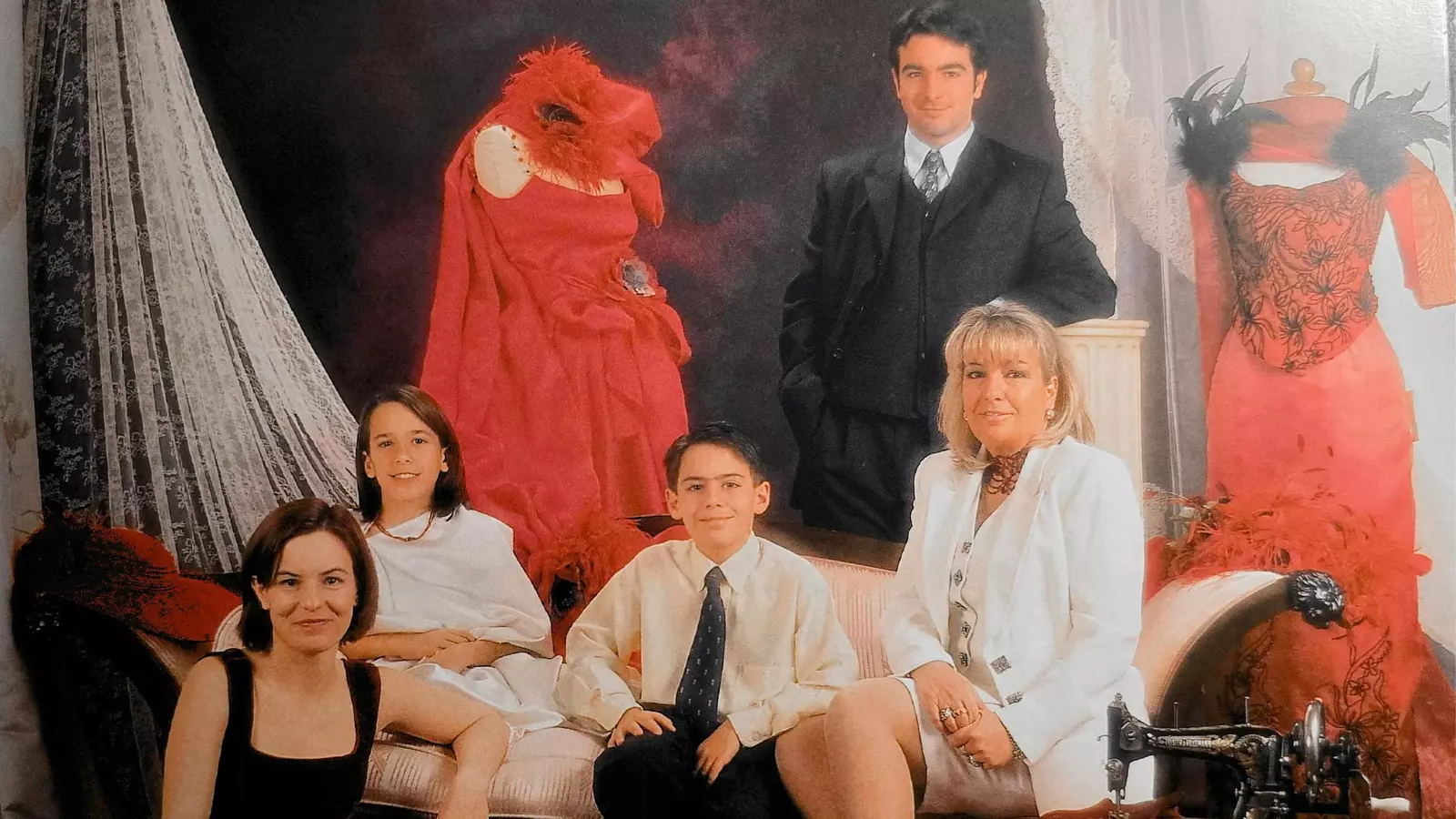

At half past ten in the morning, she delivered the last wedding dress she designed in Marbella, and then the keys to her home. At four in the afternoon, before the court order was issued, she was already in her hometown of Cabra (Córdoba).
‘I haven't slept in so many beds as I have in recent times, in friends' houses, at my children's houses, in hotels or in August at a friend's villa,’ says Carmen Piedra.
She arrived in Marbella 45 years ago to work as a special education teacher and discover her love of fashion. For thirty years, from the late 1980s to 2020, she created her own clothing brand and was a haute couture designer, creating wedding dresses, party dresses and flamenco dresses.
"In 1980, after studying teaching in Granada and passing the competitive exams, I was assigned to the Los Olivos school in Marbella. I studied special education at the university school in Malaga and also took a course in speech therapy, so that I could work in secondary education as a specialist in therapeutic pedagogy and speech therapy.
I asked to do an internship at the Juan Ramón Jiménez special school, which was being completed. When we arrived, there was nothing, not even tables or chairs. We had to paint the walls. I imagined a boarding school like PROMI, the first centre for work and residence for people with mental disabilities in Cabra. (A non-profit organisation offering special education and job training workshops). Queen Sofía was going to inaugurate the school, but in the end she didn't come; she stayed in Torremolinos. The special education school project ran for sixteen years, then it was changed when it was understood that all students are equal and it was agreed that they should be integrated into every school.
I have been very happy in Marbella. I arrived with my two children and had two more here.
Dress designed by Carmen Piedra. / M. H. Since 1980, I have made many friends, I have been involved with the town, I have been in the Red Cross, at charity markets and festivals. I saw Marbella grow like crazy. Here I fulfilled my dream of being a teacher and here I was born as a designer.
A school bus driver's assistant, who saw me sewing between classes, told me that Goymar, a haute couture school, had opened in Alameda de Colón in Malaga. He insisted so much that I finally decided to go to the school to study haute couture design, fashion and styling. The director was surprised that I wanted to enrol; at thirty, he thought I was too old. It was very hard for me to go to Malaga every day, often by bus. I studied for three years, and it was very difficult to combine it with school. For my final project, I presented a collection of fourteen outfits with hats at the Eduardo Ocón Auditorium in Malaga. It was a unique time in Spain, with Adolfo Domínguez's slogan “wrinkles are beautiful” and the fashion catwalks.
In 1988, I was looking for aplace for a small workshop in the square behind the Caja de Ahorros bank in Ronda. Then I met a Belgian lady with whom I set up a cotton clothing shop on Calle Virgen de los Dolores. I worked with her for three months. Then, in that shop in the old town, we sold 900 linen jackets of one design, in three sizes and different shades of white, red and beige.
In 1989, the Town Council's Councillor for Festivals, José Pernía, organised the Moda en Marbella fashion show, a spectacular catwalk show modelled on those of Cibeles in Madrid and Gaudí in Barcelona.
Flamenco dress by the designer. / M. H. I didn't have a workshop yet, so I entered the competition with a collection of chiffon and silk dresses and hats, all in red. I was dressed in black with feathers. At one point, after the shows, I saw all the models running to the dressing rooms to change their clothes, and I asked what was happening. ‘The red collection won,’ they told me. I felt very nervous. I couldn't believe it, I was laughing and crying. I remember that the jury included Pedro Hierro, Pedro Zotano, the founder of Tapioca, and María Luisa, the Princess of Prussia, among others. Bottles of champagne appeared from somewhere. One of my sisters, who was travelling in Brussels, saw it on television and called me to ask what I had done.
I then opened a workshop in the Miraflores area, in a horrible basement that someone had let me use. The floor was covered in grease, and there was no staircase to get from the workshop to the pavement. It was a storage space with a huge cold room. I tidied it up as best I could while I continued with school. I was lucky to have professional seamstresses like Mery and Encarni.
People asked me why the shop was called Carmen Piedra, because that's my name on my ID card. If I had been sewing on buttons and zips, I would have called it Maricarmen, which is also my name.
My first customers were people from Marbella, such as Carmen Jiménez de Maíz and her daughter Laura, who asked me for a black suit for the mother and a dress with a jacket for the daughter. Carmen Urbano, Antonio Lorenzo's wife, commissioned me to make her daughter's first wedding dress. I showed her a sketch inspired by a dress by Simoneta Gómez Acebo, the daughter of Pilar de Borbón. It was made of satin, natural silk with embroidery, stones, crystal and a huge train. Then she asked me to make one for her other daughter. But at a wedding, it's not just the bride's dress; you also get orders from the mother, the godmother, with embroidery, shoes and a black mantilla. Orders from grandmothers, aunts and sisters, non-stop.
Carmen Piedra and María Maíz Jiménez. / M. H. My dresses have been worn by Miss Spain, Remedios Cervantes, Juncal Rivero, Raquel Rodríguez and Raquel Revuelta at the Tivoli, and several of them at the International Flamenco Fashion Show in Seville and at the haute couture shows at the Alfonso XIII hotel.
Cristina Lozano, a very good friend of mine, suggested that I change premises and take one in Francisco Norte, the street where she had a shop. I rented the premises, and things went so well that I soon rented the one next door to expand the shop and another one behind it for the workshop. I ended up with a staff of fifteen women.
Women from the villages around Ronda would come down with their daughters and money hidden in their bras to order wedding dresses. They did this after the chestnut harvest, as the girls got married from November onwards. I never made any distinctions; I treated a princess the same as a woman who came from a village.
I continued with school; I couldn't leave a job I had got through competitive examination. My mother didn't understand. “You've done two degrees, teaching and speech therapy, and you're going to be a seamstress?” she said. My father encouraged me a lot, and my mother later commissioned me to make dresses.
—On three occasions, I was chosen by the Andalusian Regional Government to present my collection at fashion shows in Paris. I was at the Folies Bergère, a Parisian landmark, with a haute couture fashion show, and in major hotels in Paris with the Spanish Chamber of Commerce. I have also participated in fashion shows in Bilbao and at the Joy Eslava in Madrid, which was spectacular with all the politicians in attendance.
Wedding dress. / M. H. Her clients have included princesses from the United Arab Emirates and Elga Andersen, the German model and actress discovered by Otto Preminger, who appeared in Le Mans with Steve McQueen and Elevator to the Gallows with Jeanne Moreau.
—In the shop, we called her Doña Pepita so as not to reveal her name. I made her about fifteen spectacular dresses, costing between six and eight thousand euros. We have also had clients such as Norma Duval and María Teresa Campos and her daughter.
The dressmaker to the folk singers Antonio Ardón, who considered Rocío Jurado his muse, once told me: Never deliver a dress two days before the wedding. Do it on the day itself or they'll never stop finding faults with it.
Like Elio Berhanyer, who was also from Córdoba and structured jackets very well, I take great care with the finishing touches. I can't stand to see a jacket that's come apart. I level the shoulders and hips on the garments so that the customer looks straight. I'd rather take a thousand extra stitches even if it takes me longer. I've had three very good tailors. I'm a very good pattern maker and a good draughtswoman, which is important to me. The first fitting is more than fifty per cent of the garment, that's when you have to know what the suit is like, and for that, good pattern making is essential.
Her name was included in a book published by the regional government, ‘60 women, projects and dreams’, and she was recognised as a businesswoman of the Costa del Sol.
—I had customers from the Basque Country who came in the summer to order their winter clothes. I have worked with the best national and international fabric brands, doing embroidery on garments and appliqués. On the coast, I saw people dressed worse than in the interior. They wore tracksuits, high heels and hair clips. Fortunately, that has changed now.
I made the costumes for the flamenco dance group Karina to participate in an international folklore fair in Shanghai, invited by the Chinese government.
Flamenco group Karina at the Shanghai festival. / M. H.—The fashion show for the presentation was held on the main avenue.
I made the zaya and shawl for the Virgen Blanca, the brotherhood of the Santo Cristo de Marbella, and I also made a zaya for the Virgen de Ojén and a guitar-shaped casalla for the parish priest Francisco Echamendi.
After her marriage broke up, the judge granted her the right to remain in the family home for three years, from 2014 to 2017, a period that was eventually extended for three more years.
—So I was left without a place to work, and during those years I set up my workshop in the basement of the house, where I continued making wedding dresses in linen or natural silk. When I left the house, I gave all the clothes I had in the shop to the Virgen Blanca brotherhood and to Caritas, keeping only a few mementos. Back home in Cabra, I found a lot of support and began to recover. I have fought against many negative things.
I didn't go to a psychologist. A friend, Marta Patricia, recommended that I go to Despertar sin Violencia (Awakening without Violence) in San Pedro, an association for the eradication of gender violence, where I met the psychologist Carmen Sánchez, who treated me for a year free of charge.
Virgen Blanca with zaya and shawl by Carmen Piedra. / M. H. I realised that I had withdrawn into myself like a snail so that others could shine.
Then I went to see psychologist Iñaki Piñuel and read several of his books, such as Amor Zero (Zero Love) and Familia Zero (Zero Family).
Piñuel treats victims of harassment, narcissistic and psychopathic abuse. He uses the term “zero love” to explain the bad experience of being in a relationship with a toxic person.
"It helped me understand a lot of things. I've fought hard, laughed and cried my eyes out. I've spent whole nights working to deliver the suit the next morning. Sometimes I think I should have done a couple of years of workshops in Madrid and then opened the shop.
An entrepreneur has to act with their head, not their heart. My father used to tell me that you have to have two harvests in the bank to be prepared for bad times.

Latest news





Upcoming events
12
Nov
El Desembarco, la traición de Viriato at La Caja Blanca
12
Nov
HOMER El Mero Mero at Sala Trinchera Málaga
13
Nov
Marbella Startup Lab – Innovate & Collaborate
13
Nov
Candlelight: Coldplay & Imagine Dragons at Sala Fundación Unicaja María Cristina
13
Nov
Candlelight: Tribute to Ludovico Einaudi at Anantara Villa Padierna
Similar News
Paco Guerrero: From Taking Care of Pigs to Serving in the Main Luxury Hotels
Marbella
Caroline Schell: Painter and Sculptor in an Actors' Clan in Marbella
Marbella
Pepe Imaz, Djokovic's Emotional Coach
Marbella
