


The trawling fleet of Caleta de Vélez returns to fishing:
The fishermen work
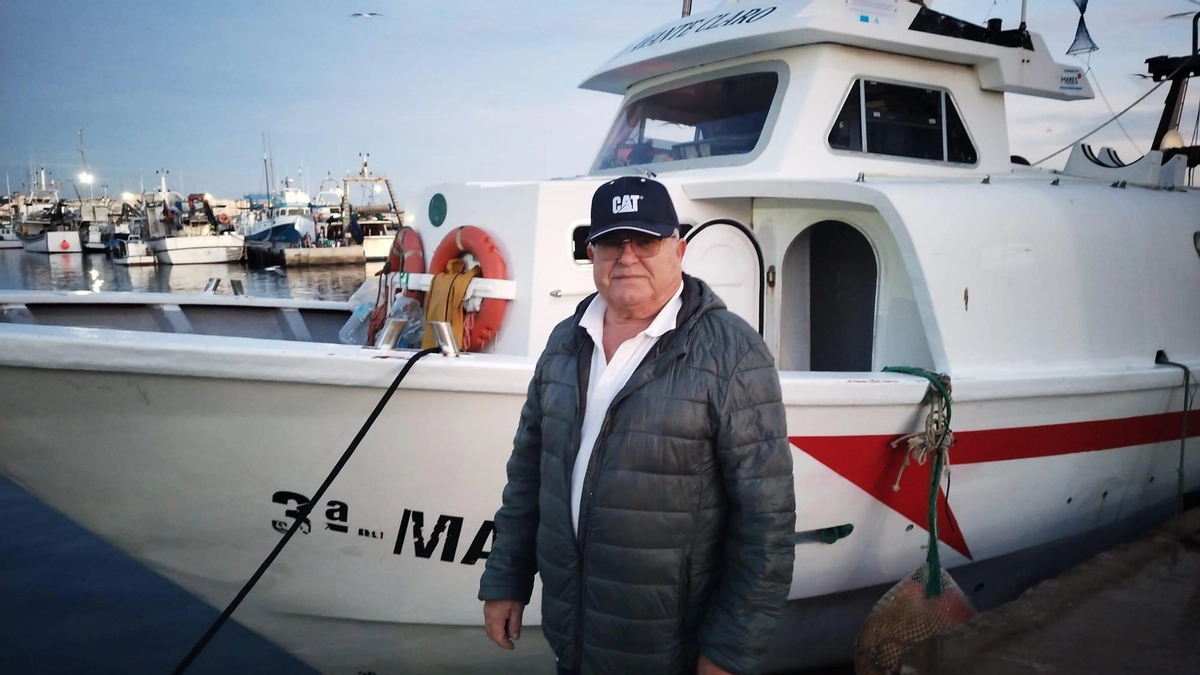

Caleta de Vélez/A portion of the trawling fleet from Caleta de Vélez, consisting of 42 boats, set out to fish in the second week of January. Although "negotiations are closed," maritime professionals continue "fighting for flexibility" in the measures, which according to the last meeting with the Secretary-General of Fisheries, Isabel Artime, will allow the fishermen to return to 130 days of fishing if they install the new nets before May. Thus, at the port of Caleta, they assure that "come what may, there will be no shortage of fish" and that this town "lived, lives, and will live by and for fishing."
It is 18:00, at the fish market of the port of Caleta de Vélez Manolo Pendón is found sitting, watching as his boat, the only one that went out that day, arrives. With a steady gaze, he assesses the amount of fish it brings, on which the livelihood of four families depends.
"It seems that the day has not gone badly, because we already have enough on our plate," comments the owner of four trawling boats, who at 77 years old continues to guide his sons in the "hard and constant labor of serving the sea." One of his four heirs to the profession is Samuel Pendón, captain of the boat that has just arrived. While he organizes the unloading of the boxes, his father kindly shares how a "lover of the sea" lives through this "difficult situation."
Before evaluating, the "servant of the sea" recalls his history in this profession. "I came from Barcelona and bought a boat, before this port even existed. Gradually, with sacrifice, work, and effort, I acquired more, until today I own four and one that I don't have here," explains Pendón. Thus, his sons joined him in the process until the day they told him: "Dad, I need a boat for myself." Today, the 77-year-old man generates 14 jobs, and remembers that "each boat is a business."
"They are mocking us"
For Pendón, the latest measures approved by the European Union are "an offense, they are mocking us." He also remembers that "we don't even fish for red shrimp here, I wish," one of the two species that the Commission is most concerned about, along with hake fry.
Regarding the options to secure fishing days, the owner explains that "whether we want to or not, we have to do it," referring to the adoption of the nets demanded from Brussels. Currently, fishermen use 40 mm nets, now they must adapt them to 45. This is one of the six options being applied in Spain, along with others such as the incorporation of flying doors, the imposition of closed seasons, or the temporary closure of certain areas. However, the nets are the focus of the debate.
The Secretary-General of Fisheries, Agriculture, and Food, Isabel Artime, assured that fishermen could return to 130 days of fishing if they install the new nets before May and "committed to helping the boats that see a drastic decrease in their work performance."
This decrease in work "is guaranteed," according to the sailor, and as stated by the president of the Provincial Federation of Fishermen, who is also the deputy head of the National Federation and leader of the Brotherhood of Caleta de Vélez, Mari Carmen Navas, with the new nets, the catch figures "will decrease by up to 40%." This is "unviable," according to the fishermen. Just in Caleta, the law directly affects about 210 people, there are 42 trawling boats in the locality and 93 throughout the province, according to the patroness. There are "hundreds directly affected and thousands indirectly," she asserts.
"I invite those who have drafted this law to work a day with us"
Regardless of whether the fishermen can obtain 130 days or not, which according to Navas "is difficult, and if it happens, it won't be the same for everyone," the workers believe that "they have drilled into our heads that this number is like achieving a real feat, and no, it's the minimum for a company to survive," thinks David Martín, a 23-year-old sailor who is "in love with his job" and doubts "that I can retire at sea," although he assures that "the fight will continue, whatever they approve."
"Can a factory worker feed his family with 130 days?" the young man wonders. Thus, he emphasizes that "we cannot forget the sacrifice this entails and how hard this job is." Martín wakes up every day at 04:30 hours, prepares to start his day at 06:00 and does not arrive at the port until 18:00 hours, after which they have to sell the fish they have caught and clean the boat, "as if it were to eat on the deck," for the next day, "I don't get home until 20:00 hours, but I don't care, I love my job, I don't want to stop getting up early, I want them to let me work," he adds. Moreover, the young man invites "everyone who has drafted and approved this law to work a day with us, we will all have a laugh."
In his boat, five people and the captain work. "It's big enough that we have two holds, to perform the clear and tango arts," the young man specifies. The first to catch the "more land-based" fish and the second specialized in shellfish. That day, they were able to catch 180 kilos of shrimp, which can be considered a "good day."
Amount of fish and species
In the "sea business," there are not only sailors and captains but also net makers, those who tie nets. Alberto Fernández works for Pendón, and has shared 25 years with him: "They forget that the boat requires maintenance, has breakdowns, the sailors risk their lives and it takes a lot of effort and will, and above all, economic capital," he estimates.
Fernández advances that a kilo of net costs 12 euros, "more than that of ham." And that the breakdowns cost "around 50 and 100,000 euros the most important ones and thousands of euros the minor ones."
Regarding the species and the kilos usually caught in a day's work, "it usually ranges between 600 and 1,000 kilos, although it is rare to reach the latter figure." Compared to those of purse seine, "these can pull out tens of thousands although it is true that they have restrictions," explain Pendón and Fernández.
Thus, at the port of Caleta, they impose their own limits "to not harm the business," for example, trawlers cannot catch more than 50 buckets of mackerel per day and per boat. Regarding the species, they catch: shrimp, sea bream, monkfish, mullet, cuttlefish, squid, mackerel, dogfish... "Everything that is in the market."
At 18:00 hours, what is caught is sold in the fish market, where dozens of wholesalers wait, either for "their own businesses" or to "continue trading," according to the fishermen of Caleta.

Latest news





Upcoming events
12
Nov
El Desembarco, la traición de Viriato at La Caja Blanca
12
Nov
HOMER El Mero Mero at Sala Trinchera Málaga
13
Nov
Marbella Startup Lab – Innovate & Collaborate
13
Nov
Candlelight: Coldplay & Imagine Dragons at Sala Fundación Unicaja María Cristina
13
Nov
Candlelight: Tribute to Ludovico Einaudi at Anantara Villa Padierna
Similar News
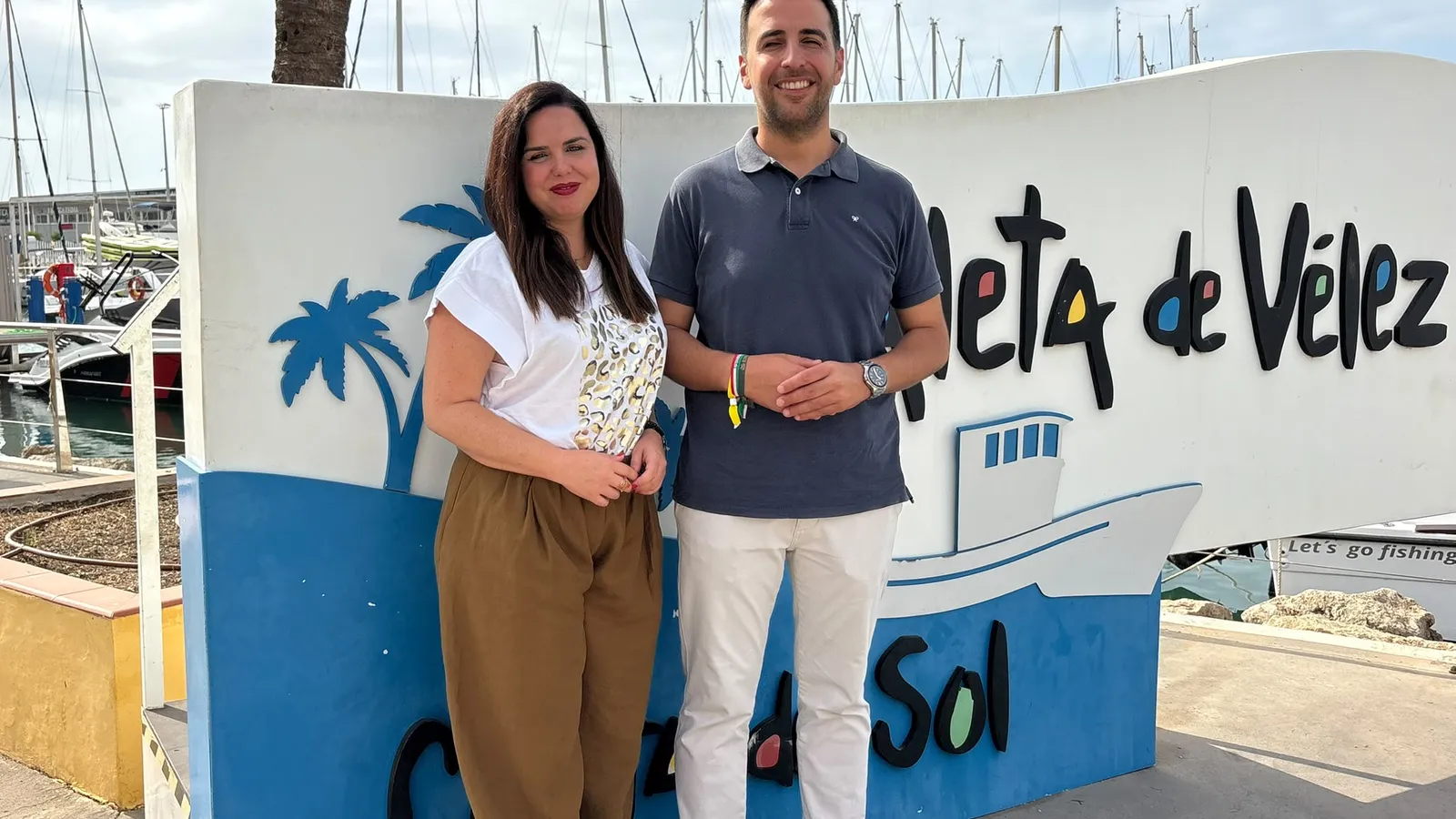
Classrooms move to the sea: hundreds of schoolchildren take to the port of Caleta de Vélez by catamaran
Vélez-Málaga

Raule, a tribute to Manuel Carrasco and Óliver Gil, headline the San Juan Night in Torre del Mar.
Vélez-Málaga

Vélez-Málaga organizes a free female self-defense workshop against gender violence
Vélez-Málaga
