


Antequera Brings Together Experts from Across Spain to Protect Andalusia’s Holy Week Traditions
The Málaga town is hosting a national conference on 19 and 20 November examining the evolution of Holy Week in eastern Andalusia. Its programme features 17 research papers, an educational processional-music concert and a workshop using historical documents.
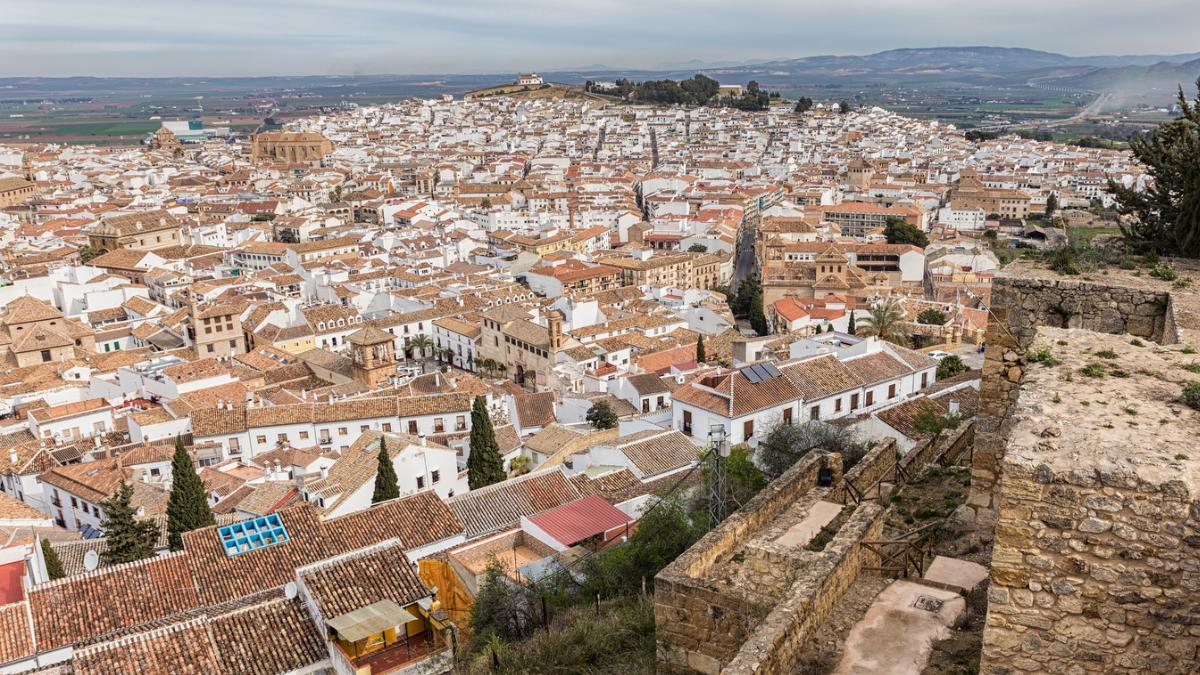

Antequera becomes a centre for Holy Week heritage
Antequera is bringing together researchers, university lecturers and heritage specialists to examine the present and future of Andalusia’s Holy Week traditions.
The national conference “Holy Week in Eastern Andalusia: Traditions, Transformations and Safeguarding Strategies” is taking place on Thursday 19 and Friday 20 November at the Real Academia de Nobles Artes de Antequera.
The gathering examines celebrations in Málaga, Granada, Jaén and Almería from historical, anthropological, artistic, musical and social perspectives. Its purpose is to study how these traditions have changed and to develop ways of passing them on to future generations.
The programme combines academic discussion with activities for those interested in learning more about Holy Week heritage, including an educational concert devoted to processional marches and a workshop using material held by Antequera’s Municipal Historical Archive.
Seventeen studies of Holy Week traditions
The main conference sessions feature 17 research papers divided into four broad areas.
The first panel, “Communities, Territories and Identities”, examines the connection between Holy Week, local customs and collective identity.
A second panel focuses on heritage, ritual and material culture. Participants study religious sculptures, processional platforms, clothing, public spaces and ceremonial gestures.
The third section considers soundscapes, visual culture and the media. Music, photography, broadcasts and social networks have transformed how Holy Week is experienced and presented to the public.
The final panel examines contemporary change and safeguarding strategies. The subjects discussed include younger generations, women’s participation, the economic activity generated by the celebrations and the influence of growing media exposure.
Processional music takes centre stage
One of the programme’s main attractions is the lecture-concert “The Processional March: Origins, Evolution and Splendour of a Musical Genre”.
Held at the church of San Zoilo, it features the Camerata Ipagro Musical and Cultural Association from Aguilar de la Frontera.
The event combines explanations with live music to illustrate how processional marches developed into one of the most recognisable sounds of Andalusian Holy Week.
Music is more than an accompaniment to a procession. Marches create emotion, become associated with particular brotherhoods and preserve a shared memory passed down through generations.
Documents preserving Antequera’s Holy Week memory
Antequera’s Municipal Historical Archive is participating with a workshop entitled “Ritual, Traces and Memory: Antequera’s Holy Week Through Its Historical Sources”.
Led by Miguel Ángel Fuentes Torres, the activity gives participants an opportunity to examine documents, photographs and other evidence connected with the town’s brotherhood history.
These sources help reconstruct previous processions, routes, organisational structures and ceremonies. They also make it possible to understand how local traditions have changed.
Historical archives play an essential role in protecting intangible heritage. They preserve documents while also helping researchers identify customs that could disappear if they are not properly recorded and transmitted.
Antequera and its distinctive Holy Week
Antequera is a particularly appropriate setting for the conference. The town has a Holy Week celebration with distinctive traditions and an important artistic heritage.
One of its best-known customs is “correr la Vega”, when religious platforms are carried at a rapid pace up the steep streets leading back to their churches.
The historic rivalry between the Arriba and Abajo brotherhoods on Good Friday is another significant local tradition. Its origins are connected with the locations of their respective churches and centuries of local history.
These customs demonstrate that Holy Week is more than a religious event. It is also part of each town’s cultural identity, collective memory, community life and heritage.
Balancing tradition and change
One of the conference’s central questions is how to preserve tradition while responding to social change.
Brotherhoods are introducing new forms of organisation, communication and participation. Livestreams and social media allow processions to reach global audiences, but can also influence how celebrations are presented and experienced.
Youth participation will be essential to their future. Researchers are therefore examining how knowledge, ceremonies and responsibilities can be transmitted without treating tradition as something that can never change.
Safeguarding does not mean preventing all evolution. It means preserving essential elements, documenting their history and allowing local communities to participate in decisions concerning their heritage.
A conference led by the University of Jaén
The event is organised by the University of Jaén and the Real Academia de Nobles Artes de Antequera through its José María Fernández Chair. It is supported by the Andalusian regional government’s Department of Culture and Sport.
The initiative forms part of a research project devoted to the cultural expressions of Holy Week in eastern Andalusia and their protection amid social and media transformation.
Researchers from several universities and cultural institutions are participating, including representatives connected with the University of Málaga and its Chair of Holy Week Studies.
A selection of the papers may subsequently be included in an academic publication, extending the scientific impact of the conference.

Latest news

Upcoming events
22
Nov
ODISEA – Film Symphony Orchestra: The Greatest Film Soundtracks Live in Concert
22
Nov
Candlelight: Tribute to Hans Zimmer at Gran Hotel Miramar
22
Nov
Candlelight: Vivaldi's Four Seasons at Gran Hotel Miramar
23
Nov
Drive Your Plow Over the Bones of the Dead – Teatro Echegaray, Málaga
25
Nov
La Cubana – La cuisine de ma cousine in Málaga
Similar News
El Guiri Brewery: the craft beer bringing a taste of Antequera to every bottle
Antequera
Calle Pasillas unveils a new look in Antequera after an almost €590,000 transformation
Antequera
