


Málaga looks for new refuges for the Spanish fir with a planting of 150 trees in the Serranía de Ronda
The new edition of the Pinsapada will take place on 15 November in Cortes de la Frontera, with volunteers, educational activities, a guided route and free transport from Málaga city.
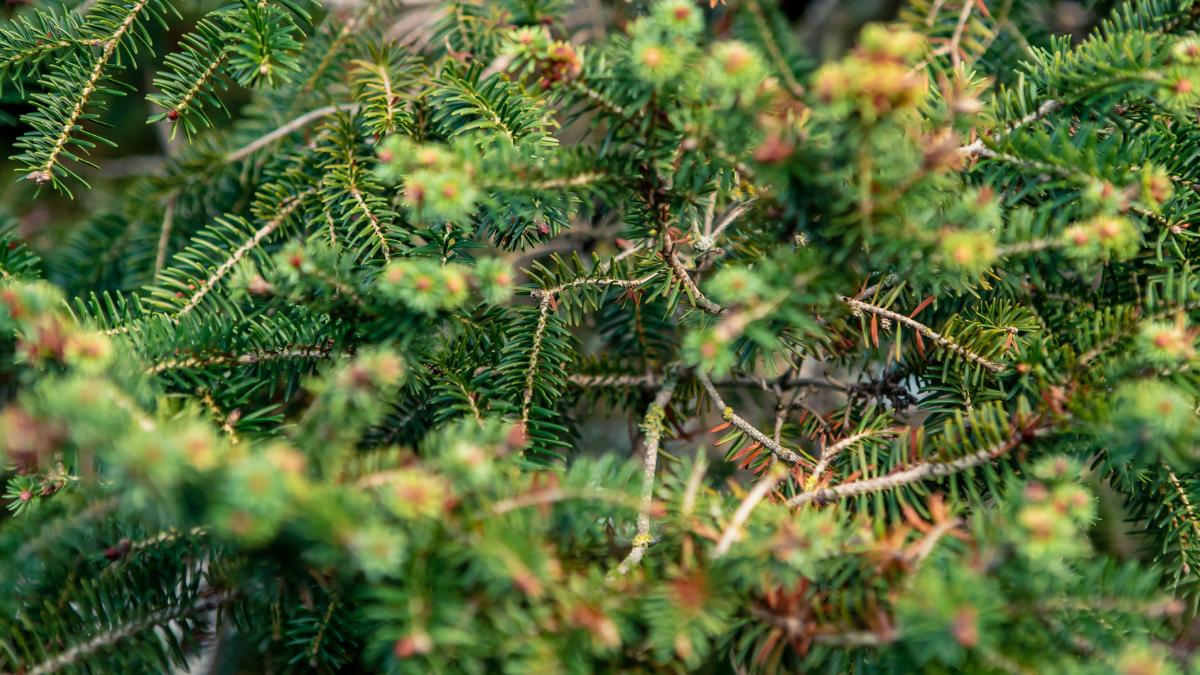

Málaga province is looking for new places where the future of the Spanish fir, or pinsapo, can be better protected. On 15 November 2026, Parque Las Camaretas in Cortes de la Frontera will host a new edition of the Pinsapada, an environmental volunteering day during which around 150 Abies pinsapo trees will be planted.
The initiative is promoted by the Provincial Council of Málaga and Fundación Unicaja as part of the Ruta Viva programme, with the collaboration of the Andalusian regional government and Cortes de la Frontera Town Hall.
Unlike previous editions, the goal is not simply to reinforce already established Spanish fir forests, but to test new areas that could act as refuges for the species in the face of drought and changing climate conditions.
A new potential refuge in the Serranía de Ronda
The planting will take place in Parque Las Camaretas, in Cortes de la Frontera.
The area has been selected because it meets several of the conditions considered favourable for Spanish firs: elevations above 900 metres, shaded slopes and relatively high humidity.
The idea is to assess how the species performs in a location outside its main traditional strongholds.
This turns the activity into more than a symbolic planting exercise. It also works as a small-scale forest restoration test that could help identify other suitable areas for future conservation.
Why new refuges are needed
Spanish firs require very specific environmental conditions.
Higher temperatures, prolonged drought and lower humidity can make natural regeneration more difficult.
For that reason, one of the main conservation challenges is to identify places capable of maintaining suitable conditions even as climate pressures increase.
The new Pinsapada is built around that idea.
The aim is not simply to plant trees, but to see whether certain mountain areas could support the species in the longer term.
From Yunquera to Cortes de la Frontera
The previous edition took place in the Sierra de las Nieves National Park, in Yunquera.
On that occasion, the priority was to reinforce an area where the species is already well established.
This year, however, the approach changes.
Organisers want to test new locations and broaden the range of possible conservation areas beyond the best-known Spanish fir forests.
150 trees aged between three and four years
Around 150 Spanish firs aged between three and four years will be planted during the event.
The trees will not come from a single source.
They will represent the three main populations associated with the species in southern Spain: Grazalema, Sierra Bermeja and Sierra de las Nieves.
This gives the planting additional ecological interest and may help provide useful information on how trees from different origins adapt to the new location.
Three origins for a more valuable trial
Each of the main Spanish fir populations has developed under slightly different environmental conditions.
Bringing together trees from several origins could help organisers observe how they respond in Cortes de la Frontera.
The intention is for the planting to have practical conservation value rather than being merely ceremonial.
If some groups adapt particularly well, the information could inform future restoration work.
What exactly is a Spanish fir?
The pinsapo, or Spanish fir, is a conifer belonging to the genus Abies and one of the most distinctive mountain trees in southern Spain.
Its appearance resembles that of other fir species, but it has evolved characteristics suited to Mediterranean mountain environments.
In Málaga province, it is particularly associated with Sierra de las Nieves and Sierra Bermeja.
Another major population is found in the Sierra de Grazalema, in neighbouring Cádiz province.
A tree closely associated with Málaga
The Spanish fir has strong natural and symbolic value for Málaga.
Its forests form part of some of the province’s most distinctive mountain landscapes.
Its distribution is also very limited compared with many other conifers.
That makes the protection of each surviving population especially important.
The species has become one of the best-known symbols of forest conservation in Andalusia.
The day begins with ‘Get to Know the Spanish Fir’
The 15 November programme will not start directly with planting.
Before volunteers begin work, there will be an educational activity called “Get to Know the Spanish Fir”.
Participants will learn about the biology of the species, from seed germination to mature tree.
The session will also explain where the main populations are found and why their conservation matters.
The idea is for volunteers to understand what they are planting and the wider purpose behind the project.
Environmental volunteering in Cortes de la Frontera
The planting will involve volunteers from both Málaga city and Cortes de la Frontera.
Members of the Fundación Unicaja Volunteer Club will also take part.
The event is designed as an open environmental restoration activity.
Participants will help plant the young trees and prepare the area so that the new specimens have the best possible starting conditions.
Participation is free
Taking part will be free of charge and voluntary.
Anyone interested in conservation and environmental volunteering can apply for a place.
Registration must be completed in advance through Málaga Viva.
Because transport and logistics depend on participant numbers, advance registration is recommended.
Free bus from Málaga city
To make participation easier, the Provincial Council will provide a free bus from Málaga city to Cortes de la Frontera.
The same service will bring participants back after the activity.
This means people can take part without needing their own vehicle.
It also reduces the number of private cars travelling to the planting area.
Guided route through Cortes de la Frontera
The programme will continue after the planting itself.
Participants will take part in a guided interpretive walk through the town centre of Cortes de la Frontera.
The route is intended to help visitors learn more about the municipality and connect the environmental activity with the surrounding territory.
There will also be some free time before the return journey to Málaga.
A day combining science, volunteering and rural tourism
The Pinsapada brings together several different elements.
There is a hands-on forest restoration component.
There is also environmental education.
And finally, there is a local tourism and heritage element through the visit to Cortes de la Frontera.
This makes the event practical, educational and recreational at the same time.
Drought is one of the main challenges
One of the key reasons for searching for new refuges is drought.
Mountain species such as the Spanish fir depend heavily on humidity and relatively moderate temperatures.
If those conditions become less reliable, some populations may struggle to regenerate.
Finding areas with better microclimatic conditions could therefore become increasingly important.
Shaded slopes may play an important role
Not all slopes on a mountain experience the same conditions.
Shadier areas receive less direct sunlight and often retain moisture for longer.
That can be an advantage during dry periods.
Choosing sites with these characteristics is therefore part of the wider strategy to identify places that may be more resilient to rising temperatures and reduced rainfall.
Altitude also matters
The project is specifically looking at areas above 900 metres.
At higher elevations, temperatures are generally lower than along the coast or in lower-lying areas.
Humidity can also be better preserved.
The combination of altitude, orientation and moisture will be crucial in determining whether Las Camaretas can become a suitable refuge.
A long-term trial
The success of the planting cannot be measured on the day itself.
The real test will be how the trees develop over the coming years.
If survival rates are good and the trees adapt successfully, the experience could become a useful reference for future projects.
That gives the Pinsapada a much longer-term significance than a single volunteering day.
Restoration requires follow-up
Every forest restoration project needs monitoring.
Planting is only the first step.
The young trees will need to be checked over time to assess survival, growth, water availability and possible damage.
Those observations will help determine whether Las Camaretas can realistically develop into a new refuge for the species.
Cortes de la Frontera, gateway to the Serranía de Ronda
The location also adds strong landscape appeal.
Cortes de la Frontera sits in the Serranía de Ronda and close to some of inland Málaga’s most important natural areas.
Its surroundings combine cork oak forests, mountain landscapes and Mediterranean woodland.
The event will also give greater visibility to a municipality that acts as a link between several protected natural environments.
The Spanish fir as a symbol of biodiversity
The importance of the species goes beyond the trees themselves.
Spanish fir forests support wider ecosystems containing many other plant and animal species.
Protecting these forests also means protecting the biodiversity associated with them.
Conservation strategies therefore focus not only on increasing tree numbers but also on maintaining stable ecosystems capable of supporting them.
A conservation project open to the public
Bringing volunteers into the project allows people who do not normally take part in forestry work to experience conservation directly.
For a few hours, participants can learn how planting is carried out and why certain sites are selected over others.
That first-hand contact can also help people better understand the complexity involved in protecting sensitive species.
How to take part in the 2026 Pinsapada
The event will take place on Sunday 15 November 2026.
Location: Parque Las Camaretas, Cortes de la Frontera
Main activity: planting around 150 Spanish firs
Participation: free
Transport: free bus from Málaga city
Registration: through Málaga Viva
The programme also includes the “Get to Know the Spanish Fir” educational activity and a guided route through Cortes de la Frontera.
A small forest with a much bigger purpose
Planting 150 trees may seem modest compared with the size of major forest areas.
But the real value of the project lies in testing alternatives.
If environmental conditions continue to change, Spanish fir conservation may require new places where the species can survive and regenerate.
This November, Cortes de la Frontera will become one of those experimental locations.
The future development of these trees will help determine whether Las Camaretas can become a genuine new refuge for one of Málaga’s most emblematic forest species.

Latest news




Similar News

Cork seeks new opportunities for employment and innovation in the Serranía de Ronda
Cortes y Graena
