


Casares to host a stage of the 2026 Andalusia Festival Legend for historic rally cars
The municipality will become part of the route on Friday 27 November, bringing classic rally cars, replicas and iconic motorsport machinery to the Costa del Sol.
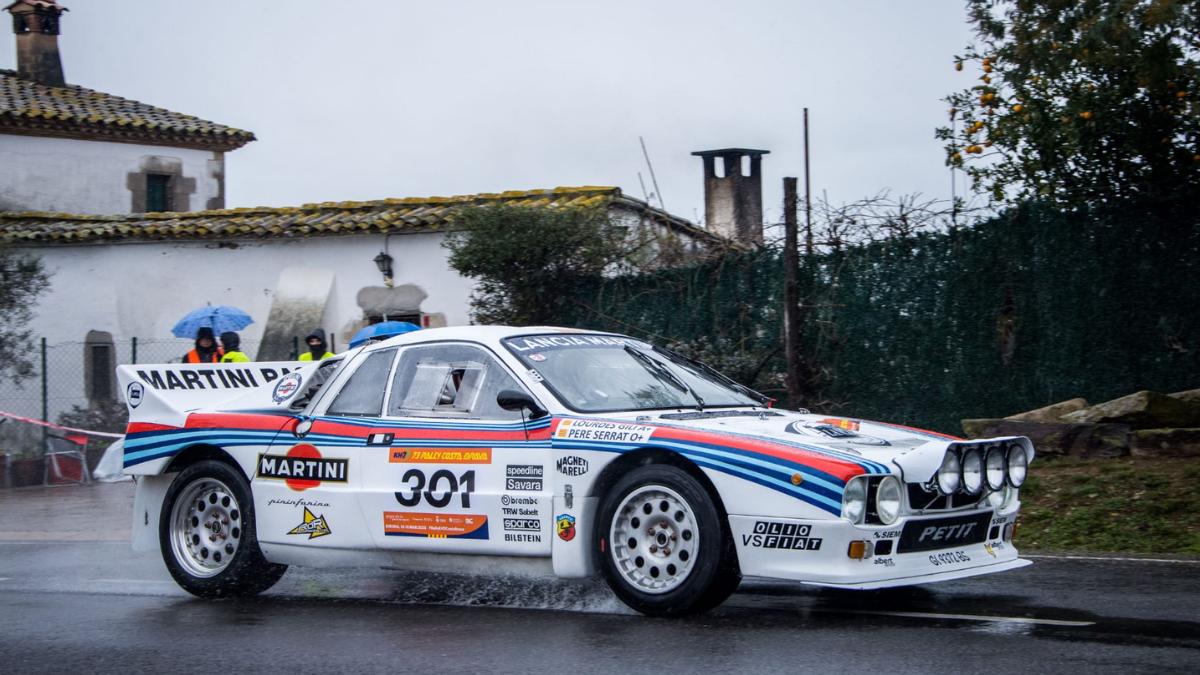

Casares will form part of the 2026 Andalusia Festival Legend route on Friday 27 November, becoming one of the locations chosen for this celebration of historic motorsport.
The municipality will host one of the event’s road sections, giving local residents and visitors the chance to see classic and legendary vehicles associated with different eras of rallying.
Unlike a conventional rally, the event is not a speed competition. Participants drive through specially prepared sections without racing against the clock.
The aim is to celebrate the history of motorsport and bring historic cars back onto the kind of roads they were originally built to tackle.
Andalusia Festival Legend arrives in Casares on 27 November
Casares will host its stage on Friday 27 November 2026.
Full details of the precise route and timetable in the municipality are still expected to be confirmed closer to the date, but Casares is already included as one of the stops in this year’s programme.
For motorsport fans in western Málaga province, the event will provide an opportunity to see unusual and historic cars much closer to home.

Three days of historic motorsport
The 2026 edition will take place on 26, 27 and 28 November.
According to the organisers, the full itinerary will cover around 380 kilometres and include 12 different sections.
The event will be centred on the Costa del Sol and Marbella, while also passing through several other municipalities.
Casares will be one of the locations featured during the three-day route.
This is not a traditional speed rally
One of the most important things to understand about Andalusia Festival Legend is that it is not a conventional timed rally.
Cars use sections prepared for the event, but drivers are not competing to set the fastest time.
There is no stopwatch-based classification like there would be in a championship rally.
The emphasis is instead on the cars, their history and the spectacle of seeing them driven on roads that resemble the environments in which many of their original versions once competed.
Bringing the golden age of rallying back to the road
Andalusia Festival Legend was created with a clear idea: to recreate the atmosphere, vehicles and visual identity of some of rallying’s most memorable eras.
For a few days, roads once again fill with cars inspired by the 1970s, 1980s, 1990s and early 2000s.
The organisers describe the event as a journey through rally history.
Rather than focusing on outright performance, it gives fans the chance to see cars from different generations being used in motion.
Original cars and faithful replicas
The entry list can include both original historic cars and carefully prepared replicas.
Vehicles are assessed by the organisers before participation is confirmed.
Factors such as appearance, historical relevance, technical specification and authenticity are taken into account.
This helps the festival maintain a consistent identity while still allowing cars from different eras and backgrounds to take part.
Cars built up to 1996
One of the main categories for the 2026 edition is open to original cars and replicas built up to 31 December 1996.
That period includes some of the most celebrated decades in rally history.
Many of the cars from those years have become icons among motorsport enthusiasts and are now rarely seen in normal road use.
Late-1990s cars are also included
The event does not stop at 1996.
A category known as Road to Legend allows cars built between 1 January 1997 and 31 December 2001 to take part.
This introduces a slightly newer generation of machinery.
For many fans, cars from this period are now beginning to be regarded as modern classics.
Competition-prepared cars can also join
The regulations also include Sport categories for cars prepared for competition.
These vehicles may use modern equipment and modifications, particularly where safety is concerned.
The intention is to preserve the appearance and spirit of historic rally cars while ensuring that they can take part safely on the event’s road sections.
Some modern cars may appear too
The organisers also have an ST category.
This can allow selected modern cars to participate on an exceptional basis.
Entry in this category is limited and subject to approval from the organising committee.
The main focus of the festival nevertheless remains historic cars and vehicles connected with classic periods of rallying.
Around 90 cars expected
The 2026 Andalusia Festival Legend has initially set a limit of 90 participating vehicles.
That number may be increased in exceptional circumstances.
Owners do not simply pay an entry fee and automatically receive a place.
Each car is submitted for consideration and the organisers review the application before participation is confirmed.
Selection helps preserve the event’s identity
This selection process allows the final field to remain historically and visually coherent.
Not every vehicle needs to have the same financial value or competition history.
What matters is whether it fits the philosophy of the event.
Authenticity, appearance and the ability to represent a particular era of motorsport all play a role in the selection process.
Casares joins a route with strong tourism appeal
The arrival of Andalusia Festival Legend also has a tourism dimension.
Events of this kind attract drivers, teams, organisers and fans over several days.
Beyond the cars themselves, the route also provides visibility for towns and landscapes that are not always part of the Costa del Sol’s most conventional tourist itineraries.
Casares is particularly well suited to that kind of event.
Mountain roads and Costa del Sol scenery
The area around Casares combines mountain landscapes, winding roads and views towards the Mediterranean.
That type of terrain fits naturally with the character of a historic rally festival.
Rallying has always been closely associated with secondary roads, mountain routes and technical bends where the road itself becomes part of the spectacle.
Casares therefore provides a particularly distinctive setting for the event.
A chance for Málaga motorsport fans to see the cars
Bringing a section of the route to Casares will make the festival more accessible to motorsport enthusiasts across Málaga province and the western Costa del Sol.
Previous editions of Andalusia Festival Legend have also passed through roads in Cádiz and Málaga.
The 2026 edition strengthens the event’s focus on the Costa del Sol.
For local fans, that means more opportunities to see cars that are rarely encountered outside specialist events or private collections.
Building on previous editions
Andalusia Festival Legend has grown steadily since its first editions.
In 2025, the event brought together around 80 historic cars from Spain and other European countries.
Participants came from places including Portugal and Ireland, while the route crossed roads in the provinces of Cádiz and Málaga.
That international element is expected to remain part of the festival’s identity.
No timing and no speed classification
The non-competitive format has been a defining feature of the event from the beginning.
Earlier editions were also presented as recreational and demonstration-based rather than timed competition.
Some sections may be closed to normal traffic for safety reasons, but drivers are not trying to achieve the fastest possible time.
This makes the experience closer to a moving celebration of rally history than a conventional motorsport contest.
A chance to see cars that defined an era
One of the biggest attractions is the opportunity to see and hear cars belonging to very different generations.
Many historic rally models disappeared from top-level competition decades ago.
Others survive mainly in museums or private collections.
Events like Andalusia Festival Legend return them temporarily to the road and place them in surroundings similar to those for which they were originally designed.
Rallying’s most memorable eras return
For many enthusiasts, certain generations of rally cars are inseparable from the sport’s golden years.
Cars associated with Group 4, Group B, Group A and the first World Rally Car era remain among the most recognisable machines in motorsport history.
Bringing original cars and replicas together creates a visual journey through decades of engineering and design.
Sound, design and mechanics take centre stage
Without a timed classification, other aspects become more important.
Spectators can focus on the appearance of the cars, historic liveries and the sound of engines from very different technical eras.
Cars separated by several decades of development can also be compared directly.
The experience is therefore closer to a moving motorsport museum than a conventional rally.
Casares becomes part of the show
The inclusion of Casares adds another distinctive location to the 2026 programme.
The municipality is known for its whitewashed village and mountainous surroundings.
Seeing historic rally cars on its roads could become one of the most visually memorable moments of Friday’s programme.
For Casares, it also means joining an event that attracts participants and spectators from beyond the local area.
Full details of the Casares stage are still to come
Although the festival’s presence in Casares on 27 November has been confirmed, several practical details are still expected to be announced.
These include the precise road section, passing times and recommended spectator areas.
Temporary traffic restrictions may also be introduced.
Anyone planning to attend should therefore check official information closer to the event.
Safety will be essential for spectators
Even though the festival is not timed, safety remains a priority.
The cars use closed sections and some are genuine competition machines.
Spectators should remain only in authorised areas and follow instructions from organisers and safety personnel.
Standing in prohibited locations or escape zones around bends can create serious risks.
Three days celebrating rally history
The full programme runs from Thursday 26 to Saturday 28 November 2026.
Organisers have announced approximately 380 kilometres of driving and 12 sections.
Different locations around the Costa del Sol will form part of the itinerary.
Friday 27 November will be the day when Casares becomes directly involved in the route.
A different Costa del Sol plan for late November
For residents and visitors, Andalusia Festival Legend offers something very different from a conventional classic-car gathering.
The vehicles are not simply parked for display.
They are taken onto the road and driven through sections prepared specifically for the festival.
That allows spectators to see the cars in an environment much closer to the one for which many were originally created.
Historic engines return to the roads of Casares
On 27 November, roads around Casares will temporarily become part of a celebration of motorsport history.
With no stopwatch and no speed-based classification, the focus will be on the vehicles, their drivers and the spectators.
Historic cars, replicas and machines representing different generations of rallying will return to the road to celebrate the evolution of the sport.
For Casares, it will be an unusual day. For motorsport fans, it will be an opportunity to see part of rally history moving once again.

Latest news


Similar News

Guau Fest Returns to Casares Costa with Free Activities for Dogs and Families
Casares
